
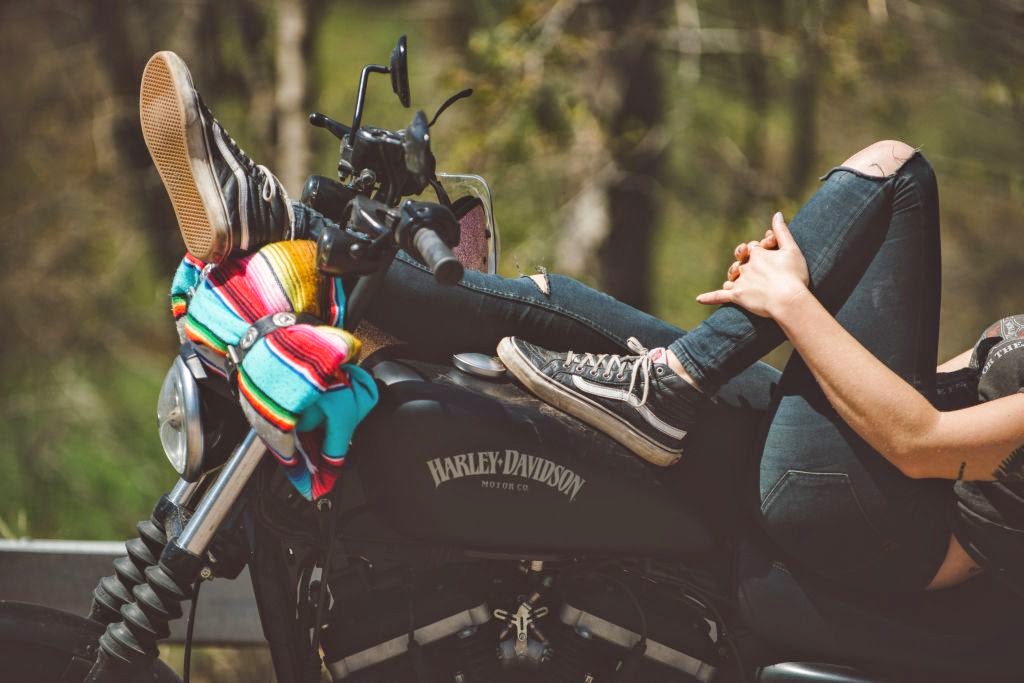
Sometimes you just want to look cool. I spend a lot of time riding, writing about, and thinking about adventure bikes and touring bikes because they are machines that go far and have an element of practicality.
But sometimes the things those segments offer aren’t really what you need or care about. Sometimes the weather is perfect and you just want to rumble down less busy roads in search of ice cream, a nice view, or both. Sometimes you want to be seen. Sometimes you want to indulge the little kid part of you that fell in love with motorcycles in the first place.
No kid gets into motorcycling because he or she is enraptured by the thought of eight different traction control settings. It’s the noise, the feel, the look of a motorcycle that speaks to the heart. And fewer segments speak more directly to the soul than cruisers.
Unfortunately, cruisers have a tendency to be disproportionately expensive. Compare what you get to what you pay, and something feels a little off. That’s just how things are, though. And as such, this list doesn’t contain any ‘big twin’ machines like the Harley-Davidson Street Bob (one of my all-time favorite bikes) or Indian Chief Vintage.
That doesn’t mean you have to break the bank for a genuine cruiser experience, though. Here are five secondhand cruisers that can be found for less than £5,000.
Honda CMX500 Rebel (2017-present)

What is it?
OK, cruiser die-hards, get it out of your system: But Honda. But parallel twin. But 500. Grumble! Fuss! Harrumph!
Yes, yes. I know. The Rebel name extends all the way back to the mid-80s, when it was used for the 234cc CMX250C – an air-cooled machine produced off and on from 1985 to 2016. Several generations of Americans learned to ride on the Rebel and it was in almost every way the antithesis of an actual rebel.
(There was also a short-lived 450cc version produced from 1986-1987)
In 2017, the platform was overhauled and the Rebel became a 500. Powered by the same 471cc liquid-cooled parallel twin that drives Honda’s CB500 Hornet, NX500, CBR500R, and underrated CL500, the CMX500 Rebel claims peak outputs of 46 bhp at 8500 rpm and 32 lb-ft of torque at 6000 rpm.
The CMX500 Rebel is largely seen as an entry-level machine, with its big brother, the CMX1100 aimed at more experienced/power-hungry riders. I dislike the idea of describing something as “entry level” because of its displacement; A LOT of fun can be had on machines with 500cc or less.
And it would seem many would agree with me: the CMX500 Rebel has been a massive global success for Honda.

Why you want it
This is arguably the most sensible purchase you can make in this category (rivalled, I suppose by Kawasaki’s Vulcan S). It’s relatively lightweight (190 kg), reliable, and reasonably cheap to run and maintain.
The bike’s global popularity means that there is a decent-sized aftermarket for the bike, as well. You’ll find just about everything you could want in terms of bits and bobs, which means you can participate in the age-old cruiser practice of festooning your ride with questionable decisions. From different handlebars to billet pegs and skull-emblazoned engine covers, you can find it.
Additionally, because the bike has a low asking price to begin with (£5,799 brand new), you’ll have no trouble finding recent, low-mileage, excellent-condition examples under that all-important £5K mark.

Why you don’t want it
Look at it. The styling doesn’t particularly stir the soul, does it? The tank looks accidental. The exhaust looks (and sounds) oh-so-Honda. And the rider triangle looks cramped for anyone taller than 5-foot-5.
It is a bike that is unlikely to earn you a shaken fist from any old ladies you ride past. To that end, one criticism that owners and reviewers have is that the overall riding experience is just a little too smooth.
Many years ago, I test rode the BMW R nineT (now known as the R 12 nineT) and Jonathan Benson’s assessment was: “It’s sh-t. And as soon as I get home I’m going to buy one.”
Sometimes you want that from a motorcycle. That’s particularly true of a cruiser. You want something stupid. Something that doesn’t make sense, but which speaks to some deep, irrational part of the soul. Something that reminds you – viscerally – that you are sitting on a box of explosions. The CMX500 Rebel doesn’t really do that.
Additionally, owners complain that the speedometer is difficult to read in bright light, the seat is uncomfortable, the rear suspension is overly soft, and the exhaust headers discolor too quickly.
Kawasaki Vulcan S (2015-present)

What is it?
“Vulcan” is another name that’s been around for more than 40 years and which has been applied to a number of models. It first appeared in 1985, adorning the VN750 Vulcan – a 749cc liquid-cooled V-twin. There was also the the Vulcan 400 (1986-2004), Vulcan 500 (1990-2009), Vulcan 800 (1995-2006), Vulcan 900 (2006-present*) Vulcan 1500 (1987-2007), Vulcan 1600 (2002-2008), Vulcan 1700 (2009-present*), and Vulcan 2000 (2004-2010).
In 2015, Kawasaki decided to offer a modern take on the cruiser experience, presenting a motorcycle powered not by a V-twin but a liquid-cooled 649cc parallel twin unit pulled from the Ninja 650. Claimed peak performance is 60 bhp at 7500 rpm and 46.3 lb-ft of torque at 6600 rpm.
Related: 2018 Kawasaki Vulcan S – First ride review
* The internet tells me these models are still in production but I can’t find any evidence of them currently being sold in Europe or the United States.

Why you want one
When it came out, the Vulcan S offered a fresh, non-derivative take on the cruiser genre. Different styling than riders were used to, different engine character. Kawasaki also used the bike to introduce its so-called Ergo-Fit system that made modifications a little easier: handlebar, seat, and pegs could all be adjusted slightly to better suit an individual rider.
The powerplant is tried and true, having been used in Kawasaki models since 2005, and offers a revvier, somewhat sportier experience than one might expect from a cruiser. Equally, the Vulcan S has won praise from owners and reviewers for handling better than it really needs to.
Because the bike has not changed in 11 years, finding parts and accessories should not be hard. Build quality is as good as any Kawasaki. Which means certain bolts need regular applications of ACF-50, and the sidestand is made of aluminum foil, but it will otherwise run forever.

Why you don’t want one
But for its paint scheme, the Vulcan S that you might buy new today (starting price £7,399) is exactly the same as the one I spent a few weeks riding some eight years ago. Which was, but for its windscreen, exactly the same as the bike that had been released in 2015.
From a secondhand buyer’s perspective, that’s arguably a bonus. I mentioned replacement parts; you also don’t have to suffer FOMO caused by your budget limiting you to a certain generation (something you will have to accept with some other bikes on this list). But it also means that the bike’s ‘modern’ styling is distinctly unmodern. It’s not timeless/classic, either – it feels locked to a certain time.
When I test rode the Vulcan S many years ago, the thing that bothered me the most was the feeling that its engine didn’t really lend itself to cruiser-style riding. It’s punchy, but you have to rev it quite a bit to get the most out of it – there is pretty much no low-end torque. Meanwhile, when you are ringing its neck it can be pretty buzzy. Call that character, I suppose, but I wasn’t a fan.
Owners also frequently complain of battery drainage issues if the bike is left sitting for long.
Royal Enfield Super Meteor (2023-present)

What is it?
Royal Enfield is an iconic brand, boasting 125 years of continuous production – longer than any other motorcycle brand I’m aware of. In the past decade or so, it has made huge strides forward, thanks in no small part to the 650 platform it first introduced at EICMA in 2017.
Initially, the 648cc air-cooled parallel twin engine was the force behind the Interceptor and Continental GT. These days it powers seven different models, including the Classic 650.
Related: 2025 Royal Enfield Classic 650 – First ride review
In all cases, the engine produces peak outputs of 47 bhp at 7250 rpm and 38.5 lb-ft of torque at 5650 rpm.
The Super Meteor joined Royal Enfield’s line-up in 2023 and served as the brand’s premier model until being unseated by the aforementioned Classic 650 (which not only shares an engine but much of its chassis). It represented a massive step up in terms of fit and finish for the brand and remains a prime example of what Royal Enfield is capable of.
Related: Royal Enfield’s Future: An exclusive chat with Siddhartha Lal and BGR

Why you want it
I’m not exaggerating when talking about the bike’s fit and finish. Royal Enfield’s attention to detail on the Super Meteor is on par with what you’d find on a motorcycle from Harley-Davidson or Indian Motorcycle. No, really. It’s a beautiful machine.
The engine is thoroughly enjoyable at cruiser speeds, with a 270-degree crank that mimics V-twin feel and a good amount of low-end torque. The air-cooled nature of the engine adds authenticity, as does the fact that this is a bike made of metal – no plastic fenders here. And the exhaust note is delightful, balancing brilliantly between stirring the soul and maintaining good relations with neighbors.
All of this combines to deliver a genuine cruiser experience that the Japanese models on this list can’t really offer. Royal Enfield gets it.
The Super Meteor’s only been around for three years, but because it is so affordable when new (starting at £6,949) it is possible to find models under the £5K barrier. Many of these machines will be fresh from three-year PCP deals, meaning that someone else has put money and time into maintaining your bike for you.
It is the nature of Royal Enfield niggles that they generally present themselves quickly. So, if you’ve got a 3-year-old machine that’s in good condition, you can be pretty confident that all of its gremlins have been found and dealt with.

Why you don’t want it
There is a difference between attention to detail and component quality. Whereas Royal Enfield has been as meticulous as Harley or Indian in building its bikes, it hasn’t necessarily used the same quality of components. This is part of the reason its bikes are so affordable.
The important stuff – engine, frame, etc. – is generally sound but a Royal Enfield owner should expect to replace things like bulbs and levers with greater frequency than on other models. Once again, this is a machine that benefits from frequent and generous applications of ACF-50 or XCP.
In addition, Royal Enfield produces roughly 1 million motorcycles a year. It is a mathematical given that some of them are going to be less than perfect. And the company acknowledges that quality control – although better than ever – still isn’t quite what it would like. As mentioned above, major problems will usually have presented themselves and been fixed on warranty by a previous owner, but there’s no guarantee that’s true.
More day-to-day related, the 47bhp engine is a lot of fun below 60 mph, but it’s not something that you’ll want to rely on for a great deal of high-speed riding. There’s enough power for all-day motorway cruising but the vibrations at 70+ mph are such that you won’t want to put up with it for long.
Triumph Speedmaster 865 (2005-2017)

What is it?
Triumph resale values are such that we obviously can’t consider the modern Speedmaster 1200. Indeed, many examples of the model we’re talking about – the 865 version – hover quite close to the £5K mark.
Triumph’s Speedmaster cruiser was first introduced as a 790cc parallel twin in 2002. The bike was quickly upgraded for the 2005 model year – given an 865cc air-cooled parallel twin engine claiming 54 bhp at 6750 rpm and 51 lb-ft of torque at 4800 rpm.
In 2007, the engine’s carburetor was replaced with fuel injection. Even more dramatic changes were made in 2011, when the Speedmaster’s look was altered – less chrome and more power. Claimed peak outputs became 60 bhp at 6800 rpm and 53 lb-ft of torque at 3300 rpm. The bike lost a front brake disc in the process (2005-2010 models have a dual disc set-up).
There has long been a place in my heart for the Speedmaster. I spotted one while attending a job interview some 13 years ago and spent the next few days promising myself that I would put a downpayment on one with my first paycheck. Ironically, the job was with Sustrans. Perhaps unsurprisingly, then, I didn’t get it.

Why you want it
Famously, the motorcycle ridden by Marlon Brando in The Wild One was a Triumph. The Fonz rode a Triumph. The American motorcycling culture that some might accuse Triumph of mimicking here is, in fact, authentic to the brand. So, this is a bike that presents the opportunity to ride a “real” cruiser without the unreal price tag.
Triumph’s air-cooled 865 engine is now retired, but it was such a workhorse that there is little reason to be concerned about a well-maintained example. And because the engine was used for so many years across so many platforms (Speedmaster, America, Bonneville, Thruxton, Scrambler) you’ll find plenty of YouTube knowledge, Haynes Manuals, and aftermarket companies for wrenching and customizing guidance and inspiration.
A 270-degree firing order (different from the 360-degree firing order of the same era Bonnevilles) means you get V-twin character. And overall build quality is good (if, perhaps, not quite as refined as current-era Triumphs).

Why you don’t want it
Both when new and in the secondhand market, the Speedmaster 865 has never been that far from the Harley-Davidson Sportster 883 in terms of price or offering. Whereas comparable Japanese cruisers might offer liquid-cooled powerplants, ABS (which was never introduced to the Speedmaster), lower maintenance costs, or simply a more agreeable price tag, the Triumph offers you “Like that American thing but with a parallel twin engine and a British name.”
Many moons ago, the great Adam Child made the observation that if you want a bike that’s like a Harley, you should just buy a Harley.
“If I go into a shop looking to buy an orange, I don’t want something that’s like an orange,” he told me. “I want a proper orange.”
Triumph may be an authentic player in the cruiser segment but it is impossible to argue that it is more authentic than Harley-Davidson. Put the two brands’ offerings side by side and it can be difficult to come up with a good reason to go British.
In terms of riding experience, some folks (myself included) find the riding position less comfortable than it should be. There’s not a lot of oomph at motorway speeds. And the bike’s engine fins are an exception to the rule when it comes to build quality. Applying ACF-50 here will only get you so far, though, as it will burn off as soon as you fire up the engine.
Also, the Speedmaster is chain-driven and – like all Bonneville-derived models – getting to that chain for cleaning and maintenance is a major pain in the ass.
Harley-Davidson Sportster 883 (2007-2022)

What is it?
The Sportster is one of the most iconic names in motorcycling. First introduced in 1957, there has been a Sportster of one form or another in Harley’s line-up ever since. The 883cc Evolution engine that powered the Sportster 883 until 2022 was first introduced in 1986, but I have limited this discussion to models produced after 2007, when fuel injection became standard. ABS was not introduced until 2014.
There are any number of variations on the Sportster 883 theme, including the Roadster, Iron 883, and SuperLow. The engine and its characteristics are exactly the same in all of these, it is only the chassis and styling that changes.
Related: 2013 Harley-Davidson XL883L SuperLow – First ride review
Claimed peak performance from the bike’s 883cc air-cooled V-twin engine is 54 lb-ft of torque at 3750 rpm. Harley never officially offered horsepower figures, but most media outlets put it around 52 bhp.

Why you want it
Like it or not, Harley-Davidson defines the cruiser genre. So, by definition, you cannot find a more authentic cruiser than one sold by the boys and girls in Milwaukee. And an air-cooled Sportster is one of the most authentic. Its Evolution V-twin shakes within the frame at idle – its attitude barely containable – and offers one of the most joyous and visceral experiences in modern motorcycling.
Hitherto my first encounter with a Sportster 883 many years ago, I had maintained a negative opinion of Harley-Davidson and Harley-Davidson riders. Within approximately 10 seconds of hitting the starter, the Sportster began to completely rewrite my world view.
“Yes, as a matter of fact, it is like riding a tractor,” I wrote at the time. “[But this is] a tractor from the Land of Bad-Ass, with which you can sow the seeds of awesomeness.”
Peak torque comes at 3750 rpm but the majority of it is available right off idle. Off the line, it is a bike that feels so much more powerful than its numbers might suggest. If you ride a Sportster 883 and don’t come away giggling, there is something deeply, deeply wrong with you. You should probably just give up on motorcycling and take up a joyless hobby, like paper clip straightening.
And while the aftermarket and general knowledge base for the Speedmaster might be large, there is an entire universe around the Sportster platform. The availability of parts, accessories, advice, know-how, and customization options and inspiration is effectively infinite.
Oh, and although Harleys have an undeserved reputation for poor reliability (that reputation is, in fact, a hangover from the AMF days and hasn’t really been true in at least 30 years), the Evolution engine is bulletproof.

Why you don’t want it
The Sportster 883 is also like a tractor in the sense that it isn’t too hot at motorway speeds, and cornering is not its forte. The five-speed gearbox is reliable but clunky. Even after major improvements in 2017, the suspension was never that great – minimal travel means it’s not hard to bottom out on British potholes.
Taller riders may also find the riding triangle a little cramped/uncomfortable. Especially when paired with the suspension and just-OK stock seat. I’m 6-foot-1 and wouldn’t want to spend any more than an hour on the bike without getting a chance to stretch my legs.
Lastly, because customization is such a big part of the Sportster world it can be very difficult to find a secondhand example that hasn’t been subjected to someone else’s sense of style. Prepare yourself for sorting through lots of skulls, questionable and offensive tank art, and legally dubious exhausts.
Honorable mention: Yamaha XV950 (2013-present)

What is it?
What if Harley-Davidson Sportster Iron 883, but Japanese? That’s the basic premise of this machine. Known as the Bolt in the United States (where it is still sold; it left the UK market in 2021), the XV950 is powered by a 942cc air-cooled V-twin engine claiming 51.3 bhp at 5500 rpm and 56 lb-ft of torque at 3000 rpm.
Related: 2014 Yamaha XV950 – First ride review
Why you want it
Maybe you want a Harley-Davidson Iron 883 but just can’t allow yourself to be seen riding a bike with a bar and shield badge. Here’s the answer. The XV950 is identical in quite a lot of ways.
Why you don’t want it
If you want an orange, buy an orange, my dudes. The XV950 corners even worse than the bike it’s copying. The digital dash doesn’t fit the styling/spirit of the rest of the bike (and it’s hard to see in bright light). And good luck finding replacement parts/accessories; the XV950 drew a lot of attention in its first year or so of production, but consumer interest waned considerably thereafter.

Leave a Reply