

OK, fine. I’m back on the bandwagon.
I’ll admit that until very recently, my fanboy enthusiasm for Indian Motorcycle had started to wane. And when erstwhile parent company Polaris sold its controlling stake of Indian to a private equity outfit with no previous experience in motorsport, I became even more cynical.
But then I spent a day riding the new 2026 Chief Vintage, and I sat down for dinner with the company’s new CEO, Mike Kennedy (more on that in the future), and, well, yeah, I’m all-in again.
Which is interesting, because there’s not really anything new about the new Chief Vintage. But Indian has managed to put together a package of existing platforms so effectively that this bike feels special.
Is it special enough to be worthy of roughly £19,000? Let’s get into that.
(Full specs can be found at the bottom of this article)

SOME BACKGROUND
You may be aware that the Indian Motorcycle brand turns 125 years old this year. If you didn’t know that, where have you been? To kick off celebrations, on 2 February – Groundhog Day – the company took on the ninth official owner of its history. There have been plenty of others who have attempted to make legal claims to the name, but as far as Indian Motorcycle is concerned, these are the ones that count:
– 1901-1953: The original Indian Motocycle Company, started by George Hendee and Oscar Hedstrom.
– 1953-1960: John Brockhouse
– 1960-1963: American Motorcycle Company
– 1963-1970: Floyd Clymer
– 1970-1977: Alan Newmann
– 1998-2003: IMCA, also known as the Gilroy Indians
– 2008-2011: Stellican Ltd., also known as the King’s Mountain Indians
– 2011-2026: Polaris
– 2026-????: Carolwood LP
RELATED: Why do Harley owners insist new Indians aren’t real?
Although it was designed, developed, and first announced while Indian was still under the Polaris umbrella, the Chief Vintage counts as the first Indian Motorcycle model of the Carolwood era. And I had theorized that its place in the Carolwood canon was intentional.

“[The 2026 Chief Vintage] is a statement… a declaration of intent, signalling how [Indian Motorcycle] sees itself and where it wants to go,” I wrote back in January, when the bike was first revealed. “Indian is [signalling that it’s] going back to its roots.”
When I put this theory to Indian Motorcycle Senior product Line Sales Manager Jon Vick, he pops my little balloon.
“That’s not how motorcycle development works,” he says. “It takes a lot longer than six months to produce a motorcycle. This was always the plan. It was always going to be launched in January ‘26. It takes on a little more impact because of the Polaris split, maybe. But that’s just luck.”
Uhm… yeah. I should have known that. When I worked for Harley-Davidson’s PR team we were planning stuff out years in advance.

Nonetheless, the 2026 Chief Vintage is still a statement motorcycle. Still a celebration of Indian’s past and present. Just maybe not as much its future.
It is certainly a more faithful celebration of the company’s heritage than previous attempts. The Chief Vintage was one of the first models in Indian’s line-up when the brand was resurrected by Polaris in 2013, and it remained in production until 2021, when the Chief platform was overhauled.
I was pretty critical of that take on Indian’s heritage. In a 2015 first ride review of the bike, I wrote that it was “simultaneously amazing and awful,” hurt most obviously by its garish styling. The thing was dripping with chrome, had studded leather seats, and leather fringe hanging from the seat and panniers – with the option of buying accessory fringe for the handlebars and fenders.
“What weird, fetishist pack of Minnesotans did Indian dig up for a test-marketing group that [it] came away with the belief that bedecking one of its bikes in leather fringe was a good idea?” I bemoaned.

Meanwhile, another problem with the 2013-2021 Chief Vintage – which I didn’t really observe at the time – was the fact that it was built more or less on a touring chassis. This meant that – although it was comfortable – it was too big. Unmanageable compared to the Chief models it was paying tribute to.
Indian fixed that problem with the 2021 overhaul of the Chief platform, wrapping a smaller, more purposeful frame around the company’s air-cooled Thunderstroke powerplant and delivering a generally more agile chassis.
Which brings us back to what I said at the start of this article: there’s not really anything new about the new Chief Vintage. The chassis is effectively 5 years old, the engine 13 years old, and the styling some 75 years old. But it hasn’t been until now that all those things have come together so perfectly.
FIRST IMPRESSIONS
“It was a lost technology,” Indian Director of Design Ola Stenegärd tells me.
He’s explaining the art behind the Chief Vintage’s valanced fenders, easily its most standout feature.

From 2013 to 2017, all of Indian’s motorcycles, save the Scout, had valanced fenders. But these were three-piece items, says Ola: “so, you had a basic fender shape and the fender skirts welded up.”
Doing things this way created potential issues. The welds had to be extremely precise. Even the smallest imperfection meant that water and muck could creep into a part of the bike that – for most owners – is never cleaned, leading to rust and corrosion and, ultimately, a very unhappy customer.
Back in the 1940s, when Indian adopted the valanced fender as a signature part of its styling, it was a single piece. But the so-called “deep-draw” pressing technique used to create those fenders was lost to the mists of time.
“It’s like, how did they build the pyramids? No one remembers,” Ola says. “But our guys said, ‘I think we can do it.’ And after a lot of back and forth and back and forth, here they are.”

Attention to detail has long been one of Indian Motorcycle’s KSPs, but if you haven’t seen an Indian in the flesh in a while you may not have realized that this mindset has grown more and more focused over the years. The 2015 Chief Vintage that I rode more than a decade ago, for example, was a meticulously built machine, but this Chief Vintage is miles beyond it.
Indian Motorcycle says that it is “dedicated to elevating craftsmanship” and you can see it’s telling the truth when you consider the effort put into making fenders in a way that most owners won’t notice or appreciate.
There are still a few tiny signs of the old-school ‘one size fits all’ Polaris way of thinking – the accessory mounting bolts on the rear fender are the same as what Victory was using 20 years ago – but the Chief Vintage is mostly without fault.
It is a motorcycle that you stare and stare and stare at: Look how wires are neatly tucked away. Look how you can see through it. Look at the way this line flows into that one. Look how rich the paint is. Look how ‘natural’ the engine looks – not like it’s something designed on a computer screen and cut by lasers but crafted, forged. Look how the steel frame fits that engine so perfectly – highlighting it, drawing attention to its size and beauty.

Step back from the bike and the attractiveness of the machine intensifies. From 50 feet away, the thing looks so authentic, so ‘true’ to Indian’s heritage, that I’m willing to bet that upward of 90 percent of the people you pass on the road will think you are on a motorcycle built during the reign of George VI (1936-1952).
The idea of the Chief Vintage – modern bike that looks old – is pretty gimmicky and plenty of manufacturers (including Indian) have tried and failed with such a formula. But here it works. It looks and feels real. It is, as I said in the review I wrote for Visordown, a rejection of and antidote to our current AI-corrupted world.
Attention to detail is one of the reasons the Chief Vintage succeeds. But it is also a really good motorcycle.
You start to realize that when you throw a leg over and settle into its wide, cosseting, tractor-style seat. The seat sits just 686 millimeters above the road, meaning the feet of a 6-foot-1 rider are comfortably flat on the ground at stop. Hands fall naturally to the old-school handlebar, which is not as wide as I’d assumed.

Glance down and you’ll spot the bike’s excellent 4-inch TFT dial (more on that later) but the beauty of the Chief Vintage is that it’s one of those bikes that more or less disappears from your view when on the go. This – along with the relatively nimble chassis – contributes to a feeling that this 327kg, 2441mm-long is somehow smaller than it is.
ENGINE AND TRANSMISSION
Indian first introduced the air-cooled V-twin Thunderstroke engine in 2013, before it had even introduced any actual motorcycles. Delivered just two years after Polaris had acquired Indian Motorcycle, the engine had almost certainly had been initially intended for use in Victory Motorcycles’ bikes – a replacement for the Freedom platform that had existed since about 2000.
Disgruntled Victory owners will tell you that the fact the Freedom engine was never replaced is one of the reasons the brand died. Whatever the case, in 2019, Indian boosted capacity of the Thunderstroke to 116 cubic inches – about 1900cc in Not America – but otherwise the powerplant hasn’t really changed in 13 years.
That’s not a bad thing. I’ve experienced the Thunderstroke engine in a number of different models over the years and have always enjoyed it. In this ‘vintage’ application it makes particular sense, the massive air-cooled engine radiating heat that enhances the riding experience with a certain authenticity.

Indian claims a peak torque output of 115 lb-ft at 3300 rpm. The company doesn’t give horsepower figures, but there’s a well-known equation (torque multiplied by rpm, divided by 5252) that allows us to determine that peak power output is 72.25 hp (or 71.26 bhp). That second number is, admittedly, not very impressive. A Suzuki V-Strom 650 produces roughly the same.
But cruisers have never been about horsepower. Torque is the thing that matters to everyone but communists. And the torque delivery of the Chief Vintage is delightful. Everything is smoother and more natural, more analogue, than you get with a modern Harley-Davidson. It feels more like a carbed engine, even though it’s fuel-injected.
That means that when you twist the throttle, power delivery is smooth, linear, and almost never abrupt. Or, at least, that’s the case in the Standard riding mode. Because this is, in fact, a modern engine, there are three riding modes: Tour, Standard, and Sport. Tour is effectively a rain mode and should be avoided. Sport sharpens the throttle response if you’re feeling chopsy, but feels a little out of character for the style of the bike.
Speaking of character, the engine’s soundtrack is delightful: a throaty growl from the exhaust, matched by the tickety-tickety and unlabored drone of internal workings. It sounds delightfully mechanical.

Plus, as I say, there’s the heat. That’s a thing that a lot of people hate – and certainly I wouldn’t want to be stuck filtering through traffic on this thing on a 30ºC+ day – but increasingly I find I enjoy engine heat. I enjoy the realness of it. The not-digitalness of it.
(That’s right, kids: spot the guy who’s lost two jobs to AI)
The engine is aided by a good-for-a-cruiser transmission that works faultlessly. The transmission of a massive 1900cc V-twin is never going to be Suzuki slick but the Chief Vintage’s six-speed box is wholly agreeable within context. It was just a teency bit sticky, but I suspect that has to do with the fact that I was riding a brand-new motorcycle; I’d wager it’s something that smoothes over time.
Clutch lever pull is lighter than on Harley cruisers, though it still helps to have a strong left hand.
One thing that particularly stands out over Harley-Davidson cruisers is the Chief Vintage’s slipper clutch. It is so much better. In the sense that it actually works; you don’t feel like you’re going to be thrown from the bike when you make an ill-timed downshift.

BRAKES AND CHASSIS
The Chief Vintage handles so much better than I was expecting. “Nimble” is the word that kept coming to my mind.
“It’s almost flighty,” I recorded in my voice notes to myself. “I don’t know if ‘flighty’ is the right word, but it’s just… it’s a lot… uh, easier, in terms of handling, than a Harley would be on these roads.” (Indian held its European press ride in the twisting, mountainous roads of Spain’s Valencian region)
That’s within context, of course. The Chief Vintage has floorboards and a 28-degree lean angle. Front forks are non-adjustable. The rear dual shocks are pre-load adjustable. Sportbike it will never be. But its chassis allows you to establish and maintain a cruiser-riding flow with relative ease.
That’s the key to riding a cruiser fast: flow. They are not point-and-shoot vehicles. You have to set yourself up well before going into corners – think and move with a kind of zen. If you’re someone with ADHD, riding unfamiliar roads and sitting on a 327kg motorcycle, it can be easy to disturb that flow – to get it all kinds of wrong. The thing I love about the Chief Vintage is that the flow doesn’t get disturbed as easily as on other cruisers I’ve ridden, and it’s not as hard to get back.
This is aided by reasonably good brakes that are capable of being nuanced somewhat. Would it be nice to have a second brake disc up front to manage all that weight? Sure. But I accept that it would negatively affect the aesthetic and, hey, almost no one is going to be riding this bike as hard as we were. I sure as hell wouldn’t if I owned one.

FANCY STUFF
For a motorcycle that you can see through, the Chief Vintage has a surprising amount of technowhizzbangery and rider aids. Three rider modes, ABS, keyless ignition, full LED lighting, cruise control, and a brilliantly well-hidden USB port (under the tank) are top of the list.
You also get a very useful, stripped-down version of Indian’s Ride Command software. This is the software that was developed to run the infotainment and bike management systems on Indian’s baggers and touring bikes.
You don’t get all of the Ride Command bells and whistles on the Chief Vintage but you do get a wealth of bike and riding information, a choice of different screen types, and – most importantly – actual satellite navigation.
If you’ve read any of my other motorcycle reviews, you will know that I despise the current trend of offering navigation via a system that connects to an app on your phone that connects to Google Maps. These systems never work. Indian’s Ride Command system doesn’t need your phone; it’s a proper, old-school sat-nav. Does that mean that the bike’s TFT screen is slow to boot up? Yes. But I’ll take that over infuriating, non-functioning apps any day.

WHAT IT’S LIKE TO RIDE
As soon as I finished my day’s riding on the Chief Vintage, I was hounding Indian’s PR team for an extended loan of the bike. I am desperate to put more miles on it, to spend more time with it, to fall even more deeply in love with it. More on that when/if it happens.
The Chief Vintage is not a bike that will change the mind of a cruiser sceptic, though. If you don’t like big, heavy, hot V-twin motorcycles, you definitely are not going to like this one. But if you are able to appreciate cruisers, the Chief Vintage offers one of the most authentic and enjoyable takes on the genre that I’ve encountered.
As I say, flow is easy to establish and maintain, and when you catch little glimpses of yourself in shop windows you feel pretty cool. And the heat and the noise and the grunt of the engine feel so… connected. Actual.
Speaking more broadly, one of the things I love about riding motorcycles is the sense of connection to the world around you. Authentic connection isn’t always perfect – sometimes you’re hot, sometimes you’re cold, sometimes it’s raining old ladies and sticks, sometimes you’re riding past a pig farm and it stinks to high hell – but it’s real. It’s genuine. You are in the world and a part of it.
A cruiser is one of the best motorcycles for getting that feeling. And within that context, the Chief Vintage is one of the best cruisers I’ve experienced.

BASIC MAINTENANCE
One of the things to love about Indian Motorcycle is that it is not so far up its dealers’ backsides that it’s strangely secretive and proprietary about maintenance. Sure, Indian would like for you to take your bike into a dealership for a service, but it also understands that some people want to do their own work. Especially the easy stuff.
So, Indian makes owners manuals available online and has a number of tutorial videos on its YouTube channel.
And, as it happens, basic maintenance of the Chief Vintage is pretty straightforward. Oil and oil filter need to be replaced every 5,000 miles, the air filter every 10,000 miles, and spark plugs every 30,000 miles.
Doing these jobs is easy and won’t require that you lift the fuel tank (which is one of my least favorite things to do). Indian’s YouTube channel has explainer videos for each of these tasks, as well as several others that aid in inspection and maintenance of your bike.
I can’t stress enough how awesome it is that Indian does all this. Most manufacturers seem to actively discourage home maintenance. It would be nice if the Chief Vintage came with a tool roll, but hey-ho.
Meanwhile, the engine has hydraulic lifters, so you never need to do valve checks.

CRITICISMS
My biggest complaint about the Chief Vintage is something Indian can’t really do anything about: the big, ugly exhaust. That dual cannon really distracts from the bike’s aesthetic. But Indian Motorcycle is not responsible for the environmental regulations that force the need for such a massive exhaust.
Truth is, almost every exhaust on every motorcycle of every brand is ugly these days. C’est la vie.
In the same spirit, the chunky rear dual shocks are just a little bit jarring when you compare the Chief Vintage against a Chief from, say, 1950. But, of course, those old bikes were hardtails; they didn’t have rear suspensions. I don’t want a riding experience that authentic, so, I’m happy to suffer this aesthetic sin, as well.
The TFT screen’s touch sensitivity is such that it is surprisingly easy to use with gloves. This makes me think that it would also respond to raindrops, meaning God would be constantly changing your screen options as you rode through a storm.
Lastly, this isn’t a complaint for me personally, but the handlebar brake and clutch levers are not adjustable. If you’re not 6-foot-1 and wearing size 10 gloves it might be annoying. I will say that it seems like a weird oversight to make on a roughly £19,000 motorcycle.

COMPETITION
There isn’t really anything out there that competes in a like-for-like sense against the Chief Vintage. The closest bikes to my mind are the oil-/air-cooled Harley-Davidson Street Bob and Heritage Classic. Both of those bikes have the same engine and chassis; the main differences are in ergonomics and accessories.
Regular readers will know that I have a deep, unabiding, and possibly irrational love of the Street Bob. To my mind, it competes against the Chief Vintage in its stripped-down nature and purity of spirit. It costs upward of £5,000 less than the Chief Vintage, while offering more horsepower, traction control, a markedly more robust dealer network and riding community, and a greater sense of reassurance that the company making it will still be operating 20 years from now.
The Heritage Classic competes more directly in aesthetic terms against the Chief Vintage, though, I would argue, its look is not quite as authentic. It offers most of the strengths of the Street Bob but costs roughly £5,000 more than the Chief Vintage. I’m willing to bet, however, that if you added a touring seat, passenger accommodation, panniers, and a windscreen to a Chief Vintage the disparity in cost would evaporate.
| STARTING PRICE | ENGINE | POWER, TORQUE | |
| Indian Chief Vintage | £18,955 | 1900cc air-cooled V-twin | 71.3 bhp, 115 lb-ft |
| Harley-Davidson Street Bob | £13,995 | 1923cc air-/oil-cooled V-twin | 90 bhp, 115 lb-ft |
| Harley-Davidson Heritage Classic | £24,245 | 1923cc air-/oil-cooled V-twin | 90 bhp, 115 lb-ft |

VERDICT
The Chief Vintage is an expensive motorcycle, but one could vindicate such a purchase with the thought that this is a motorcycle that has all the makings of a Forever Bike. That’s an increasingly rare thing. We live in a throwaway world; none of the motorcycles being offered right now by Chinese manufacturers, for example, are bikes you’re going to hold on to. Most people will kill or ditch those things within five years.
Very few of the models coming from European and Japanese brands are long-term keepers, either.
Ola Stenegärd describes the 2026 Chief Vintage as something of a completing of the circle for him. He tells the story of being a young boy in Sweden in the late ‘70s and his father taking him to a neighbor’s house to see the man’s motorcycle collection. The bike that stood out for him was a 1940s Chief. Its lines and spirit and the story it implied has stuck with him ever since.
That bike was sitting in a Swedish garage some 30 years after being made because it was a Forever Bike. It stuck in Ola’s mind because it was a Forever Bike. The new Chief Vintage has the same qualities. No one would fault you for never selling it. Indeed, they’d more likely question a decision to get rid of it.

As a day-to-day motorcycle it’s not immensely practical, and the use cases to which it is perfectly suited are limited. And there are legitimate concerns about dealer support, community, and exactly how long parts will be available, which aren’t really issues for the Forever Bikes being made by Harley-Davidson.
There’s no question that the Chief Vintage is visually stunning. It also rides and handles well. If you’ve got the money to buy one, the only thing to consider, really, is your emotional response to it. In other words, all the pieces are there – whether it’s a motorcycle that’s worth your money is something that only you can decide.
I am jealous of anyone who can afford to buy this motorcycle. I wish I were you.
THE THREE QUESTIONS
Does the 2026 Indian Motorcycle Chief Vintage suit my current lifestyle?
Uhm… It doesn’t not fit my lifestyle. In terms of rideability and reliability, there’s no reason that a Chief Vintage couldn’t be a year-round, all-things motorcycle. That would be an eccentric way to treat a bike like this, though. It’s so pretty, I think that some part of your soul would burn when taking it out in bad weather. I mean, the idea of exposing this thing to salt feels criminal.
Did the 2026 Indian Motorcycle Chief Vintage put a smile on my face?
Definitely. What’s more, it continues to put a smile on my face, more than a week after having ridden it. The more I think about the Chief Vintage, the more I love it.
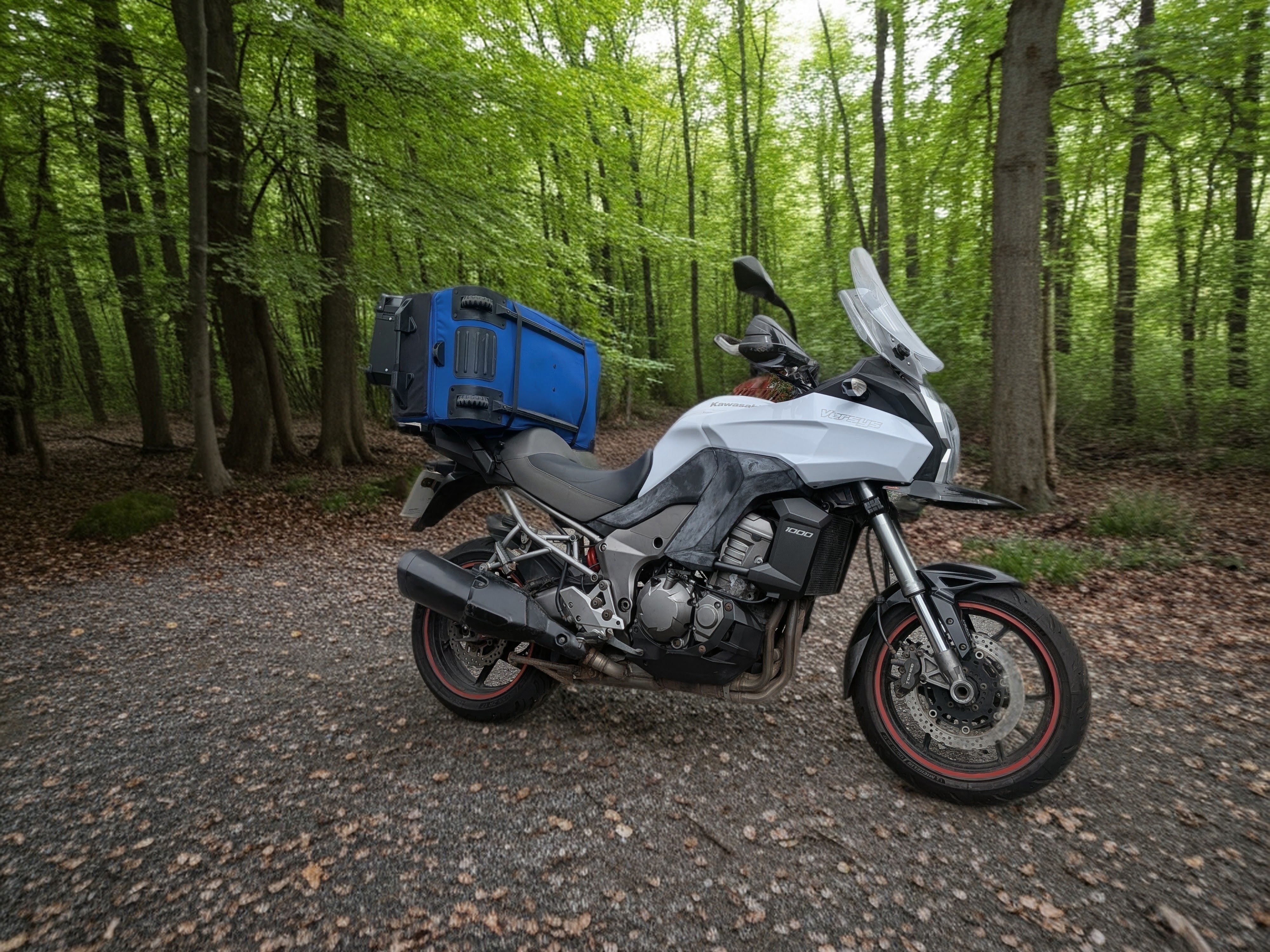
Is the 2026 Indian Motorcycle Chief Vintage better than my current motorcycle, a 2012 Kawasaki Versys 1000?
Well, yeah. We can talk about how my bike is more practical – especially for long-haul/touring stuff. And how it corners better, weighs less, has traction control, better brakes, and more power, but I don’t think there’s anyone who would look at the two bikes side by side and say the Kawasaki is better.

GEAR WORN IN PHOTOS
Helmet: Shoei Neotec 3
Jacket: 55 Collection Hard
Gloves: Richa Atlantic GTX
Jeans: Pando Moto Boss 105
Shoes: Spada Strider S
2026 Indian Motorcycle Chief Vintage specs
| STARTING PRICE | £18,955 |
| ENGINE | 1900cc air-cooled Thunderstroke 116 V-twin |
| TRANSMISSION | 6-speed manual |
| POWER | 71.3 bhp (calculated) |
| TORQUE | 115 lb-ft at 3300 rpm |
| TOP SPEED | n/a |
| SEAT HEIGHT | 686 mm |
| GROUND CLEARANCE | 125 mm |
| WEIGHT | 327 kg |
| FUEL CAPACITY | 15.1 liters |
| FRONT TIRE | 130/90 B16 |
| REAR TIRE | 150/80 B16 |
| FRONT BRAKE | Single 298mm disc, four-piston caliper |
| REAR BRAKE | Single 298mm disc, two-piston caliper |
| FRONT SUSPENSION | 46mm telescopic fork, 132 mm travel |
| REAR SUSPENSION | Dual shocks, 75 mm travel |

Leave a Reply