
It’s amazing how one’s financial situation affects perspective. That’s the best explanation I can give for the dramatic change in my thinking about Suzuki over the years.
Roughly a decade ago, I was writing missives with headlines like “How do you solve a problem like Suzuki?” and lamenting that the Japanese manufacturer was guilty of simultaneously selling boring bikes and thinking too highly of itself.
That was before the bankruptcy, however. Before I fully understood and accepted that buying a motorcycle on PCP financing – or, indeed, almost any financing – is a scam. Before I realized that, actually, there is something praiseworthy about a manufacturer that builds bikes that always start. And something valuable about a bike that has been refined over tens of years and hundreds of thousands of miles to deliver a genuinely superior riding experience.
That’s the hook of a Suzuki, I think. It’s not the sexiest. It definitely doesn’t carry the latest tech. But it is something that is built around a bulletproof platform and tweaked to near perfection in a real-world, everyday sense.

If it ain’t broke, just keep selling it
The GSX-R1000R is a solid example of this. It’s been around for more than a quarter of a century, trading on a model name that’s more than four decades old. On paper, it is far from the most powerful of sportbikes. It has a fraction of the tech that other machines have. And yet every article I’ve read about the 2026 GSX-R1000R has been spilling over with love and affection for the bike.
Another motorcycle for which folks have held a place in their heart is the SV650. A generation of riders’ first and favorite big bike, it was introduced in 1999 and is still being sold in some markets, such as the United States.
Its 645cc liquid-cooled V-twin engine was/is beloved by riders for its ability to deliver an experience that is simultaneously engaging and non-threatening. The engine was also used in the V-Strom 650, which remained on sale in the UK up until last year (and, of course, it, too, is still available in the US market).
For the most part, though – up until November of last year – most people felt the 645cc V-twin powerplant had run its course. Suzuki seemed destined to retire its middleweight V-twin and replace it with the 776cc parallel twin that currently drives the V-Strom 800 DE/RE and GSX-8R/S/T/TT models.

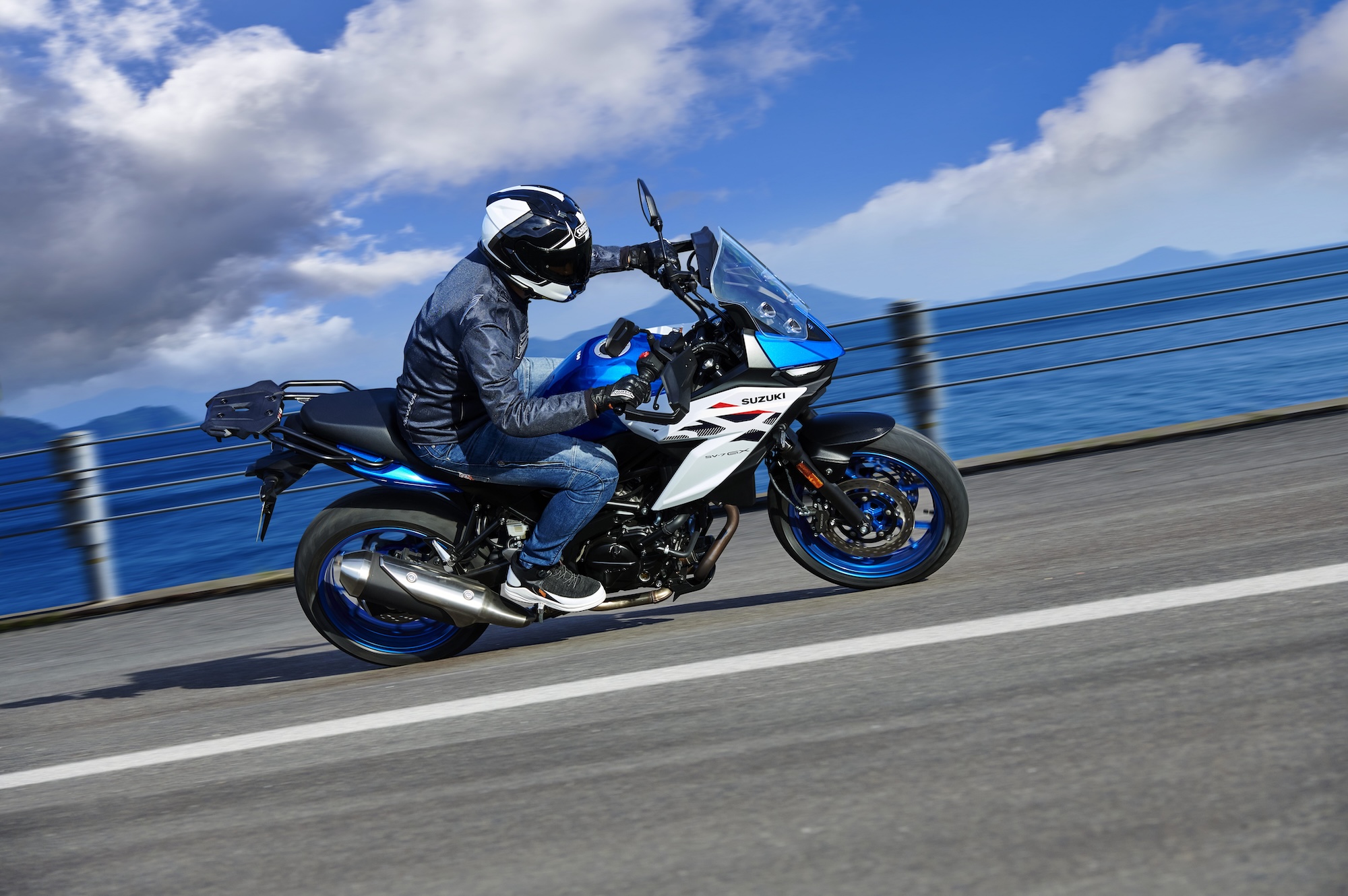
Then, at EICMA 2025, the company surprised everyone (and befuddled many) by revealing a baby brother to its GSX-S1000GX adventure sport, in the form of the SV-7GX: “a new midweight crossover motorcycle that blends comfort and everyday usability with the versatility and presence of a full-blown sport adventure bike,” according to Suzuki.
But the 7 in this model’s name is misleading. It’s really a 650. Powered by that same stalwart V-twin engine that Suzuki first introduced 27 years ago in the SV650. God bless ‘em.
I got pretty excited about this bike when I first heard about it and pleaded with Visordown editor Toad Hancocks to be sent to its launch. Sadly, he’s taken the gig for himself. He and the rest of the UK press will be getting up close and personal with the bike toward the end of next month.
Already, though, we know how much the bike will cost. And that’s sort of the point of this article: observing that Suzuki has decided to play hard ball.

The Bosch dishwasher of the motorcycle world
Suzuki bikes are reliable and well suited to the actual conditions in which the overwhelming majority of us actually ride, but as anyone holding centrist political views can tell you, being Not Extreme isn’t always a successful selling point.
As a snapshot, in April of this year, Suzuki sold 327 motorcycles in His Majesty’s United Kingdom. BMW sold twice as many. Triumph sold nearly three times as many. Honda sold more than five times as many.
In recent years, Suzuki has found itself in the position of selling bikes that are really good but that aren’t a great deal different from the versions that came many years before. For example, if you’re happy to live without cruise control, there’s no good reason to choose a brand new V-Strom 1050 RE over a good-condition 10-year-old V-Strom 1000.
Related: 2015 Suzuki V-Strom 1000 – Long-term review
The overall riding experience is identical between the two and if the latter has been well-maintained, it will be just as reliable as the former while costing thousands of pounds less. No PCP deals required.

Meanwhile, Chinese motorcycles are upsetting the apple cart and putting a number of manufacturers on the back foot. Especially manufacturers like Suzuki, for whom most people don’t hold as strong an emotional connection.
I personally know several people with Harley-Davidson tattoos. You can imagine people being equally as passionate about Ducati or Moto Guzzi or Triumph, but also – genuinely – Honda. And through its GS series, BMW has created an entire culture (Would the ABR Festival even exist were it not for the GS?).
But it’s pretty hard to picture someone incorporating Suzuki into their identity. I mean, if you have a really good dishwasher, that doesn’t mean you go around proselytizing for Bosch.
And in the face of the Chinese motorcycling revolution it seems that brands like Suzuki are most at risk. Suzuki doesn’t really have a die-hard customer base who will stick with the brand past reason.
In my review of the Voge DS800X Rally, I ultimately concluded that if I had the £7,000 necessary to meet that Chinese bike’s asking price I would use it instead to buy a secondhand V-Strom 800 DE. Few and far between are the people who would do the same; most consumers will choose the high-spec new thing instead.

The £7k counter-attack
In response to this reality, Suzuki announced a major shift recently in the pricing of its bikes.
“Over the last year we’ve been listening closely to our dealer partners and working in conjunction with our colleagues in Japan to realign pricing across a number of models in the range,” Suzuki GB head Jonathan Martin said in April. “I think it’s hard to find another brand that can compete with the claim that Suzuki is offering the most value for customers on the market right now.”
Seemingly to emphasize this, Suzuki announced last week that its new SV-7GX will start at just £6,999. That’s impressive. After all, this is a bike that comes standard with a quickshifter, three traction control modes, three power modes, and a TFT screen with smartphone connectivity – among other features.

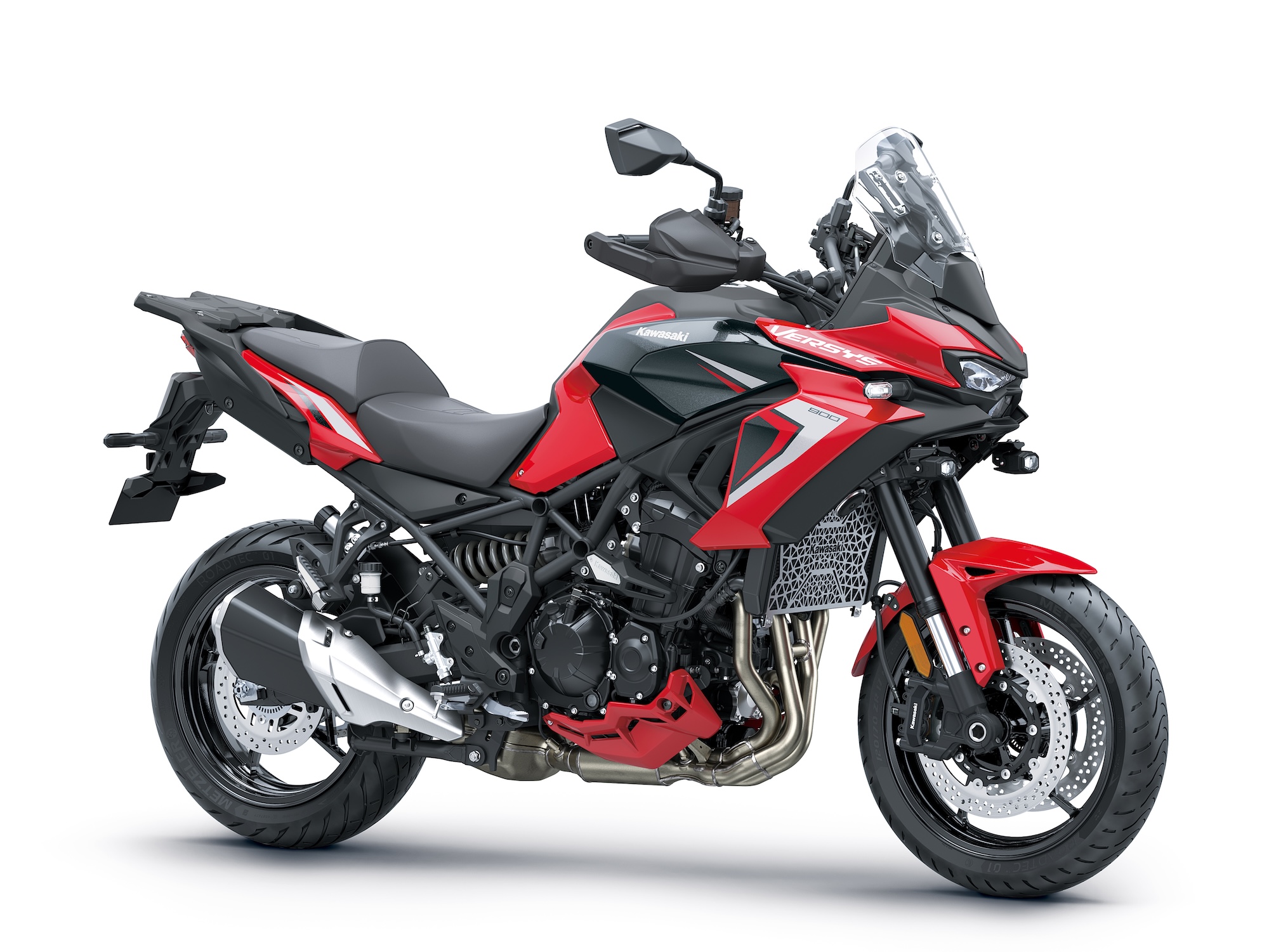
Meanwhile, a Triumph Tiger Sport 660 costs almost £2,300 more. The Yamaha Tracer 7 has a starting price that is £2,260 more. A brand new Kawasaki Versys 650 costs £1,050 more.
“We’re really pleased to be able to bring the 7GX to market at such a competitive price point,” a media release quotes Martin as saying. “Which really reaffirms our commitment to value.”
Anyway, point is: Well done, Suzuki. You’re still kinda boring, but you’re also reliable. And now affordable. And I love ya for it.



Leave a Reply