
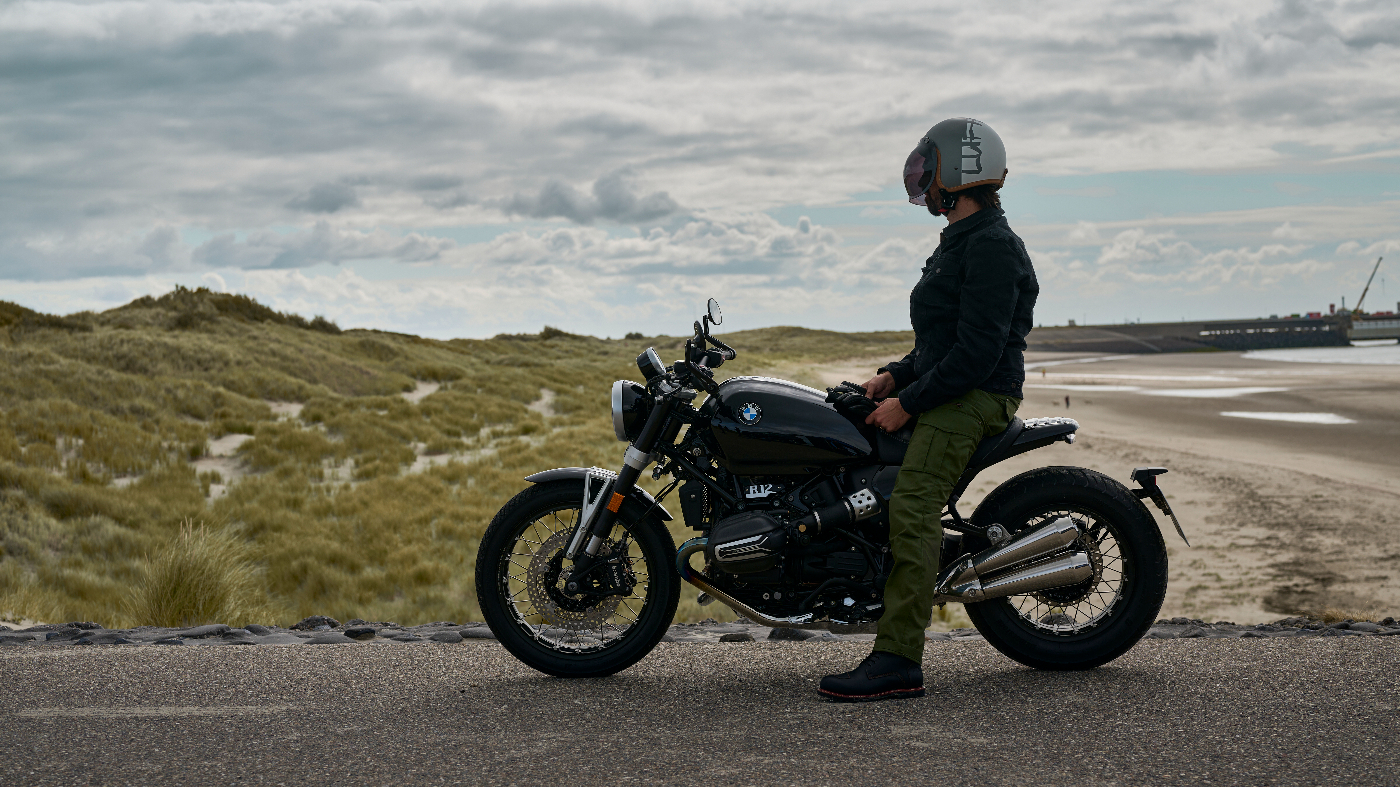
In its essence, motorcycling has not changed in more than 100 years. The things that might draw a person to riding is no different in 2024 than it was in, say, 1924: for example, the joy of being not just aware of, but fully living in the world.
On a motorcycle, you can smell the flowers and the cow poo. You can feel minor temperature variations as you ride up hills, down glens, in shade, and out. You feel the rain. You feel the sun. The good and the not-so-good. All experienced astride a vehicle that seems to move more with thought than effort.
Since these core experiences have not changed, it logically follows that, really, you don’t need a brand new bike to enjoy biking.
But need and want often conflate in the mind, with the latter burning with such confusing intensity that you become convinced you are being overcome by the former. And that is how people end up getting locked into PCP deals.

PAYING MORE FOR THE SAKE OF NOW
I have long advised against ‘buying’ a motorcycle on finance. But until that life-changing event that I never shut up about happened, I never actually followed my own advice. To that extent, much of this article is being written for me. I’m trying to silence the part of my brain that says: “I’d almost certainly be rejected for any kind of financing, but, you know, what if I weren’t? I’m better now… I could handle the payments on, say, an F 900 XR, without things getting out of hand, surely…”
Statistics suggest I am not the only person as stupid as me. According to UK campaign group Debt Justice, a record 6.7 million people in the United Kingdom are in financial difficulty, with more than 10,000 people becoming insolvent every month. Meanwhile a recent Harris Poll found that 35 percent of Americans are “in the most debt of their lives.” So, maybe this is for you, too.
I fully understand how powerful the need/want confluence can be. I think there’s something deeply psychological about the appeal of financing. If you are not rich, financing gives you a sense of power or control over your situation: an ability to overcome or ignore feelings of inequality/unfairness that you may have about your position in life.
This is why the parking lot at a chemical plant is filled with brand new pickup trucks. Those guys don’t make enough money to buy a $58,000 Ford F150 Lariat out of pocket, nor do they have lives that call for such a vehicle. But a brand new pickup says something about a man: about who he is, and who he can be.
In the same vein, I read a statistic not too long ago that in the United States more than 70 percent of new Harley-Davidson motorcycles are bought on finance.

The core problem with almost any kind of financing, of course – whether it’s for a motorcycle or a car – is that you are ultimately paying more for the sake of having something now.
Imagine you’ve got the horn for Suzuki’s GSX-S1000GT, for example. You’ve decided you’ve got to have one and you’ve got to have one now. The starting price on one of those is presently £12,699. Buy it on a three-year hire purchase loan through Suzuki (with £1,000 deposit), and you’ll ultimately be paying £14,015.80. You’re effectively saying: “Hold on, fellas. I don’t think you’re getting enough of my money. I insist that you take even more!”
Sometimes, with a car perhaps, you may actually need a thing now. You might need a car to get to work. That probably doesn’t apply to the Suzuki. A handful of people use bikes to get to work every day (I used to be one of them), but most don’t.
IT’S A TRAP
If you’re new here, I’ve complained about PCP several times in the past. It stands for Personal Contract Purchase and is the most popular method of new bike financing in His Majesty’s United Kingdom.
PCP is sort of like leasing a bike with the option to buy at the end via balloon payment. It is popular because it shifts the bulk of the cost onto an optional final payment. As such monthly payments are seemingly more manageable.

Let’s go back to that GSX-S1000GT example: payments are £185.48 a month on that plan. At the end of the 36-month contract, you’d be presented with three options:
1 – Give the bike back to the dealer. Assuming you’ve met the conditions of the PCP contract, you can walk away, sans obligation (But also sans bike).
2 – Use the remaining value on bike as a ‘downpayment’ on another bike. Most (but not all) PCP deals promise the bike will have some sort of value at the end of the contract. If that value exceeds the amount of your final payment (see below) you can apply the difference toward the purchase/financing of a new model.
3 – Buy the bike outright. You can keep the bike by handing over a “final payment” that covers the rest of the bike’s original value. In our GSX-S1000GT example, the final payment is £6,524.
That £185.48 is markedly less than what you’d pay in a more traditional “hire purchase” agreement in which one gets a loan to pay off the full cost of the bike. Therein lies the appeal of PCP. In a traditional loan, the only new Suzuki you could have on £185 a month would be a 125cc model.

Motorcycle media in the UK leans into this a lot: PCP ostensibly gives motorcyclists a chance to ride the biggest, fanciest, newest bikes with relatively low payments. Bauer publications Bike and MCN are particularly guilty of bigging up PCP, to the extent I find it hard to believe Black Horse (the entity behind most motorcycle loans in the UK) isn’t paying Bauer. Last June, for example, Bike magazine came out with a “wallet-friendly issue” that contained TWENTY PAGES of PCP examples.
“Imagine it… the bike of your dreams, within your means,” effused the introductory copy.
But the thing is, PCP is a trap. Here’s six reasons why:
1) THE MOTORCYCLE IS NOT YOURS
You don’t own the vehicle in a PCP agreement; it is the legal property of the finance company. You’re just paying for the privilege of taking care of it, and they can take it away from you whenever they like (although, admittedly, it was my experience that they aren’t actually very good at doing that).
The same condition is true during the timeframe of a traditional hire purchase, but at least in that case you fully own the bike once the contract ends. True, with PCP financing you have the option to buy the bike at the end of the agreement. But in reality that will never happen because…
2) YOU CANNOT AFFORD THE FINAL PAYMENT
The balloon payment at the end of a PCP deal is considerable. In the example above, the final payment is more than 51 percent of the bike’s original price. Presumably, the reason a person would choose PCP over hire purchase/traditional loan is that they can’t afford the hire purchase agreement’s monthly payment.
So, where are they going to get the money for the PCP deal’s final payment? If you can’t afford a traditional loan payment now, you clearly can’t afford to set aside the additional amount needed to make the final payment. In application, the option to buy the bike at the end of a PCP deal is a false one. Unless you take out even more financing to be able to cover that payment – probably a personal loan in this case, and probably at extortionate rates.

3) THE FINAL PAYMENT MAY BE UPSIDE DOWN
Since the option to buy is highly unlikely, and the option to just walk away with no bike at all is unpalatable, the only real option in a PCP deal is to use the bike’s remaining value to help lock yourself into a different PCP deal. But sometimes even that’s not possible.
As mentioned above, some PCP deals do not offer a so-called Guaranteed Final Value. That is, there is no promise of what the bike will be worth when it comes time to make the final payment. That was the case with my 2015 Suzuki V-Strom 1000. At the end of my PCP agreement, its value was less than the final payment amount. So, there was no difference to apply as a ‘deposit’ in another deal.
Because I had no real deposit for the consecutive PCP deal in which I entangled myself (for my Triumph Tiger Explorer XRx), my monthly payments were uncomfortably high.
4) YOU’RE PRETTY MUCH STUCK IN THE CONTRACT FOR ITS FULL TERM
There are ways to get out of a PCP contract but they are unpleasant and expensive. Of course, you can pay off the loan in full early (which involves a fee) but that’s not what I’m talking about. Let’s say, instead, that you’ve lost your job and can no longer afford your £185.48-a-month Suzuki. With a heavy heart you decide that the best thing for you is to get rid of the bike entirely, to give it back to the dealership from whence it came. Short of declaring bankruptcy, the only way to do that is through a process known as voluntary termination (VT).
VT allows you to give the bike back, no questions asked, but only after you have paid off at least 50% of your loan and a number of fees. Lenders say that ditching a bike via VT won’t affect you negatively, but a note about it goes on your credit report. Pair this with the knowledge that there’s really only one lender in the United Kingdom, and it feels mafia-esque.
I remember an honest salesman once saying to me: “Black Horse say that they don’t blacklist people for VT but I certainly wouldn’t want to put that to the test.”
5) YOU’RE PAYING TO TAKE CARE OF SOMEONE ELSE’S FUTURE BIKE
Increasingly, I’m of the mind that the best ‘new’ bike to buy (not on finance) is one that’s 3 years old: one that has recently come out of a PCP deal. That bike will cost less, of course, but there is also the benefit of other riders having spent 3 years figuring out what the model’s quirks are, and manufacturers/aftermarket companies coming up with answers, eg, handlebar buzzing in the first-gen BMW S 1000 XR, or crappy windscreen on the first few generations of the Yamaha Tracer 9.
Those are just broad benefits. There are benefits more specific to the exact bike you’re buying, as well ─ all down to the fact that when a person signs on to PCP they are agreeing to take care of the bike to a high standard. So, when you buy a PCP bike, someone else will have just spent three years making sure it’s been serviced regularly at an official dealership and ensuring it hasn’t suffered excessive wear and tear. Someone else will have put that time and money into your bike. If the motorcycle is the sort to suffer those weird issues that are common to brand new BMW and KTM models ─ e.g., just sort of breaking down for no reason on the motorway ─ someone else will have paid to fix that, or, at the very least, they will have had to go through the ball ache of getting the issue sorted out on warranty.
So, from a buying-used perspective, PCP bikes are a great thing. But you definitely do not want to be the person who’s actually in the PCP deal, spending your money and energy looking after someone else’s bike.
6) THE BIKE WILL END UP COSTING YOU MORE IF YOU ACTUALLY ENJOY RIDING IT
Related to the above, part of the process of ensuring the bike doesn’t suffer excessive wear and tear is committing to a mileage allowance. You’ll be charged if you exceed your mileage allowance. And it’s the nature of PCP finance that you’ll be inclined to accept a lower mileage allowance for the sake of a lower monthly payment. It’s a system that encourages you to just sit around staring at your bike rather than ride it.



Leave a Reply