

Zero Motorcycles understood the assignment. The company’s new LS1 scooter manages to not only be an environmentally friendly vehicle for navigating hyper-urban environments, it also makes use of all the benefits of electric to deliver a two-wheeler that is actually, you know, fun to ride.
And useful. And not insanely overpriced compared to some petrol-powered alternatives. It’s not a novelty; it’s a legitimate urban tool – as well as a reminder that the world of electric is rapidly evolving. Knowledge/assumptions formed even a few years ago are no longer accurate.
The UK and EU may have backtracked on pledges to ban the sale of new petrol- or diesel-fuelled vehicles by 2035, but an electric future still seems inevitable. Meanwhile, in the present, fuel prices are skyrocketing – and unlikely to come down any time soon. So, not only are electric scooters better than they’ve ever been, they’re more relevant.
Recently, I got a chance to navigate the traffic nightmare that is Brighton on a sunny afternoon with the Zero LS1. Here’s what I learned.

How we got here
As I mentioned recently in my review of the Zero XE electric dirt bike, Zero Motorcycles is the old man of the turbulent electric moto world, somehow managing to stay alive for two decades while dozens of competitors have risen and fallen.
Founded in Northern California, the company moved its headquarters to Amsterdam late last year, outwardly stating that: “Europe is where the pace of EV adoption is being set… Moving our global headquarters here allows us to react faster, focus harder, and lead the transformation of the powersports industry.”
As an American, I find it disheartening that an EV company feels it can’t succeed in the United States, but Zero is quick to point out that it retains a ‘spiritual connection’ to Northern California and the tech-driven mindset of Silicon Valley. Nonetheless, Zero no longer claims that its vehicles are “crafted in California,” and acknowledges that most are now built in the Philippines.

Meanwhile, the move to Europe has coincided with an apparent shift in Zero’s thinking, with smaller, more affordable vehicles showing up in the company’s line-up. First there was the X line of dirt bikes, now we have the LS1 scooter – first unveiled at last year’s EICMA.
Electric scooters are a fast-growing segment in the European Union, with as many as 600,000 sold each year across the EU. Zero says it is targeting riders in cities like Paris or London, where environmental regulations are becoming more and more stringent.
“Designed for urbanites and the realities of modern life, the LS1 blends sleek design with modern convenience in equal measure,” says Zero.

Design, storage, and ergos: The £4,500 question
Previous to encountering the LS1, my only experience with an electric scooter had come some seven years before, when I test rode the Vespa Elettrica. That scooter was fun, but ultimately inadequate and, in my opinion, impractical for genuine urban use.
READ: 2019 Vespa Elettrica – First ride
It was anemic from a dead stop and had a restricted top speed of 29.8 mph. It also cost too much. Approaching the LS1, I noted that Zero’s scoot was about the same size as the Elettrica – that is to say it is diminutive – and braced myself for disappointment.
Outside of its physical size, however, the LS1 is a very different machine. Its styling is more modern, for example; there is no attempt to tie the scooter to a broader narrative or heritage – it is a vehicle for now. The styling is also professional. Zero says it is speaking to companies like UberEats about introducing LS1 models to delivery fleets, but you won’t feel like you need to be wearing a puffy hooded jacket to be seen on this thing.
With a starting price of £4,500, the LS1 is a little spicy compared to, say, the £1,699 you’d pay for a petrol-powered Lexmoto OCR 125, but put it against a (also petrol-powered) Honda PCX 125 (£3,549) and it’s a little more competitive. It’s even more competitive against other electric scooters; the Honda CUVe has a lower top speed and markedly less range, and costs £3,800.

The LS1 also costs £1,500 less than the Elettrica did seven years ago (or £2,300 less if you adjust for inflation), while – again – offering more functionality, power, and range.
That said, there are elements of the LS1 that convey a sense of something built to a price point. The mirrors are flimsy and useless. The overall feel of the scooter is more plasticky than I’d like; you hear a lot of clattering of bits when navigating through the city.
There’s nowt so cost-saving that it would put me off purchasing an LS1 if I were in the market for such a thing, but it’s enough that I would at least feel compelled to research competitors.
The switch to unlock the seat is a little fiddly, but once opened there is a large space underneath to store a good amount of stuff. Zero says the underseat storage compartment has “enough space for two helmets.” I cannot imagine how this could be true. Bicycle helmets, perhaps. Or maybe two three-quarter “jet” helmets interconnectedly stacked in a Jenga style – not full-face lids.

There is enough room, though, for a single full face, or a decent-sized bag.
Zero’s press materials don’t mention the exact size of the compartment but I’m confident you could fit a Kriega US20 bag in there, as well as a liter or two of water (or wine, or other liquids of your choice). Alternatively, you could use the space to store a third battery, extending the LS1’s range to a claimed 97 miles.
Stepping into the scooter and lowering onto its 780mm seat, the LS1 feels a bit cramped for a 6-foot-1 rider – as all scooters do. The seating position reminded me of being a school boy: feet neatly together, knees bent at a 90-degree angle, back straight. There’s not much room to stretch out if you’re long of leg.
It’s not uncomfortable. Just cosy. I could still manage a daily 30- to 40-minute commute without complaint. On my test ride I spent just shy of two hours in the saddle without ill effects.

Battery range and a 62 mph top speed
The LS1 houses two 1.86 kWh batteries, which power a motor promising peak outputs of 11.2 bhp and 177 lb-ft of torque at the rear wheel. That second number is the one that matters, of course, as well as the LS1’s claimed top speed of 62 mph – well in excess of what you need in truly urban situations.
Because this is electric we’re talking about, all of that go is available instantly – ensuring that you’re able to get ahead of pretty much everyone at traffic lights. Certainly you’ll out-gun the petrol scooter riders. The joy (and ease) of acceleration is so delightful that you’ll find yourself looking down the road and hoping the light up ahead turns red.
When you’re not deliberately hammering the throttle for fun, power delivery is smooth, consistent, reliable, and intuitive. And because you’ve got a top speed of 62 mph, you’re never going to have a problem keeping up with (or getting ahead of) the flow of city traffic.
Both of the scooter’s batteries are located in the floorboard, helping to keep weight centered and physically low (Actual weight of the LS1 is low, too: 134 kg). The batteries are both removable, which means you can bring them into the office with you and charge up on your company’s dime. Charging from 0 to 100 percent via this method will take around 4.5 hours, according to Zero.

You can also buy an accessory 1500W fast charger that will see that time drop to 2.6 hours, or just 99 minutes if charging from 20 percent to 80 percent (which is a thing that EV manufacturers suggest for the sake of battery health and charging efficiency).
Claimed range for those two batteries (collectively) is 70 miles of city riding, according to Zero. As mentioned above, you can extend that to a claimed 97 miles if you’re willing to sacrifice the underseat storage area for the sake of a third battery.
That extra battery will set you back £1,045. To be honest, I don’t think it would be necessary for anyone other than delivery riders. I’d prefer to keep the storage space.
Chassis and brakes
The LS1 is a scooter. Scooters not known for plush suspensions or being accommodating of aggressive handling. I mean, what fool would think that scooters are made to go fast?
Within the context of scooters, however, there’s nothing to complain about. The roads of Brighton are bad – potholed, rutted, and scarred by half-hearted repairs. The LS1 managed them well enough: never a sense of losing control, nor dental work shaken loose.

Brakes are sound. I didn’t have any “Oh sh-t” moments on the road, so I can’t speak to their full emergency stopping power, but I didn’t find them wanting in the constant start-stop, wiggle-scoot of rush hour congestion. The bite is not too aggressive, so there’s no hobby-horse action in regular use.
The LS1 uses a carbon-reinforced belt drive, so although you can hear the rattling of plastics when you traverse a pothole, there is very little drive noise.
Fancy stuff
You get a 5-inch TFT screen that is reasonably easy to read in bright sunlight. The screen provides all the information you need. For the most part. Zero is perhaps missing a trick by not offering on-screen navigation via an app.
Before letting me loose into Brighton traffic, Zero’s team simply offered a Quadlock mount for my phone. Admittedly, that’s what I would personally choose over a manufacturer app. So maybe Zero’s simply being intelligent here.

The LS1 comes with traction control: fancy for a scooter, perhaps, but absolutely necessary for a vehicle capable of delivering so much torque. Many, many moons ago I spent a day riding a Zero DSR around a rainy Birmingham. That bike didn’t have traction control and I would describe the experience of taking off from traffic lights on wet roads as “squirrely.”
The LS1 also features anti-theft tech: useful in places like London, where motorcycle and scooter theft is so rampant.
Filtering through city traffic like a god
Awful, soul-destroying traffic jams are where the LS1 really shines. Basically, if there’s a gap big enough for you to walk through, you can get the LS1 through it. The narrowness of Zero’s urban weapon is such that you’ll be leaving other scooters behind. At stops, you’ll be hanging out with all the cyclists at the front, then rocketing past them once the light turns green.
I demonstrated this to myself over and over while navigating Brighton – a city that I normally try to avoid driving or even riding in. The LS1 really feels like a cheat code when it comes to getting around in places like this.

The overall smallness of the scooter experience leaves you feeling a little exposed (when I was in university, some friends and I got drunk and pushed each other on an office chair through traffic in London’s Soho – sitting on the LS1 reminded me of that misadventure) but being able to filter like a god certainly makes up for it.
The joy of accelerating away from stops also makes it worthwhile, of course. And the fact that you’ve got a 62mph top speed means you can explore beyond the city centre.
Verdict
I am old and busted. And the older and busteder I get, the less I am able to tolerate urban chaos.
The LS1, however, is the sort of thing that would make life in the city sufferable – the kind of thing that could possibly change my mind about city life. And the fact that it’s electric means that you don’t have to feel guilty about eschewing public transport (I like using the Tube when I visit London, but I imagine that relying on it every day would be exhausting). You’re not dirtying the air with an LS1.

Indeed, an electric scooter makes the urban thrum almost enjoyable. There is no real need for earplugs at urban speeds, and the absence of engine noise means the scooter doesn’t get in the way of your hearing better – and therefore better experiencing – the world around you. That improved sense of connection will make you a better and safer rider.
Maintenance is minimal; no engine or transmission to have to work on/pay someone else to work on. The LS1 is svelte enough that it can easily be brought into a house, making it all the more practical for city use. If you want to keep your living room tidy, or you don’t really have a ground floor space to store a scooter, you can simply disconnect the batteries and bring them inside to charge.
The real-world, everyday use case of a scooter (or, at least, a scooter that isn’t a 400cc+ maxi scooter) is somewhat limited. But for those for whom it makes sense, the LS1 makes a whole lot of sense.

The three questions
Does the 2026 Zero LS1 fit my current lifestyle?
No. I live in a small rural town in the South Downs. The LS1 has enough power and range that it could get me to the beach or nearby country pubs, but visiting any nearby cities (London is 50 miles away, Brighton is about 30 miles away) is pretty much out of the question.
Did the 2026 Zero LS1 put a smile on my face?
Yes, in an almost wholesome way. I wasn’t really giggling and shouting, “Wheeee!” but I thoroughly enjoyed riding the LS1. It was enjoyable enough that it made me kinda sorta wish that my situation were such that the LS1 would make sense. If I win the lottery and fulfill my daydream of moving to Malaga, I promise I will get an LS1 for the sake of getting around town.
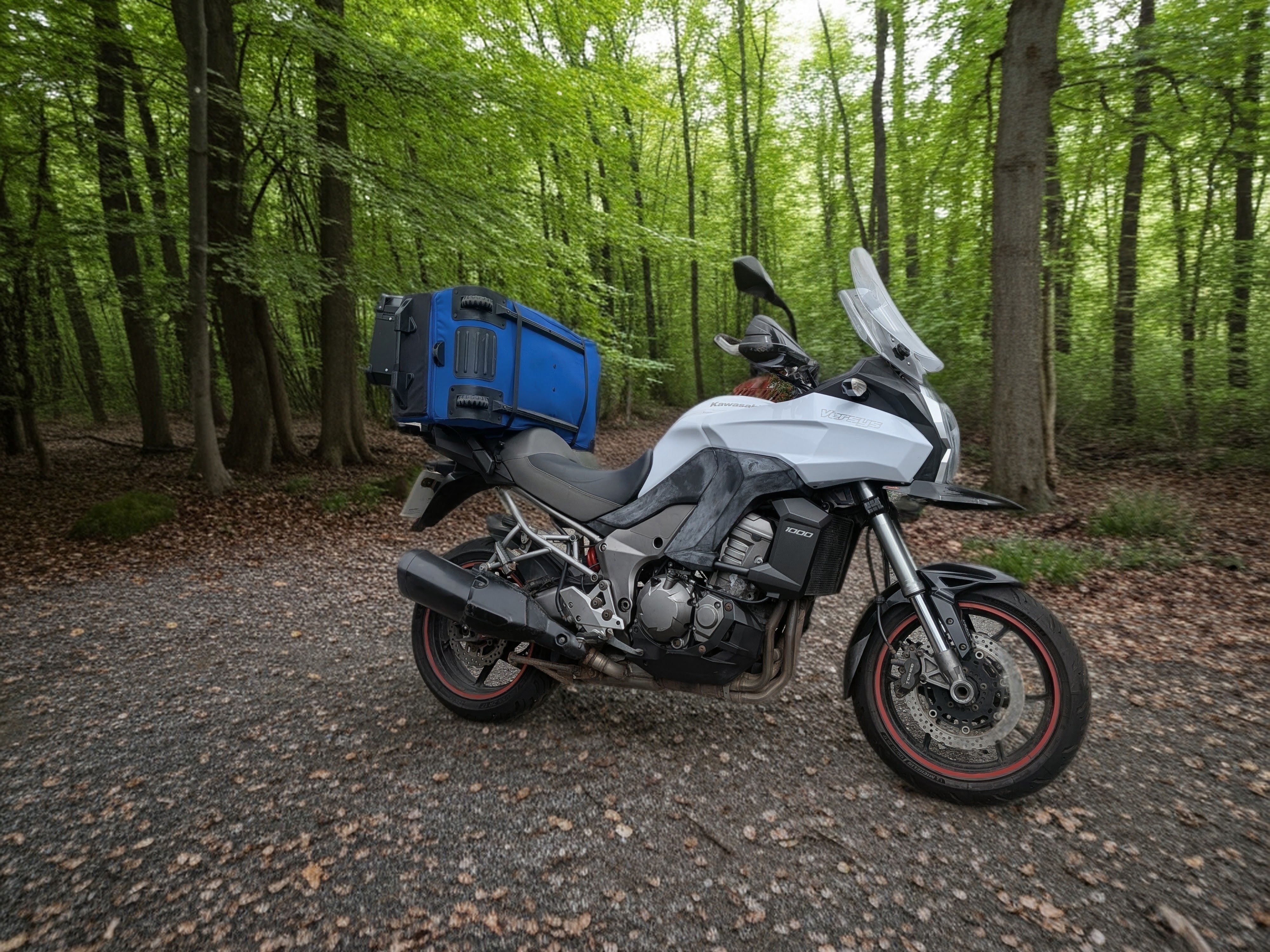
Is the 2026 Zero LS1 better than my current motorcycle, a 2012 Kawasaki Versys 1000?
Nope. Better for the environment, yes, but in all other ways, no.
Gear worn in photos
Helmet: Shoei Neotec 3
Jacket: 55 Collection Hard
Gloves: Aerostich Elkskin Competition Ropers
Jeans: Pando Moto Boss 105
Boots: Spada Strider S

2026 Zero LS1 specs
| STARTING PRICE | £4,500 |
| POWER | 11.3 bhp |
| TORQUE | 177 lb-ft at the rear wheel |
| TOP SPEED | 62 mph |
| BATTERY | 2 x 1.86 kWh |
| CHARGING TIME | 4.5 hours (0 to 90 percent) |
| RANGE | 70 miles |
| SEAT HEIGHT | 780 mm |
| GROUND CLEARANCE | n/a |
| WEIGHT | 134 kg |
| FRONT TIRE | 110/80-14 M/C |
| REAR TIRE | 130/60-13 M/C |
| FRONT BRAKE | Single disc, dual-piston caliper, ABS |
| REAR BRAKE | Single disc, dual-piston caliper, ABS |
| FRONT SUSPENSION | 109 mm travel |
| REAR SUSPENSION | 104 mm travel |


Leave a Reply