

The leaves were beginning to fade in England. Autumn colors were still a good month away, but there was clear foreshadowing in the nation’s leafy oaks. Sunlight stung the eyes in golden morning cool, and the smell of chimney smoke hung very faintly in the air.
That was the scene back in September, when I first got a chance to ride the new Royal Enfield Classic 650. It was an ideal setting for a bike that, in its aesthetic, seems targeted at a gentleman in his autumn years.
It’s a quirk of the moto industry that I wasn’t allowed to say anything about the motorcycle until it was officially revealed a few months later, at this year’s EICMA show in Milan. The folks at Motorcycle.com had sent me to cover the launch, so I’ve held off on posting a review of the bike here to ensure that the story I wrote for them had a chance to run its course.
I didn’t know about the Bear 650 when I test rode the Classic 650, nor when I wrote my review for MO. I’ll admit that I am very tempted by that bike and if I had the money to buy either of them I’d probably spend a lot of time standing quietly in the dealership, trying to figure out exactly where my heart wanted to go.

But, I suspect that, in the end, I’d still opt for the Classic 650. It’s just so pretty. Sure, I have some concerns (that would, in fact, apply to both bikes), which I’ll get to, but this is genuinely a motorcycle that I would consider buying.
SOME NUMBERS
Starting price: £6,499
Engine: 648cc oil/air-cooled parallel twin ─ four-stroke, SOHC
Power: 34.6 kW @ 7250 rpm (46.4 hp)
Torque: 52.3 Nm @ 5650 rpm (38.5 ft-lbs)
Fuel capacity: 14.8 liters (3.9 US gal)
Seat height: 800 mm (31.5 in)
Weight: 243 kg wet (536 lbs)
SOME CONTEXT
The Classic 650 is, in many ways, an update of the Classic 500 model that was introduced back in 2008. As Royal Enfield tells it, that bike was seen as a kind of mission statement following a long period of decline. From the 1950s, the company had spent decades not really doing anything and not really doing it well.
Some legal wrangling in the mid-1990s began a turn around and roughly a decade after that, the company was eager to show that it was moving forward. It did this with a bike housing a “new” powerplant (still an air-cooled 500cc single, but this one with electronic fuel injection) and styled to honor the brand’s heritage.
That heritage started in the United Kingdom, of course. Before becoming an Indian company, Royal Enfield was British ─ founded in Redditch, England. So, for this bike Royal Enfield turned to a British design company, headed up by Mark Wells. (Spoiler alert: they liked his work. Mark is now chief of design at Royal Enfield).

In 2018, a decade after the Classic 500 had launched, Royal Enfield pulled the cover off its Interceptor 650 and Continental GT 650 models ─ both driven by an all-new parallel-twin engine. That platform has since gone on to serve as the heart and soul for a number of models, including the Super Meteor 650, the Shotgun 650, and the aforementioned Bear 650.
With the Classic 650, all these pieces come together. Once again designed by Mark Wells, the bike seeks to showcase what the brand has been (ie, British) and what it is today (ie, an Indian powerhouse that’s on its way to producing 1 million bikes a year).
FIRST IMPRESSIONS
If you approach the Classic 650 knowing how much it costs, the first thing that will come to your mind when seeing it in person is: “There’s trickery afoot here. There is no way that a bike this affordable could look this good.”
You’ll feel inclined to inspect every nut and bolt of this motorcycle, trying to figure out where the cost savings are. And, sure, if you’re persnickety, you will find a few. The plastic screws on the adjustable brake and clutch levers probably won’t last long; some of the less obvious bolts have a hardware store quality to them. But the steel frame and body work, the deep and rich paint, and the proven engine are all high-quality and feel durable.

More so than the Classic 500 that inspired this machine. The Classic 650 is also bigger and more robust. It’s not huge or unwieldy, just big enough to feel like a “real,” modern motorcycle.
Throw a leg over and you’ll find a riding position that’s about the most natural to be had on a two-wheeled conveyance. Hands fall easily to the handlebar; feet rest comfortably on pegs or set firmly on the ground at a standstill.
Looking forward, there is very little to obscure your view. This may be a modern motorcycle, but it very much a classic experience. No screen stands between you and the elements; the small collection of dials on the bike’s headlight nacelle offer pretty basic information. Well, except for one, but we’ll get to that.
ENGINE
The 648cc ail/oil-cooled parallel twin that drives the Classic 650 claims just under 47 horsepower and 38.5 ft-lbs of torque. That’s not blow-your-socks-off power, but it’s enough within the context of what this bike is for. Meanwhile, Royal Enfield uses a souped-up version of the same powerplant in the American Flat Track SuperTwins Championship, where it delivers closer to 100 hp. So, one can infer that at 47 hp, RE’s engine is pretty much bulletproof.

Fire up the engine and it offers a delightful burble at idle and at pace. That sort of thing is important with a bike like this. It has the cruiser/Bonneville quality of being a motorcycle that you want to be seen riding.
Torque arrives pretty early in the rev range, so there’s plenty of oomph when pulling away from stops and such. This would be an excellent urban/suburban machine, delivering all the go you need for speeds below 60 mph. By extension, it’s well suited to sunny-day backroad wandering. When I close my eyes and imagine an ideal use case scenario for this motorcycle, I picture myself riding through the hilly farm fields of Wisconsin or Virginia.
I do not picture myself going hell for leather on mountain roads. We tried that sort of riding on the press launch and it was simultaneously disappointing and distressing. The disappointment came from the engine, the distress came from the chassis, which I’ll get to shortly.

Above 75 mph, the Classic 650’s engine slowly runs out of puff, increasingly offering vibration instead of power. As I observed in the video that I did for MO, I wouldn’t want to be spending a lot of time on the motorway/interstate/autobahn with this thing. Sure, it’s perfectly capable of maintaining an 80 mph cruising speed, but engine vibration would discourage covering long distances this way.
TRANSMISSION
Another argument against aggressive riding with this bike is the fact that doing so requires a particularly quick left foot. Chasing Mark Wells through England’s North Pennines, I was constantly banging into the rev limiter in first, second, and third gears. And sometimes even fourth. My riding style (I like to hold gears) almost certainly plays a part in that, but it was still annoying.
Doing some light digging into forums on other Royal Enfield 650s, I can’t find any consistent engine complaints. (There are, of course, isolated cases of weirdness, as you would expect from any major manufacturer, but there’s nothing like KTM‘s camshaft issue, for example.) But there are a few gripes about transmission ─ false neutrals being a somewhat common complaint.
I personally experienced no problems with the Classic 650 that I spent the day riding. But one of my fellow journalists did. Intermittently, and a little more after long and aggressive stretches of riding, his bike refused to go into 5th or 6th gear.

Back when I worked on a motorcycle marketing team I would have quickly pointed out to that journalist that we were riding pre-production models, which are always going to be more prone to gremlins. But the counterpoint to that counterpoint is that the pre-production models we were riding used an engine/transmission platform that’s been around since 2018. Something to take into consideration, I suppose.
PERFORMANCE AND HANDLING
The Classic 650 carries ─ very deliberately ─ the spirit of a British twin. And what’s the thing we always ask of British twins?
Does it do the ton?
Perhaps my opinion is clouded by fondness for the bike, but I really do feel like it could. But I will also admit that my best efforts were not successful. With the throttle pinned to the stop, my body tucked to the best of my ability, and me screaming to the gods, the needle got very close to the 100 mph mark, but not actually there or beyond.
Those attempts were made in straights, of course. On twisting roads, high speed was discouraged not just by the engine but also the non-adjustable suspension and good-but-not-great brakes. I had zero complaints at Normal Person speeds, but at ‘lose your license’ speed it was, as I say, distressing.

Better riders than me ─ specifically Cycle World’s Evan Allen ─ were able to hustle the Classic 650 with surprising agility. But for me, it lacked the sure-footedness needed to give rider confidence. It all felt unsettled: a little too wild… perhaps a little too authentic to the classic bike experience.
I refuse to believe, however, that actual owners will want to ride the Classic 650 that way. Which is fine. Not every bike has to be ridden at batshit crazy pace. Sometimes it’s nice to relax and enjoy life. At urban, suburban, and ‘looking for ice cream in Virginia’ speeds, the bike is a delight. At that pace, it is cheerful, comfortable, and easy to maneuver.
BELLS AND WHISTLES
The Classic 650 has antilock brakes. The end. No traction control, no riding modes, no quickshifter, no ‘hill start assist,’ no electronically adjustable suspension, no radar, no cornering lights, etc.
Looking at the spec sheet, it does come with a USB-C port. Although that’s not something that I noticed. Which is a good thing; the fancy modern bits are integrated well enough to be hidden.

The same is true of Royal Enfield’s Tripper computer, a kind of in-house Beeline Moto device that connects with your phone and provides navigation. It’s visually unobtrusive and can simply be used as a clock if you don’t feel like giving your data to India’s spy agencies (I’m joking).
CRITICISMS
As I alluded to, some of the lesser-seen bits of this bike are of less-than-premium quality. It’s a good bet that you will be replacing them. That may get annoying, or you could choose to upgrade things with aftermarket bits. Hitchcocks Motorcycles’ website offers some 528 items for the Interceptor 650; I doubt it will be long before it’s offering up hundreds of similar doodads for the Classic 650.
Cleaning and adjusting the chain will annoy you. Just like the Triumph Bonneville, the Classic 650’s exhaust pipe blocks access. To properly work on the chain you will need to remove said exhaust. You will need to remove both exhausts to remove the rear wheel.

I am 6 feet 1 inch tall. As you can see from the photos, I look scrunched. I didn’t feel too cramped, but I definitely wouldn’t have wanted to be any taller on this bike. I also suspect I’d be thankful for its small fuel tank ─ giving me regular reasons to stop and stretch my legs.
Related to tank size, if you are running the engine hard, you will find that fuel disappears very quickly. The press ride route was roughly 160 miles and Royal Enfield’s team made sure to top up my bike three times en route (though, in fairness, it’s much better to be over-cautious on a press ride than have a journo run out of fuel).
THE COMPETITION
Probably the most obvious competition for the Classic 650 can be found in the BSA Gold Star (another formerly British marque now owned by an Indian company) and the Triumph Bonneville T100.
The Gold Star offers relatively similar power and torque figures but it’s a single (effectively using the same 652cc Rotax engine that drove the BMW F650 in the 1990s). The price of the Gold Star has been dramatically reduced recently; when the bike was launched in 2022, its starting price was £6,800. These days, you can pick one up new and unregistered for £4,999. For some reason that rings alarm bells for me.

Another cheap single, by the way, is the Benelli Imperiale 400, but it’s not as powerful, it’s made in China, and overall quality isn’t at the same level.
The Bonneville T100, meanwhile, is a twin, and one that offers more power, more torque, a nominally better ride, and more tech. But it costs thousands more.
Sort of midway between the Bonneville T100 and the Classic 650, in terms of price, is the Moto Guzzi V7 Special. Its power figures are also more in line with the Bonnie and its engine is arguably the most characterful. But its styling speaks to a different era; it’s more ’70s than ’50s.
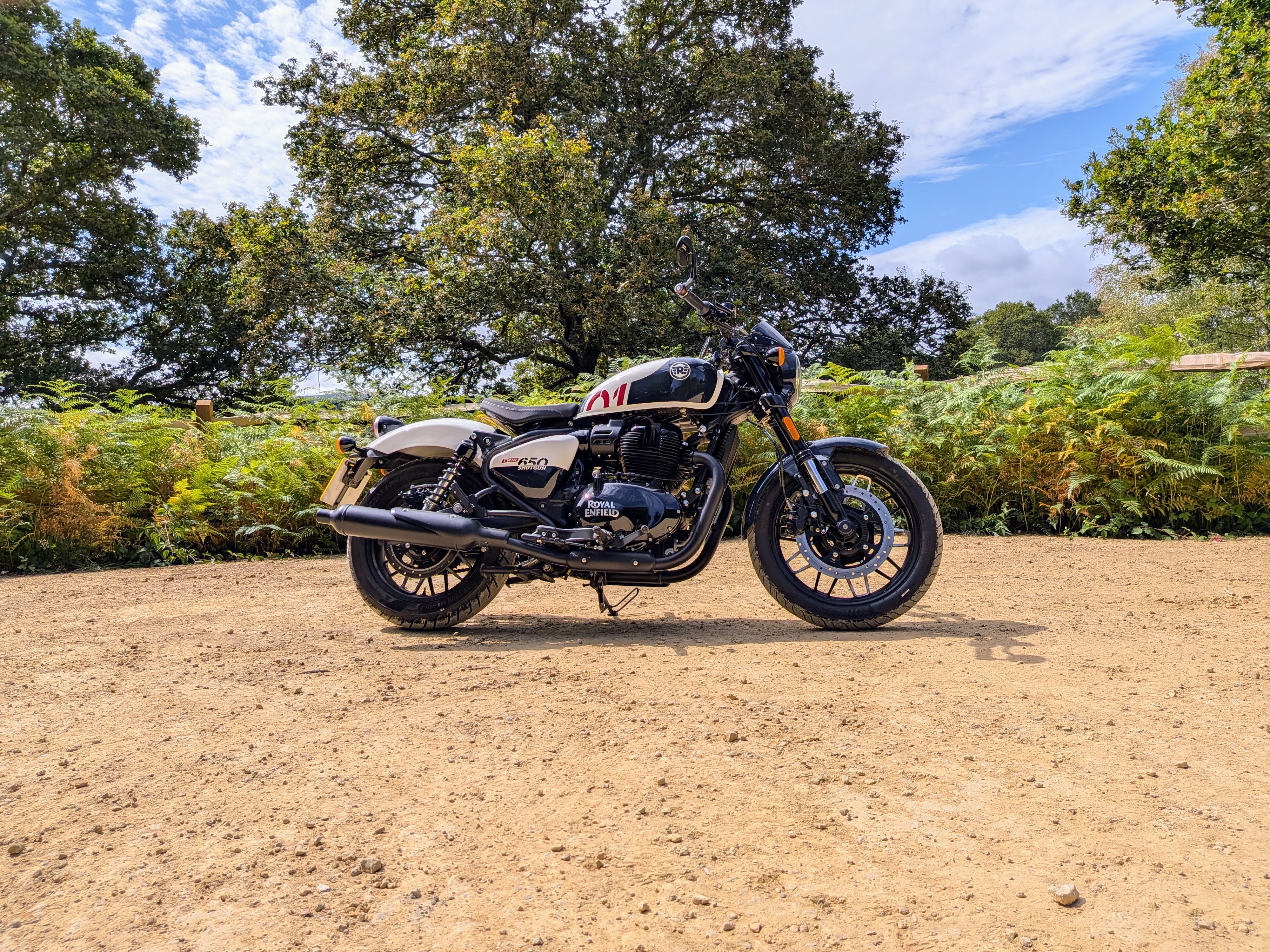
Oh, and if you want this bike with more modern styling, you’ll want to check out the Royal Enfield Shotgun 650. The Classic 650 has different tires and a slightly different rear subframe, but they’re otherwise the same bike.
VERDICT
Here’s something you wouldn’t guess from pretty much every photo you see of the Classic 650: it actually comes with a passenger seat. Removing it is a simple process of unscrewing two bolts. Royal Enfield chose to do just that for photos because the company thinks the bike looks cooler with a solo seat.

Which kind of underlines what this bike is and who it’s for. The Classic 650 is a functional and affordable piece of art. And that’s not a bad thing. Every motorcycle needs to be taken and assessed within context. For the Classic 650, the context is relaxed, sunny-day rides and being seen. It’s not incapable of being ridden from one end of a continent to another, but clearly that’s not its purpose.
And within its context, the Classic 650 is an excellent motorcycle. So much so that it is a solidly viable alternative to the aforementioned Bonneville T100. I owned a Bonneville T120 for a number of years, of course, so I can attest to the fact that Triumph does the same thing as Royal Enfield in using less-than-premium bits in unseen areas. I can attest, too, that Triumphs rust.
Beauty is in the eye of the beholder, but I would argue that the Classic 650 actually exceeds a Bonnie in aesthetics. It has less power and fewer rider aids but those are things you never use. In two years of owning a Bonneville T120 ─ riding it almost every day ─ I never once changed the riding mode; I never once set off the traction control. And that was despite my frequently using it out of context (eg, riding to work in a storm).

The Classic 650 would not be my choice as a one-and-only, go-everywhere, do-everything bike. But I would very seriously consider owning one alongside something that could be trusted to cover longer distances or crappier days. And its price tag is low enough that such a two-bike scenario is imaginable even for a skinflint like me.
If you accept the performance/use case limitations inherent to a motorcycle like this, you will love the Classic 650.
THE THREE QUESTIONS
Does the Royal Enfield Classic 650 suit my current lifestyle?
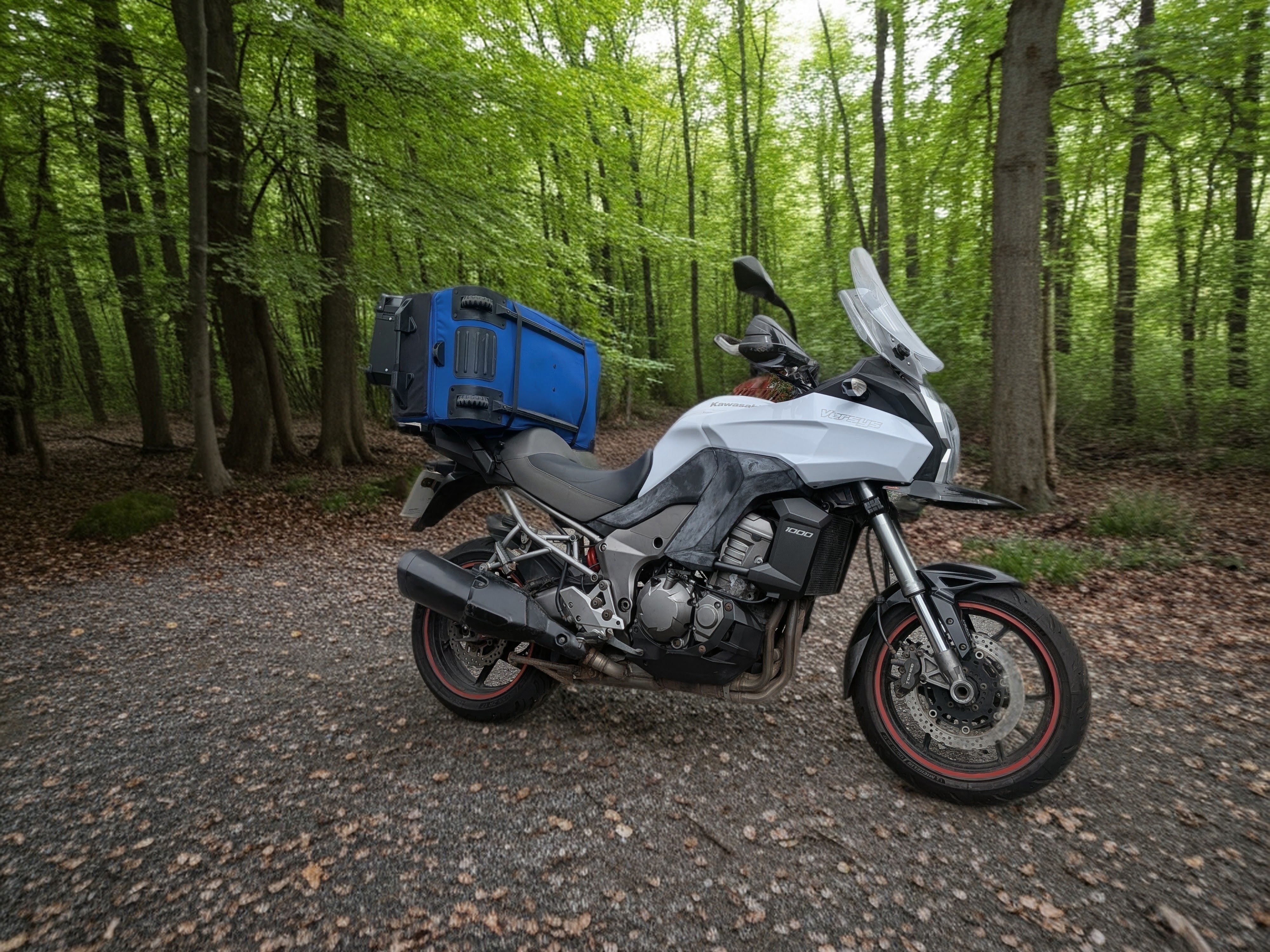
Yes. I no longer commute to work but if I did, I’d use my 2012 Kawasaki Versys 1000 for workhorse/distance stuff. If I didn’t have another bike I’d be less certain about buying this one.
That said, my current lifestyle is that of a dad who works from home. It’s fair to say I don’t have to go out in the rain, and it will be a while until I’m tackling continents. So, yeah, it fits me and if I had the money I would genuinely consider buying one.
Does the Royal Enfield Classic 650 put a smile on my face?
Without question. I worry that I have been too critical in this review ─ spending too much time identifying flaws that an owner might be happy to overlook.
The truth is, this is a beautiful motorcycle that is a lot of fun to ride. This is the bike you want to be seen on, the bike you want to park right in front of the cafe. You may want to get a book on the history of Royal Enfield, though, because this is also the bike that will spark conversations.
Is the Royal Enfield Classic 650 better than my current motorcycle, a 2012 Kawasaki Versys 1000?
Definitely yes and definitely no. In terms of vibe, the Royal Enfield is the clear winner. It looks better, it sounds better, it evokes more warm and fuzzy feelings on a summer day. No one has ever rushed up to ask me questions about my Kawasaki.
But last week, when I had to ride 340 miles to Cardiff and back in cold, wet, and miserable weather, I was pretty thankful to be doing so on a big tank of a bike. My 12-year-old motorcycle has more power, more torque, more rider aids, and more comfort than the Classic 650. As an all-round machine it’s clearly superior.
This is why I say I’d want both: the Versys 1000 to do the hard work, and the Classic 650 to remind me why I love motorcycling.

GEAR WORN IN PHOTOS
Helmet: Caberg Duke II
Jacket: Bering Norris Evo
Pants: Pando Moto Boss 105 jeans
Gloves: Aerostich Elkskin Competition Ropers
Boots: Redwing Spirit Lake

Leave a Reply