
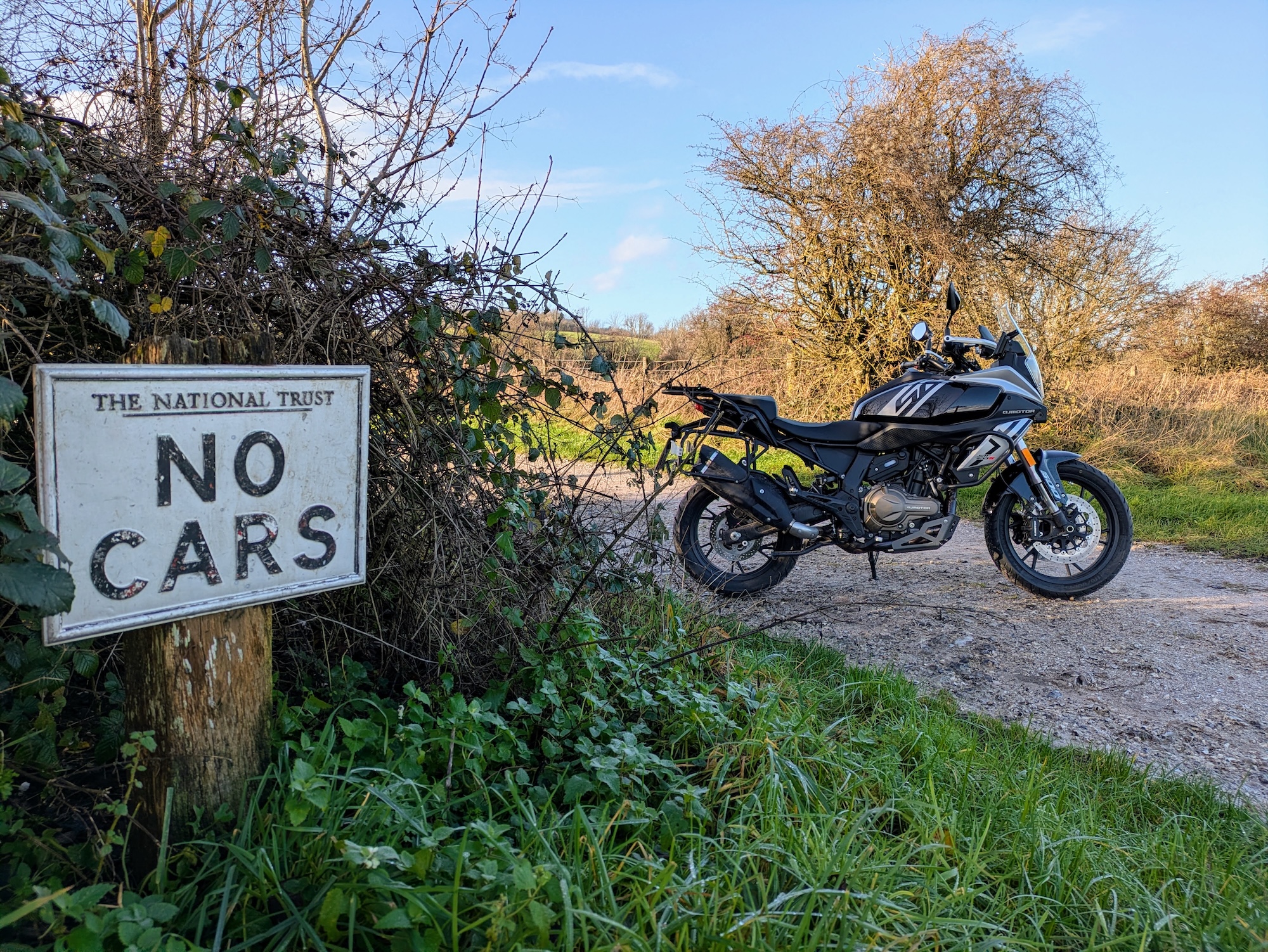
“Yes, but look at the price tag” – I suspect that would be most sales people’s response to my quibbles about the 2026 QJMotor SRT 600 S.
The China-made adventure all-rounder is imperfect, but look at the price tag: £4,699 as of this writing. That’s hard to beat when it comes to a new 600-class motorcycle. Hell, it’s hard to beat in lesser classes; the 125cc Yamaha XSR125, for example, starts at £5,001.
It’s hard to beat in the secondhand market, too. To my mind, the less powerful Honda CB500X (now known as the NX500) is the most obvious ‘traditional’ competition to the SRT 600 S. Finding one at £4,700, however, would mean accepting a model that is roughly three years old and has in excess of 10,000 miles on the clock.
But being super affordable isn’t a reason in and of itself to buy a SRT 600 S. After all, £4,700 is a lot of money – about the same amount that I have allotted when I go searching for bikes I can afford.
RELATED: Value vs. trust: Should you buy a Chinese motorcycle?
Is the bike actually worth that money? Earlier this year, I had the chance to spend two weeks riding the SRT 600 S through all kinds of weather (most of it miserable) and over long distances (QJMotor’s UK headquarters is roughly 300 miles from my house). Here’s what I learned:

How we got here
QJMotor is one of the many brands owned by Chinese manufacturer Qianjiang Motorcycle Group. Headquartered in Winling, Zhejiang Province, it’s been in operation since 1985. Part of the massive Geely group (which owns Volvo, among others), it is one of China’s largest motorcycle manufacturers.
In addition to QJMotor, Qianjiang is also the force behind Keeway, Benelli, and Morbidelli. Having operated in Europe for a few years, QJMotor arrived in the UK market in June of last year with a host of bikes with prices dramatically undercutting those of Japanese and European rivals.
Perhaps the most attractively priced of the lot is the SRT 600 S, with its promise of big bike feel and bling at beginner bike pricing. Equipped with tantalizing extras like auxiliary lighting, crash bars, and heated grips, the bike even comes with full hard luggage in the UK.
I find it impossible to believe that QJMotor isn’t deliberately taking a financial hit on this one. That’s a known tactic of Chinese manufacturers.
QJ claims its machine is an “ADV motorcycle designed to fuel your passion.” I’d say it’s a year-round runabout commuter that you won’t be upset about when it gets eaten by rust.

Look, fit, and feel
There’s something not entirely right about the aesthetics of the SRT 600 S. Like all Chinese motorcycles, it’s derivative; you can see the influences of other manufacturers. But here the look is particularly confused. It looks like one person had an idea, quit, another person had a different idea, quit, and a third person had to finish the project.
Throw a leg over its surprisingly low 805mm seat (that’s the same seat height that you’ll find on a Triumph Speed Twin 1200) and the bike is a little uncomfortable for a 6-foot-1 rider. The actual seat isn’t that bad – although it does have a somewhat firm, budget feel. Instead, the low seat height makes for a cramped riding position.
It’s OK for 45 minutes or so, but taller riders will want to avoid long hauls. Obviously, your opinion will vary based on your height. Riders with a shorter inseam may be delighted at the fact that they can get both feet down on an adventure bike.
Interestingly, the ergonomics of the bike were much more comfortable when I was standing up on the pegs. QJMotor’s UK man had mentioned taking this bike off road, so, despite the presence of alloy wheels and street tires, I took it down a nearby muddy lane. Its balance and feel turned out to be better than I’d expected.

Looking straight ahead, much of the lower part of your field of vision is filled with the bike’s gigante 7-inch TFT dash. The screen is reasonably easy to read, although bright daylight performance could be better.
Beyond the dash, you’ll find the non-adjustable windscreen, which did a decent job of keeping weather off my chest but not my arms. My head, too, was left in the wind.
You’ve got USB and 12v ports in the front fairing. The switchgear looks particularly cheap (the buttons of every Qianjiang motorcycle I’ve ridden so far have the quality of looking like they were originally intended for use on children’s toys), but it is uncluttered. Perhaps a little too uncluttered; navigating the bike’s menu is markedly less than easy.
The SRT 600 S comes equipped with auxiliary lights, which help to compensate for the not-great main headlight by giving you three not-great lights that combine to deliver OK performance.
The problem is that the LED lights are a little too focused – bright but not throwing a broad enough spread of light. So you end up with a sort of letterbox effect that leaves certain parts of the road unseen.

Engine and transmission
The SRT 600 S is powered by a 554cc liquid-cooled parallel twin engine claiming 55 bhp and 40 lb-ft of torque. According to the always-reliable internet, QJMotor uses a sleeved-down version of this powerplant in its 449cc SRT 450 RX.
It feels like things should be the other way around; this feels like an engine that used to be smaller which is now being asked to do more. The bike has no problem holding motorway speeds but it’s not going to stop anyone’s heart with the thrill of acceleration. There is very little low-end punch and it feels a bit wheezy as the speedometer approaches 80 mph.
That said, a 270-degree firing order helps give the bike a modicum of character, and the exhaust sounds so much better than you would expect from such a budget machine. Honestly, I’d say the exhaust note is the SRT 600 S’s best feature.
Power delivery isn’t as choppy as you’ll find on some Chinese motorcycles (for example, the Voge DS800X Rally) but I wouldn’t complain if QJMotor decided to put a little more effort into the throttle mapping.
The transmission is light, smooth, and consistent, offering no cause for concern when it comes to reliability. The bike’s gearing is a little odd, though. First gear is way too short. It’s basically a “rolling gear,” ie, you use it to get the bike rolling then immediately go into second.

Chassis and brakes
The SRT 600 S is set up well. An adjustable Marzocchi suspension contributes to the good balance I mentioned before and results in handling that is better than you’d expect from a sub-£5,000 motorcycle. With more off-road focused tires (and perhaps spoked wheels) you could see the SRT 600 S being an acceptable choice for riding fire roads and the like.
Not a great choice. But an acceptable one.
Things swing more in the bike’s favor on the road. I wouldn’t describe the SRT 600 S as nimble but it handles well. Or, at least, as well as you can expect from a “middleweight” that has a 220kg wet weight. Blame the steel frame, I guess.
Perhaps that weight plays a part in the bike feeling so planted on the road. As a commuter it’s a solid choice – especially for a rider who regularly has to tackle a mix of motorway and city.
Brakes, meanwhile, are a little spongy – lacking initial bite. I suspect that budget brake pads are to blame here and stopping power could be enhanced with pads that are a little more upmarket. As is, the brakes are good enough: managing to bring the bike to a stop reliably and without drama. Certainly there’s nothing wrong with the hardware; the calipers are Brembo-made ByBre, and the dual-channel ABS uses a Bosch system.

Goodies and technowhizzbangery
Where the SRT 600 S particularly manages to impress is in the long list of standard items that would be extras on a motorcycle from a ‘traditional’ manufacturer. I mentioned the auxiliary lights and full luggage. You also get crash bars, hand guards, bash plate, heated grips, and a heated seat.
Unfortunately, like the auxiliary lights, the reality of these things is a little less impressive. The handguards feel a bit cheap, the crash bars don’t seem to protect anything particularly important, the heated grips are effectively useless – even at their highest setting – and the heated seat is inconsistent: sometimes it works, sometimes it doesn’t.
This “meh” quality extends to the bike’s software. The high-end feel of the 7-inch TFT screen, for example, is spoiled by the fact that it showcases a bike menu that is byzantine and confusing – another example of a project that seems to have been taken on by three different people who didn’t communicate with one another.
An example of the system’s quirks can be seen in the fuel gauge, which stays at “full” for roughly half of the 20.5-liter tank’s capacity. It rapidly drops after that. Once you’re down to 5 liters of fuel, the dash starts flashing panicked warning signs.

Maintenance and reliability
QJMotor suggests replacing the oil, oil filter, air filter, AND spark plugs every 4,000 miles, with valve clearances checked every 25,000 miles. Those are pretty short intervals for a modern motorcycle.
Which means you’re going to be in a situation of having to teach yourself to do a lot of wrenching (remember that there are not yet any Haynes Manuals for QJMotor bikes). Or you’re going to lose the savings you made in the purchase price through frequent visits to your dealer.
Access to the sump plug and oil filter are easy enough – you simply have to remove the bash plate first – and oil changes are facilitated by the fact that the SRT 600 S comes standard with a center stand.
But removing the tank to get at the air filter – and, by extension, spark plugs – looks like a colossal ball ache. Quite a bit of fairing needs to come away before you can lift the tank.
In the UK, QJMotor motorcycles are imported by MotoGB. They’ve been in business for more than 25 years and – across the multitude of brands they support – sell in excess of 20,000 bikes a year. So, there’s reason to believe that parts will be available and that the two-year warranty that comes with every SRT 600 S will be honored.

There are a lot of money-saving aspects to the SRT 600 S, but its core elements seem solid and well built. The bike’s engine “borrows” quite a bit of its design architecture from the Honda NX500, which suggests that – in terms of engineering, at least – the powerplant is reliable.
The bike hasn’t yet been around long enough that you can get a viable perspective on its reliability from owners.
One other thing to consider: there is something about the SRT 600 S that causes it to get very mucky very quickly. It never looks clean.
Competition
The obvious competitor here is Honda’s famously reliable NX500. I’m pretty sure QJMotor would be happy with that comparison. Not only does its engine resemble the Honda’s, much of the SRT 600 S’s confused styling appears to be a (muddled) homage to the CB500/NX500.
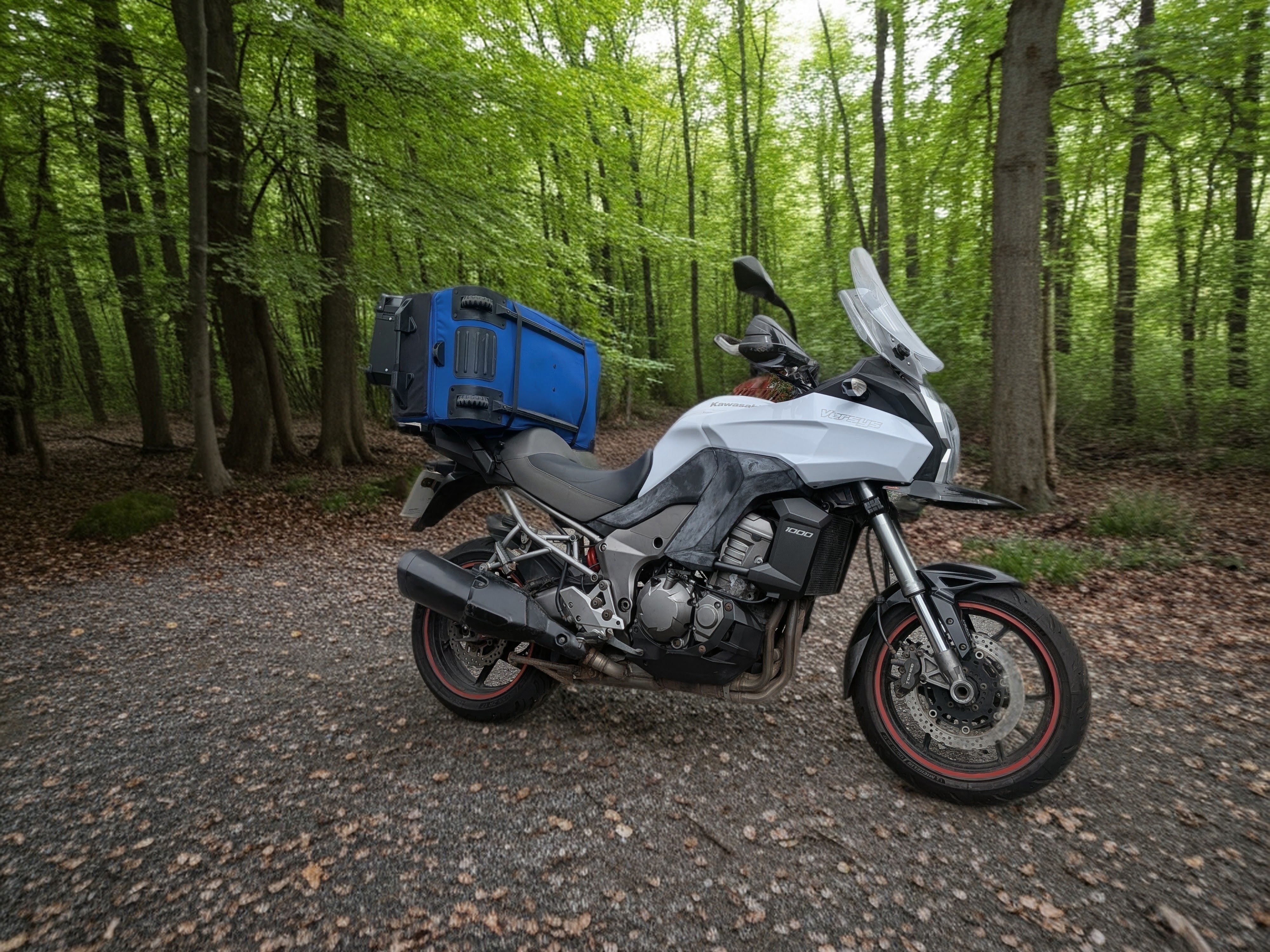
It’s in the 500 class that you will find the fairest competition for QJMotor’s machine. To put it against, say, a Suzuki V-Strom 650 or Kawasaki Versys 650 puts the SRT 600 S at a huge disadvantage, despite all of its fancy add-on bits.
It’s also the case that most of the competition for the SRT 600 S will be more off-road focused. Indeed, outside of Honda’s iconic machine it seems the most direct competition for the SRT 600 S is another bike made by Qianjiang: the Benelli TRK 500.
| ENGINE | PEAK OUTPUTS | PRICE | |
| Benelli TRK 502 | 499cc parallel twin | 47.6 bhp 33 lb-ft | £4,699 |
| CFMoto 450MT | 449cc parallel twin | 41.5 bhp 31 lb-ft | £5,699 |
| Honda NX500 (nee CB500X) | 471cc parallel twin | 47 bhp 31.7 lb-ft | £6,999 |
| Kawasaki KLE 500 | 451cc parallel twin | 44.7 bhp 31.4 lb-ft | £5,999 |
| Royal Enfield Himalayan 450 | 452cc single | 40 bhp 29.5 lb-ft | £5,750 |
| Voge DS525X | 494cc parallel twin | 47.6 bhp 32.4 lb-ft | £5,499 |
Verdict
Overall, the QJMotor SRT 600 S is not a bad motorcycle. It’s also not a great one. But, you get a lot for your money here.
There’s a difference between quantity and quality, of course. I’ll admit that I came away feeling that perhaps less would be more. Less bling, more focus on the stuff that matters, like an adjustable screen, improved fit and finish, a better throttle map, or a bike menu that makes sense.
IF you live close to a QJMotor dealership that you definitely trust, the SRT 600 S might be a good choice for commuting – a bike that you can use every day and in all weathers, without having to be too precious about cleaning or storage. The resale value of this thing will be sub-optimal, so why not ride it into the ground?
Personally, though, I’d still opt for the 3-year-old Honda CB500X with 10,000 miles on the clock. Well, actually, no. If I were in a daily commuting situation, I’d use that money to buy the best-condition Suzuki V-Strom 650 I could find, because like Miata is always the answer in cars, V-Strom 650 is always the answer in bikes.
But, I digress. It may be that my disappointment in the SRT 600 S stems from the fact that it’s not flat-out awful; there are a number of things to like about it. The wonderful exhaust note, the balanced chassis, Marzocchi suspension, the ruggedness of its steel frame. There are some strong foundations. Again, it feels like a bike that started out as one thing and was shoehorned into being another.
I wouldn’t buy one, but I wouldn’t criticize someone else for doing so. Because, hey, look at the price tag.

2026 QJMotor SRT 600 S specs
| PRICE | £4,699 |
| ENGINE | 554cc liquid-cooled parallel twin |
| TRANSMISSION | Six speed |
| POWER | 55 bhp at 8250 rpm |
| TORQUE | 39.8 lb-ft at 5500 rpm |
| TOP SPEED | n/a |
| SEAT HEIGHT | 805 mm |
| GROUND CLEARANCE | 190 mm |
| WEIGHT | 220 kg |
| FUEL CAPACITY | 20.5 liters |
| FRONT TIRE | 110/80 R19 Maxxis Maxxventure |
| REAR TIRE | 50/70 R17 Maxxis Maxxventure |
| FRONT BRAKES | Dual 320mm floating discs, four-piston radial calipers |
| REAR BRAKE | 260mm disc, two-piston caliper |
| FRONT SUSPENSION | 43mm adjustable USD forks |
| REAR SUSPENSION | Mono shock |



Leave a Reply