
I’m starting to develop a soft spot for Richa. The Belgium-based brand has been in the business of making motorcycle gear since 1952 and has a commendable habit of offering products that actually do the thing they’re supposed to do.
Case in point, the Richa Oberon waterproof boots that I’ve been wearing for a little under a year. They’re not going to win any style points, but they’re affordable (£130-180, depending on where you buy them), comfortable, and – most importantly – they are waterproof boots that are waterproof.
Here’s a breakdown of their features and my experiences of wearing them in all weathers over the past several months.

Richa Oberon WP boots details
| PRICE | RRP of €199 but you can find them for less at FC Moto |
| MADE IN | Pakistan (No. 125 on the Democracy Index) |
| SAFETY RATING | EN 13634:2017 – CE 2 | 2 | 2 | 2 |
| SIZING | EU 40-50 |
| WEIGHT | A single size-44 boot weighs 790 grams, according to my kitchen scales |
Looks, leather, and aging
Aesthetically, these are about as straightforward a “motorcycle touring boot” as a motorcycle touring boot can be. Indeed, if you were to ask AI to create an image of a motorcycle touring boot it would probably give you something more creative than this. But sometimes that’s exactly what you want: protection for your feet, not a conversation piece.
The caveat to this “nothing to see here” styling is the fact the boots have a double zip system (more on that below), meaning you’ve got a zip running down the inside of the boot as well the outside.
Richa says the upper is made of “premium aniline full-grain leather of top quality.” Ignoring the AI-ness of that copy, “premium” is a strong word to use here. That’s a bit like describing the food at Wetherspoons as premium. It’s good enough, it does the job, but premium? Let’s go with “enthusiastically adequate” instead.

That assessment comes after almost a year of regular use. I’ve fully put these boots to the test, subjecting them to day-long rides in torrential rain, road salt, and standing around in puddles. Under such conditions, they’ve aged like a British prime minister: rapidly and not as well as you might have hoped.
The boots are scuffed, cut, and frayed. They’re still fully wearable, though. Still safe. Still waterproof. They just aren’t pretty. I have a pair of Altberg High Hogg boots that I’ve owned for 10 years that look better. But, of course, those boots are clunky and markedly more expensive (£300 as of this writing), so swings and roundabouts.

RELATED:
Altberg Hogg All-Weather touring boot – Review
Fit, comfort, and walkability
Sizing is accurate in my experience – no need to size up or down. One of the things that struck me when I first received the boots was the fact that they were instantly comfortable – no break-in time required.
Richa boasts an OrthoLite insole. That’s not a name that means anything to me but I know that it does its job well. The very first time I wore the boot, I made the slightly questionable decision to ride out to Westonbirt Arboretum (in Gloucestershire – I highly recommend visiting) and spend several hours wandering around the 600-acre space. Not often a clever thing to do in brand-new boots. But the Oberons were (and still are) as comfy as any walking shoe.
That’s an aspect that serves as a strength when riding. There’s plenty of tactile feedback; feeling and operating pedals is easy. As such, they’re ideally suited to touring/sport-touring: all-day comfortable and making it easy to run up and down the gears in twisty sections.

The double zip gimmick
Arguably, the standout feature of the Oberon boot is, in Richa’s words “double side zippers for guaranteed easy entry, even with gloves on.” That means a zip on each side of the boot – along with a strong Velcro covering across the upper third of the zip. This, along with the fact that the zipper pull tab has hook-and-loop (aka Velcro) fastening, helps ensure the zips stay closed.
The thing is, though, I’m not sure that double zips are necessary. It feels like a slightly over-engineered solution to a problem that doesn’t exist. Maybe some people have fatter feet than me, though.
Additionally, I don’t love the idea of a zip running down the inside of the boot. This is the side that touches the bike, of course. Having the rough surface of a zip rubbing against paint can’t be good.
All that said, the zips are at least robust and of good quality. Ditto the Velcro. I feel confident that these fastenings would hold in an off, ensuring the protection remained on my feet as I slid and tumbled down the road.

Protection
The leather of the boot’s upper may not quite be premium but I feel it is definitely good enough to protect your foot in a slide.
You also get “Premium ForceFlex plates” (more Richa marketing speak there) in the soles to keep them relatively rigid and less inclined to break or twist in a crash. The heel and the toe sections are reinforced, you have additional covering where the foot hits the shifter pedal, and the ankles offer D3O armor.
The safety rating is “CE 2 | 2 | 2 | 2,” which means the highest level of protection available for abrasion resistance, impact cut, and transverse rigidity.

Are they really waterproof?
When it comes to waterproof boots, usually the thing that you actually care about – beyond styling and fancy-sounding proper-noun features – is whether the boot is actually waterproof. As I’ve stated above, the answer here is a confident yes.
I have ridden 300 miles through named storms while wearing my Oberons. They kept my feet dry when I rode through a deluge during the Honda CB750 Hornet E-Clutch press launch a while back. When I was taking pictures for my review of the QJMotor SRT 600 S, I spent about 30 minutes standing in an ankle-deep puddle while I moved around to photograph the bike at different angles.
Whatever I’ve thrown at them, the boots have never let me down. Normally I’m suspicious of waterproofing membranes that aren’t Gore-Tex, but the so-called “Aquashell” membrane used here has proven itself over the last year.

The presence of Gore-Tex is often the thing that jacks up the price of a waterproof piece of kit. The fact that Richa uses something else is at the heart of why the Oberon boots are so affordable.
Will the waterproofing hold up for another year? And a year beyond that? Only time will tell.
Meanwhile, I’d suggest getting something a little more robust for regular winter riding. You get excellent shifter and pedal feel from the Oberon boots. One of the reasons for that is that there isn’t a great deal of insulation. They’re solid three-season boots, but if you’re going to be clocking up big miles between, say, St. Andrew’s Day and St. Patrick’s Day, you can expect to suffer some very, very cold toes.
This issue will be exacerbated by the fact that the Oberon boot’s leather is not the bit that’s waterproof. The waterproof membrane sits beneath the leather. So, in heavy rain and puddle-standing the leather gets saturated and creates a cooling effect. Your toes will be dry but frigid AF.

Verdict
It’s a bit late in the article for a TLDR version of events, but here it is: price balances out criticisms enough that I’d recommend these boots. They do what they’re supposed to and you can’t really ask for more than that. Do I wish they were made in the UK or Europe? Yes. But they would cost at least twice as much.
I have my concerns, too, about longevity, but it’s worth noting that the nature of my job (year-round, long-haul riding) means that much of the gear I use wears down prematurely. So, my one year of use may equate to 3-5 years of use for some other riders.
To that end, although the boots are comfortable and reliably functional, I’m not entirely sure I’d choose them as a commuting boot solely because you may find yourself replacing them a little sooner than you like. Maybe. I don’t have much evidence to support that opinion; it’s worth noting that the Oberon boots I’m wearing still haven’t actually failed or shown any signs of doing so. They’re just ragged-looking.
Not that many people commute via motorcycle, anyway. For more recreational riders Richa Oberon boots are an excellent choice for spring/summer/autumn touring, allowing plenty of feel for enthusiastic riding. Simultaneously, they’re comfortable enough off the bike that you can wander around a town or beauty spot without complaint.
Meanwhile, I suspect that an occasional application of Altberg Leder-Gris (which is made in the UK and something I use on a lot of gear) or Nikwax waterproofing cream will help not only in terms of bolstering waterproofing but in slowing the signs of aging. I’ve only recently started doing this with my Oberon boots – I should have started sooner.

Other gear featured in photos
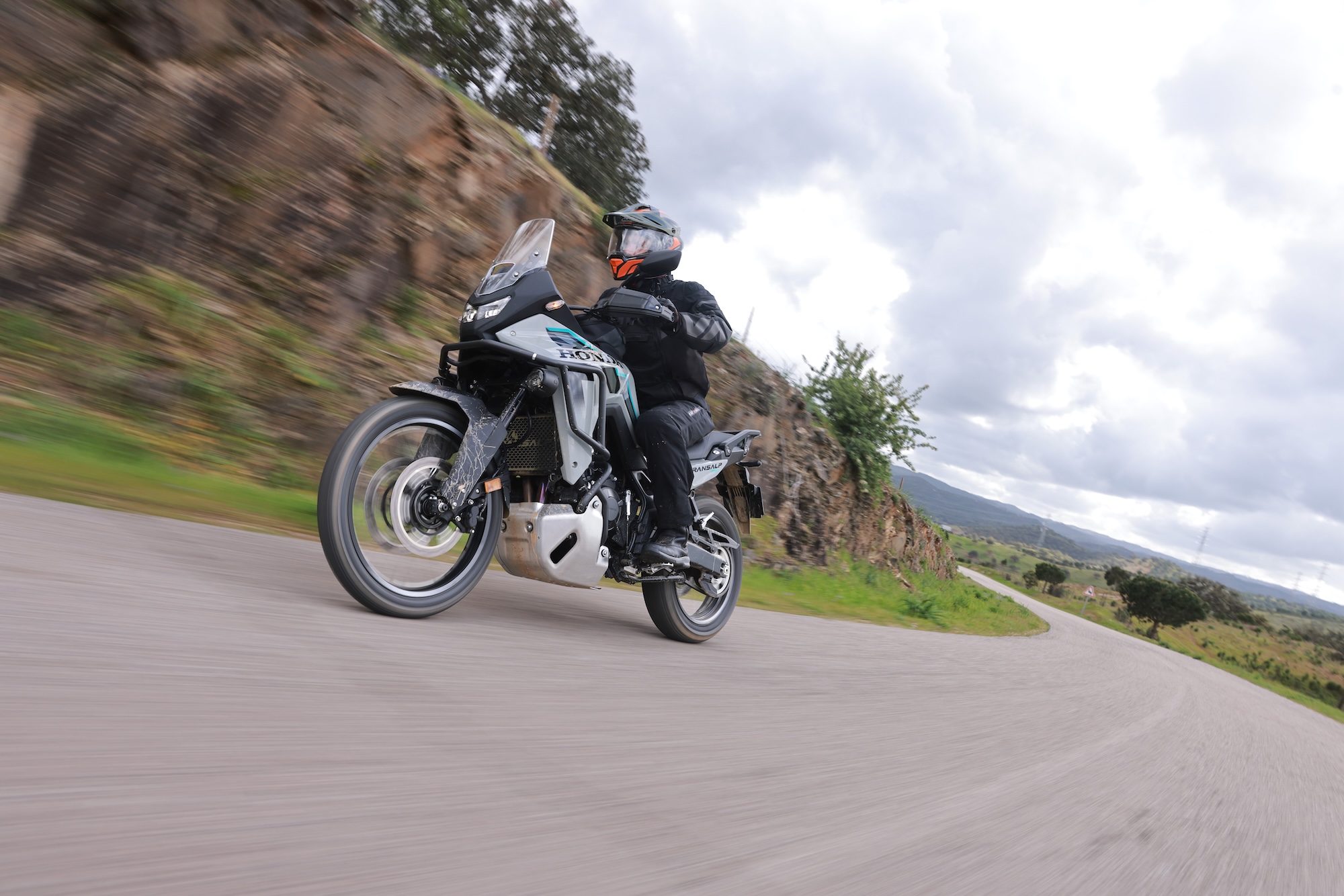
Helmet: HJC RPHA 60
Jacket: LS2 X-Master
Trousers: LS2 X-Master
Gloves: Richa Atlantic GTX

Leave a Reply