
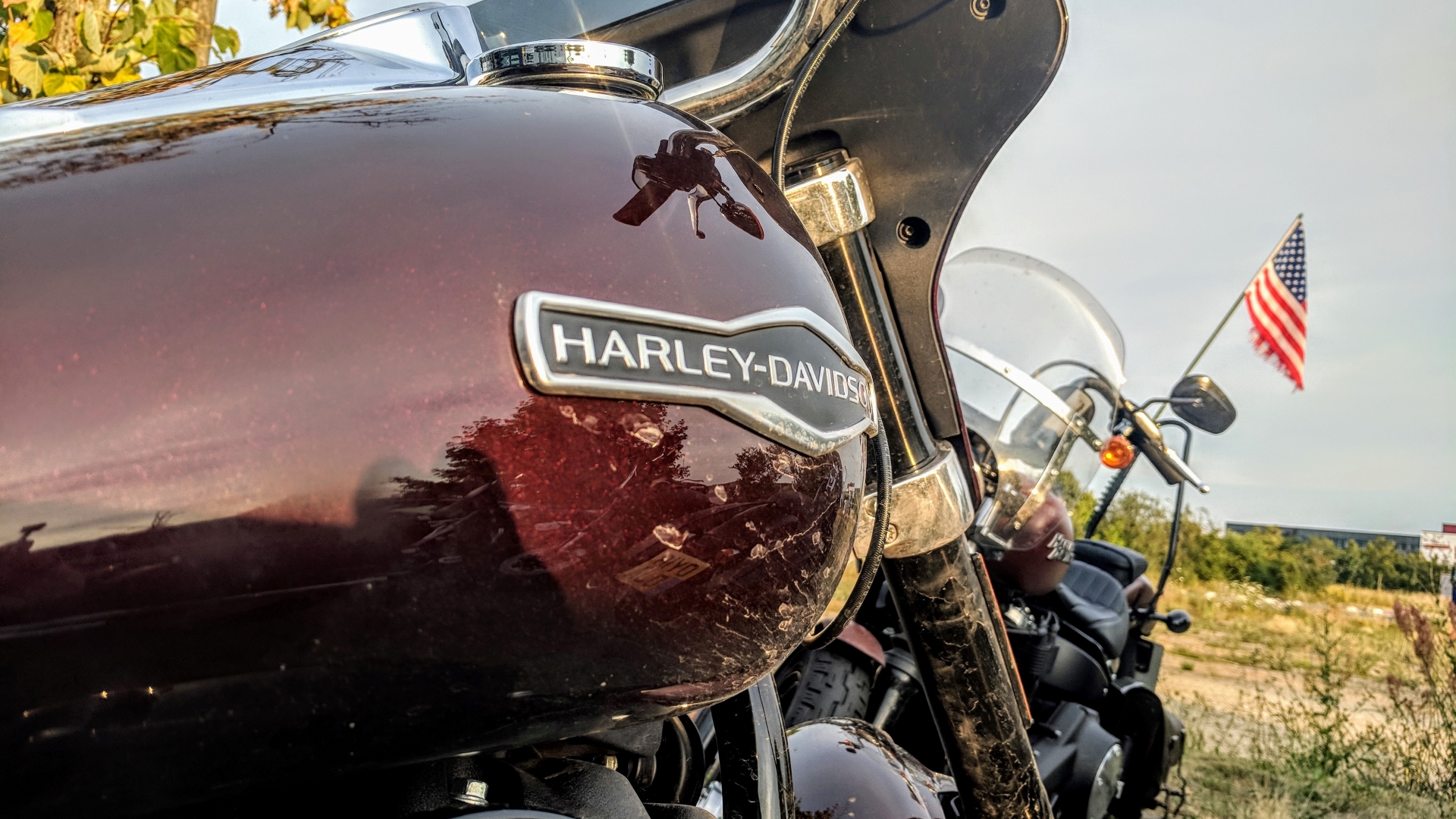
Harley-Davidson CEO Jochen Zeitz – who earned his spot five years ago when former CEO Matt Levatich was abruptly jettisoned – is set to retire, according to a report from the Milwaukee Journal Sentinel. The paper notes that a search for his replacement is already underway.
In and of itself, that’s not terribly interesting news. Zeitz is insanely rich – he has a vineyard in South Africa, for the love of Pete – and has spent most of his term as HDMC CEO dealing with one crisis after another. Faced with at least four more years of uncertainty, who wouldn’t be inclined to ride into the sunset? A life of strumming your guitar and sipping malbec definitely sounds better than a job in which everyone is angry at you about everything you do, all the time.
According to the Journal Sentinel, Zeitz made his intentions known to Harley-Davidson’s board of directors in the fourth quarter of 2024 (I’m willing to bet it was shortly after 5 November). He is aiming to leave sometime this year, after a suitable replacement is found.
As I say, initially that didn’t send up any red flags for me. As far as I’m aware, that’s the normal way in which normal companies operate. But, stop and think about it for a second, and you’ll probably realize that although the process is normal, announcing it is not. Usually, the whole ‘finding a new CEO’ process is a need-to-know sort of thing. I’ve worked for companies that have switched CEOs and it’s always been the case that employees were kept in the dark until the whole deal was done. One day you get called to a big meeting and a handful of executives you’ve never seen or heard from before cheerfully tell you that you have a new boss. There certainly weren’t any press releases announcing that the search was taking place.
“It was curious that the company made public its plans to find a successor,” observes Dennis Chung of Motorcycle.com.
An unhappy goodbye
It turns out that Harley may have done this because it wanted to get ahead of any negative spin that may came from another bit of boardroom news: the resignation of board member Jared Dourdeville. Just a few days before his resignation, Dourdeville reportedly submitted a letter calling for the resignation of Zeitz, and board members Tom Linebarger and Sara Levinson.

What that letter said is uncertain, but Harley has shared a heavily redacted version of Dourdeville’s resignation letter, which identifies a handful of complaints, largely around executive and senior management company culture.
“The shareholder returns of the Company under current leadership show severe underperformance,” he wrote. “What I am most concerned about are the foundational building blocks that underpin any company’s long-term trajectory: culture, transparency and accountability, and the willingness of the Board and management to put the Company first. These concerns have increased exponentially in recent quarters.”
Some of his criticism is a little duplicitous, effectively complaining that Zeitz, Lineberger, and Levinson have been in the Harley fold for too long, while simultaneously lamenting that Harley-Davidson has suffered unusually high turnover in recent years, writing: “the Company has had a revolving door of senior leadership, further depleting Company culture.”
So, which is it? Do you want new blood, or experienced hands?
Declining sales and high-school-level drama
More concretely, Dourdeville points to a continued slide in sales as being troublesome, with core products – touring bikes and cruisers – suffering a 20-percent drop since 2019. He also gives numbers to something I’ve lamented: a lack of legitimate entry-level products.

“Harley-Davidson appears to have a void at the entry level of its product lineup,” he wrote. “To be specific, the sales of entry-level products have fallen 75% since Jochen became CEO.”
So, I guess it isn’t just me who dislikes the new Sportster platform.
Meanwhile, one of the most intriguing sections of Dourdeville’s letter is the part that’s most heavily redacted and deals with Harley’s response to the Robby Starbuck campaign to kill the company’s DEI initiatives. Exactly what he thinks the company should have done is uncertain but he makes it clear he didn’t like what they did do.
Outside of that, Dourdeville echoes a lot of the long-standing complaints that dealerships have had for decades now – you know, the “where’s the heart, man?” argument. The idea that the corporation is placing too much strain on dealerships while failing to understand what makes them successful.
For its part, Harley has issued a bullet-listed response that effectively says, “This is the first time we’re hearing this stuff from you, and a lot of what you’re saying is wrong” pointing out that Dourdeville has never raised these issues before, that turnover is not high, and that, yes, there should be an entry-level model but the company is working to remedy that by 2026 and Dourdeville knows this. Discuss.
A few thoughts on all this
I think Dourdeville is right to be concerned about the lack of entry-level product. The Street 750 and Street Rod 750 were kind of duds, but the core of the platform was solid. The engine was fun and if Harley had put a little more effort into fit and finish, it could have been a genuinely attractive proposition. Instead, Harley dumped that platform and ushered in an updated but far too expensive Sportster platform that looks bad, lacks character, and isn’t easy to customize. That was dumb.
If the problem is set to be addressed within the next year, as Harley says, that’s good.

Meanwhile, I still don’t think that Harley’s scrapping of its DEI policies was down to the campaigning of someone that a lot of people have never heard of. As I wrote on Motorcycle.com at the time, I suspect the real reason for its actions is more cynical.
“If you take something that a business should just be doing because it’s the right/moral thing to do and wrap it in a financial context you turn it into a commodity – a thing to have. Or not have,” I wrote. “Like many other good ideas in the company’s storied history… DEI has been shuffled out of view for one simple reason: money.”
Dourdeville’s take on the whole Starbuck affair is unknown but the fact that he’s criticizing Harley’s actions suggest to me that he either thinks the company was dumb for dropping DEI, or dumb for acting in such a way that it looked like it was dropping DEI in response to one man’s bitching. I’d agree on both counts. There’s nothing wrong with inclusion, and you shouldn’t chickenshit away from it because some internet guy (who probably can’t even ride) is butt-hurt about it. One of the things that helped me change my previously negative attitude toward Harley was its late 2010s efforts to connect with minority communities: women, blacks, Latinos, etc. Inclusion and acceptance are inherent parts of freedom; they are 100-percent in alignment with Harley’s core values.
Lastly, I can’t help but be a little sceptical of Dourdeville’s criticism of work-from-home culture and his leaning into the “hoorah the common man” rhetoric in echoing of dealership complaints. Like many manufacturers, Harley has always had at least a little friction with its dealerships. This largely has to do with different perspectives, with each side thinking it’s pretty sure it knows what the other side should be doing. In a way, both sides are right, and both sides are wrong.

When I talk to Harley dealers (or Triumph dealers or BMW dealers) I hear a lament that sort of goes like this: “These corporate guys don’t understand my customers. I’m here on the ground. I’m the one selling the damned bikes. I understand the product and I get what the customer wants and how he thinks.”
With a successful dealership that’s probably true; the dealership does understand its customer. But, it may only understand its customer. The counter-/corporate argument is that the dealer doesn’t necessarily understand the person who is not yet their customer. Those are the people that the supposedly out of touch marketers are trying to reach: new people to sell to.
Harley’s next CEO
I don’t dislike Zeitz. By all accounts, he was one of the driving forces behind LiveWire, which was a really good motorcycle. Of course, he was also the guy who killed it (or, rather, pushed it out of the Harley brand, which, ultimately, will probably kill it). To that end, my impression of Zeitz is that he’s a business guy. He sees Harley’s products as, you know, products, and not anything more.
I find it hard to believe that he is capable of viscerally understanding how many Harley riders define themselves by their bikes – people for whom being a Harley guy or gal is an intrinsic part of their personality and self-image. Zeitz isn’t emotional about H-D.
To this end, he was arguably the right guy for the time, able to make cold decisions when cold decisions needed to be made. Based on his success at Puma, Zeitz had ostensibly been brought in as a turnaround man – there to drive the dramatic change that his predecessor, Matt Levatich, had seen the need for but hadn’t managed to implement. Instead, global events largely led to Zeitz being a crisis manager, steering Harley through some very choppy waters: eg, EU tariffs, the pandemic, supply-chain issues, global economic slowdown, and a rising cost of living.

There are, as I say, some more choppy waters ahead. Regardless of whether you think the Trump administration’s actions are good or bad, you have to acknowledge that they are disruptive and that they exacerbate the challenge of business planning. Nonetheless, I don’t think it’s a bad idea to have someone else navigate the ship going forward.
Personally, I always felt that the proposals formed under Levatich weren’t given enough time to breathe. Back in 2018, the MoCo announced plans to create 2 million new US riders, dramatically increase its international footprint, and launch 100 ‘high-impact’ models by 2027. Just 18 months later, it was showing Levatich the door. And Zeitz backed away from all of it. The Street platform was shelved, LiveWire was shuffled away to a side-hustle, planned projects like the Bronx 975 street bike were dumped, outreach to new and non-core riders was abandoned, and focus turned inward, leaning on a dwindling number of core riders. That’s an OK way to get through a crisis, but it’s not the way to grow.
As such, Harley’s next CEO either needs to redefine what success looks like – ie, embracing/accepting the idea of Harley-Davidson as a smaller player in the game – or revisit some of the good ideas that have been dumped in the past five years. Dealerships will moan because they will be expected to work harder and sell to customers they don’t (yet) understand. Old boys will whine because… well, that’s what old men do. They bitch about everything, even when they’re getting their way. But something new is what’s needed.
As I said at the start, being CEO of Harley is a job in which everyone is angry at you about everything you do, all the time. That has been true for as long as Harley has had CEOs. It’s a company that is simultaneously blessed and cursed by an active, engaged, and loyal fanbase who are convinced they know better than any of the people running the company. It’s a job I wouldn’t want – despite the fact it clearly pays well – but, for whoever gets it, I wish him – or her – well.




Leave a Reply