
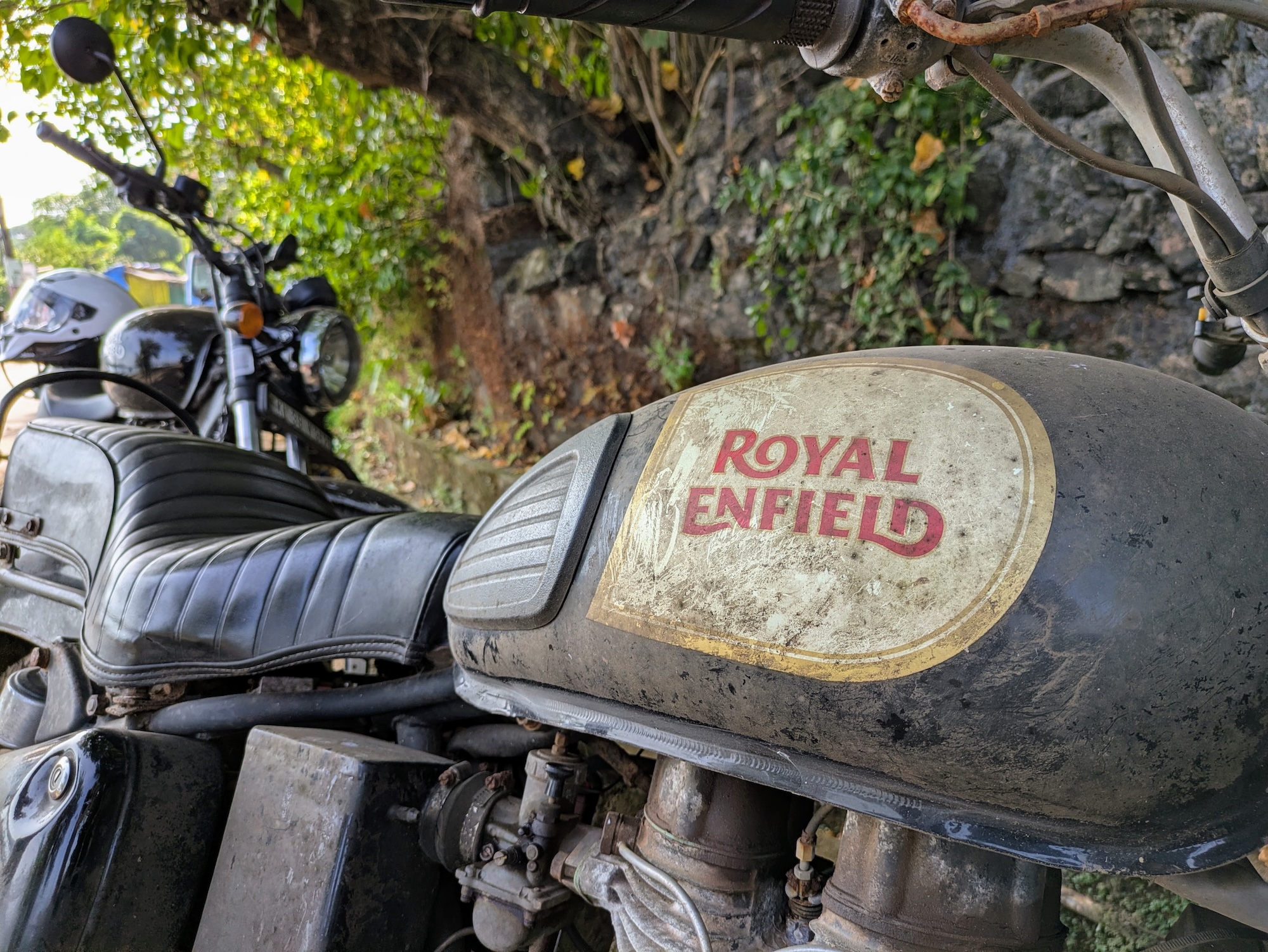
“That was an informal interview,” Royal Enfield’s PR man says pointedly.
I am standing backstage at Motoverse, Royal Enfield’s annual get-together in Goa. Myself, Saffron Wilson of MCN, and Driss Abdi of GQ France have just finished chatting with the company’s head honchos: Chairman Siddhartha Lal and CEO Govindarajan Balakrishnan (also known as BGR). We are the only European media to have been extended the honor.
“Siddhartha and BGR aren’t big on media training,” continues Royal Enfield’s man. “They live and breathe this brand but their phrasing might not be exactly what you’d get from, say, me. So, if you plan to use any direct quotes I would appreciate it if you’d run them by me first.”
He says the word “appreciate” in a long and menacing way, letting us know that “appreciate” is not at all what he means. What he means is: “If you ever want to attend another Royal Enfield event, if you ever want to borrow another Royal Enfield press bike, if you ever want Royal Enfield to even entertain the idea of advertising in your publications, you will not publish direct quotes without my approval.”

I’m a pretty pro-Royal Enfield guy, but something about that just doesn’t sit right with me. I don’t have anything particularly negative to say – if anything, I worry that my attitude toward the brand is a little too fawning – but I just don’t like the idea of publishing an article that I know is ‘100-Percent Royal Enfield-Approved.’ If I have any journalistic integrity, that sort of thing would be the death of it.
So, for the most part this article has eschews direct quotes. In the very few places that I’ve put in quotes, I’ve not attributed them. I’m hoping that will be enough to keep me on Royal Enfield’s good side. Even without quotes, this article shares the highlights and themes of a one-hour conversation with the two men. It touches upon the company’s storied history, how it got where it is, where it’s going, and what it’s working on. Coming away from the conversation my lasting impression was that the company is in good hands.
125 years in the making
You probably already know – and if you don’t, the company will tell you many times over the coming months – that Royal Enfield traces its history back to 1901. That was the year that the then-British company produced its first motorcycle. That makes this year, 2026, pretty damned special.
There are other brands that claim long histories – Indian Motorcycle, for example, is also celebrating its 125th anniversary this year – but none of them have been in continuous production for all those years, like Royal Enfield has. In real terms, it is the oldest motorcycle manufacturer in the world.

You will probably also already know that things haven’t always been great for Royal Enfield. In the 1950s, the manufacturer was suffering the same post-war fate as the UK’s other storied motorcycle names – like Triumph, BSA, and Norton – so it shipped production to India to save costs.
Things on the UK side got worse and worse but in India the company secured an incredibly fortuitous contract with the Indian Army (which it still has). When the British side of the business finally tanked, the Indian government opted to prop up its motorcycle supplier to ensure its vital supply of Bullet motorcycles remained unbroken.
Now a fully Indian operation, Royal Enfield limped on for a few decades, producing the same bike over and over and over again. Famously, a Bullet from 1994 uses parts that are interchangeable with those used for a Bullet in 1954. With such a stultifying lack of innovation, the company was hardly a shining star when Siddhartha and BGR first arrived on the scene in the 1990s.
Both came from Eicher Motors, an automotive company founded by Siddhartha’s father, Vikram Lal, and the parent company of Royal Enfield since 1994. Through sleepless, cigarette-filled nights they undertook the long, arduous process of changing the company’s culture, its direction, its ambitions, its products, and so on.

At EICMA last November (no one told me not to use direct quotes from that event), Siddhartha reflected on the company’s 100th anniversary (in 2001) and the fact that there were no celebrations.
“We were on our deathbed, from a company perspective,” he told journalists. “It wasn’t a time for celebrating.”
Somehow they survived. Quality improved, processes were overhauled or refined, new factories were built, production increased. These days, the company is selling more than 1 million motorcycles a year – some 10 percent of them in the international market.
Royal Enfield’s Kaizen approach
Royal Enfield has long adopted a slowly, slowly approach, borrowed from the Japanese concept of Kaizen. That’s a business approach that focuses on the long-term, cumulative benefits of small – sometimes seemingly insignificant – improvements.

“Continuously improve continuously,” is the phrase that was used.
Kaizen is an inclusive approach, addressing every single aspect of an organization, from how data is collected to how soft the toilet paper is in the employee toilets. It’s an approach that requires everyone to be all-in. And Royal Enfield seems to have that. Every person I have spoken to from Royal Enfield seems to be fully committed to its success.
They are genuine riders who genuinely love the brand.
“I think we have a very different culture,” said someone in our conversation. “Most of us, most of the management, we ride a lot. And we enjoy riding. We go and ride and understand that joy of riding, the pain of riding – the love, the heartache, everything rolled into one. You can only get it when you ride. You can’t explain it through a McKinsey spreadsheet or something like that.”
A focus on the heart
Siddhartha and BGR are not the kind of people you would describe as dreamers. Their straight-forward honesty about things can be surprising if you’re used to hearing the platitudes of executives in American and European companies. But they understand that for customers – and, indeed, for them personally – Royal Enfield is more than just a business.

In my article about attending Motoverse, I mentioned BGR’s attitude toward the event and its attendees – his feeling that it needed to be organic and that Royal Enfield’s role should not be to guide or drive the way that people connect with the brand but to support it.
Broadly speaking, there seem to be two main ways in which Royal Enfield riders connect: 1) they use their bikes for everything; 2) they take immense pride in their bikes. So, the company tries to deliver bikes that are simultaneously beautiful and desirable, but also functional and affordable. The bike you can ride every day while taking delight in its look, feel, and character. But also the bike you can afford.
As the company has expanded beyond its modern classic safe space, it has kept that philosophy intact, be it in the adventure segment with models like the Himalayan 450 Mana Black, or the more street/modern naked segment, with models like the HNTR 350 or Shotgun 650.
Why Royal Enfield won’t build a 1000cc motorcycle
Over the years, plenty of Western riders have pined for bigger, more powerful Royal Enfield models. It’s one of the reasons people got all in a tizzy about the ‘still not headed for production’ Himalayan 750. Siddhartha and BGR explained, however, that they are in no rush to go big.

The decision to operate in the middleweight space was a deliberate one, made many years ago, and it’s paid off. If you go back to, say, 2005, very few of the Japanese or European manufacturers were making bikes in the 350cc-500cc range. If they were, they weren’t putting in much effort.
Royal Enfield decided there was room to succeed in that space. It was right; the overwhelming majority of the 1 million+ motorcycles that the company sells each year have a capacity of 500cc or less. Arguably, its success in this space helped spawn the current boom in the sub-500 market, with the likes of Triumph and Suzuki rushing to take part. Siddhartha joked that the company has been so successful in its strategy that Honda has since started making copycat bikes in homage.
At present, its air-cooled 650cc parallel twin engine – used in bikes like the Classic 650 – is the largest powerplant that Royal Enfield offers. That’s aimed primarily at the Western market. Yes, the company has been testing a 750cc parallel twin, but I got the sense from Royal Enfield’s head honchos that production is a lot further away than internet rumors would have you believe.
And you certainly won’t see anything larger than a 750. Partially this is all part of the company’s slowly, slowly approach. But, equally, the company hasn’t yet determined how it could uniquely contribute to the ‘big’ bike space.

Here’s another quote that I won’t attribute: “Why would we go into a 1000cc space? When all sorts of [other manufacturers] are making amazing motorcycles in that space? I mean, what are we going to offer differently? If we can answer that question, then, maybe, we will.”
Flying Flea and why you can’t buy an electric Himalayan
For a company that’s keen on avoiding the kind of big steps that lead to big regrets it’s perhaps surprising that Royal Enfield officially launched its Flying Flea sub-brand of electric motorcycles late last year. The sub-brand had been teased at EICMA 2024, but it was in November ‘25 that it got its big push
Matt Cardenas, Royal Enfield’s head of project strategy says the first Flying Flea model, the C6, will likely hit the market in spring of this year, with the more visually interesting S6 arriving late in the year. Specs and prices have not yet been announced but the general assumption is that it will have a power output equivalent to that of a 125cc motorcycle and a price point that is in line with Royal Enfield’s philosophy on affordability.
Siddhartha and BGR were straightforward, however, about the challenges that the new sub-brand faces. They are not expecting astronomical sales – not right away, at least – and they have no immediate plans to offer anything more powerful.

In other words, although the electric Himalayan we saw being tested last year looks amazing and production-ready (I saw it up close and in action at Motoverse) it will be sitting on the proverbial shelf until who knows when. In an interview with Visordown last year, former chief growth officer Mario Alvisi said: “At this stage, this motorcycle is purely a test bed, and there are no plans to bring this motorcycle to production.”
This was confirmed in my conversation with Siddhartha and BGR. They didn’t say this outright, but I got the feeling that the electric Himalayan – as it is now, at least – simply doesn’t meet their expectations for what a Royal Enfield should be. A production version would cost too much and not go far enough on a charge. In other interviews, Siddhartha has said that battery density is “not there yet.”
Swagger and paranoia
Observing the incredible turnaround that Royal Enfield has seen, one that was engineered by these two men, I asked them if they feel a sense of swagger now: a sense of confidence and pride, maybe even a bit of cockiness about what they’ve achieved.
They were bemused. Indians are great capitalists but so far Western arrogance isn’t really a thing. Why would you have “swagger?” Why would you stop and tell everyone how great you are when there’s work to be done?

As Royal Enfield turns 125 years old, Siddhartha and BGR say they are more willing to see the brand and its successes feted than they once were, but they have no intention of glorifying themselves. They remain focused on going forward.
“We’ll celebrate,” one of them said. “But in the morning, we’ll be back in the office facing problems. The paranoia is always there.”
Indian motorcycles vs Indian Motorcycle: The impact of good leadership
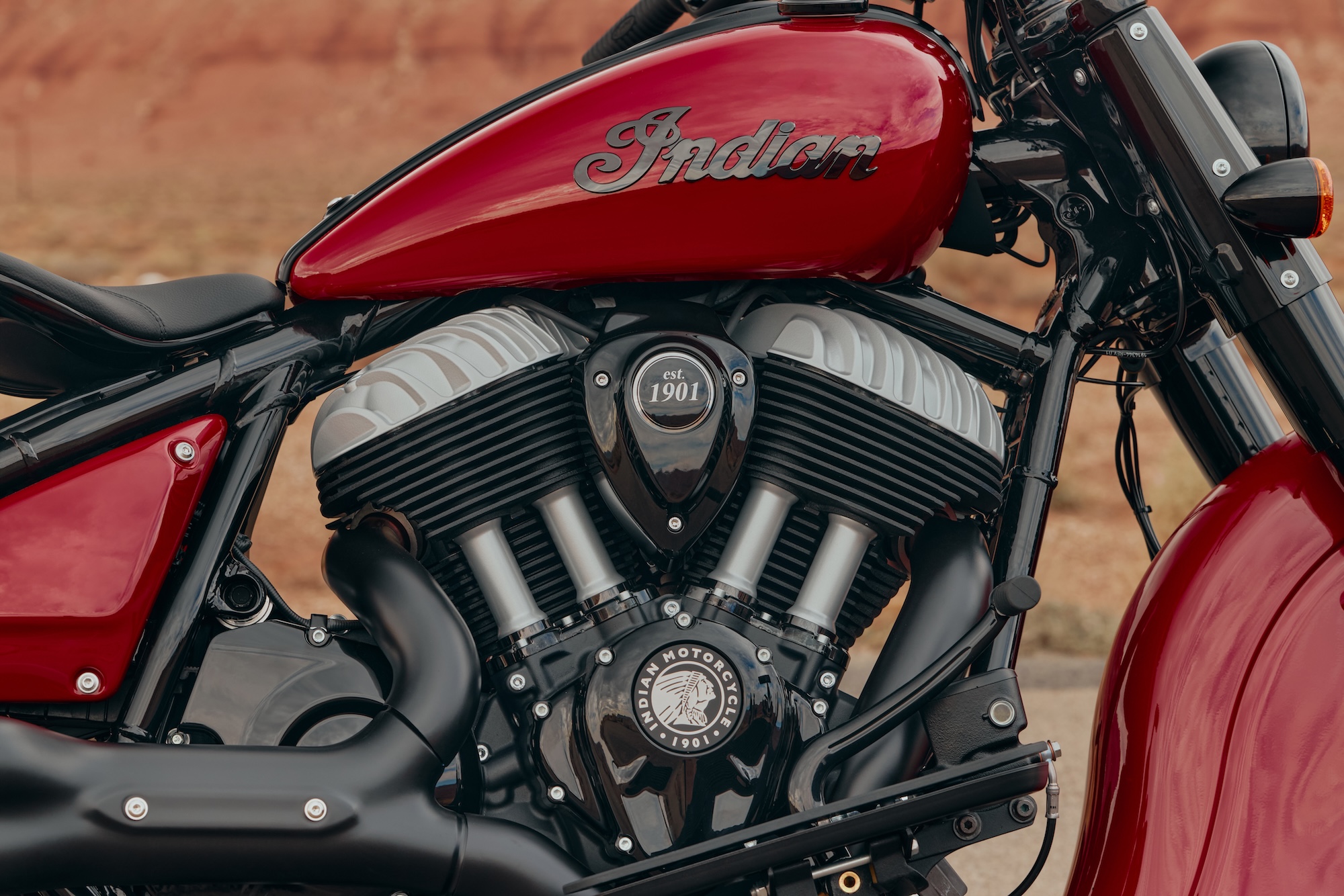
I mentioned that Indian Motorcycle is also celebrating its 125th anniversary this year. They are very different companies, in quite different countries, operating in different segments, but it is interesting to see where they parallel.
Each company’s fortunes went south in the 1950s, for example. Indian ceased production in 1953; Royal Enfield effectively left England in 1955. Interestingly, from about 1955-1960, Royal Enfield imports to the United States were rebadged as Indian Motorcycle models.

From the ‘50s, both companies spent roughly half a century effectively in the wilderness. Royal Enfield produced the same bike over and over and over again to dwindling returns, while Indian went through half a dozen owners and countless starts and stops.
For Royal Enfield, its first major step to redemption came in 2008, with the Classic 500, a bike with an upgraded engine and improved quality. For Indian Motorcycle, its first step back was threefold: the Chief Classic, Chief Vintage, and Chieftain that were launched in 2013 with Polaris’ money, infrastructure, and expertise.
In 2026, Royal Enfield is producing more than 1 million motorcycles a year, while Indian is relaunching under the eighth owner in its history (after the original 1901-1953 era, there’s been AMC, Floyd Clymer, Alan Newman, IMCA/Gilroy, Stellican/Kings Mountain, Polaris, and now Carrolwood).
Luck, market, and segment all have something to do with the dramatically different fortunes of these two companies, but when you look at the current success of Royal Enfield you have to think that leadership has been a big part of it, too.

Sure, Indian has had some competent leaders, but Royal Enfield has had two men who have dedicated themselves completely to their company’s success. BGR will be 57 years old this year; Siddhartha 53. Having met them, I’m confident they are not ‘retire early’ types. All things considered, we can be relatively confident that Royal Enfield will benefit from their leadership for at least another decade.
And through their leadership they have built a culture of all-in dedication, passion, focus, and anti-swagger that you can see in other higher ups, ie, the people who will likely take over when BGR and Siddhartha step down. If you’re a fan of the Royal Enfield brand, there’s a lot to be positive about when looking to the future.

Leave a Reply