
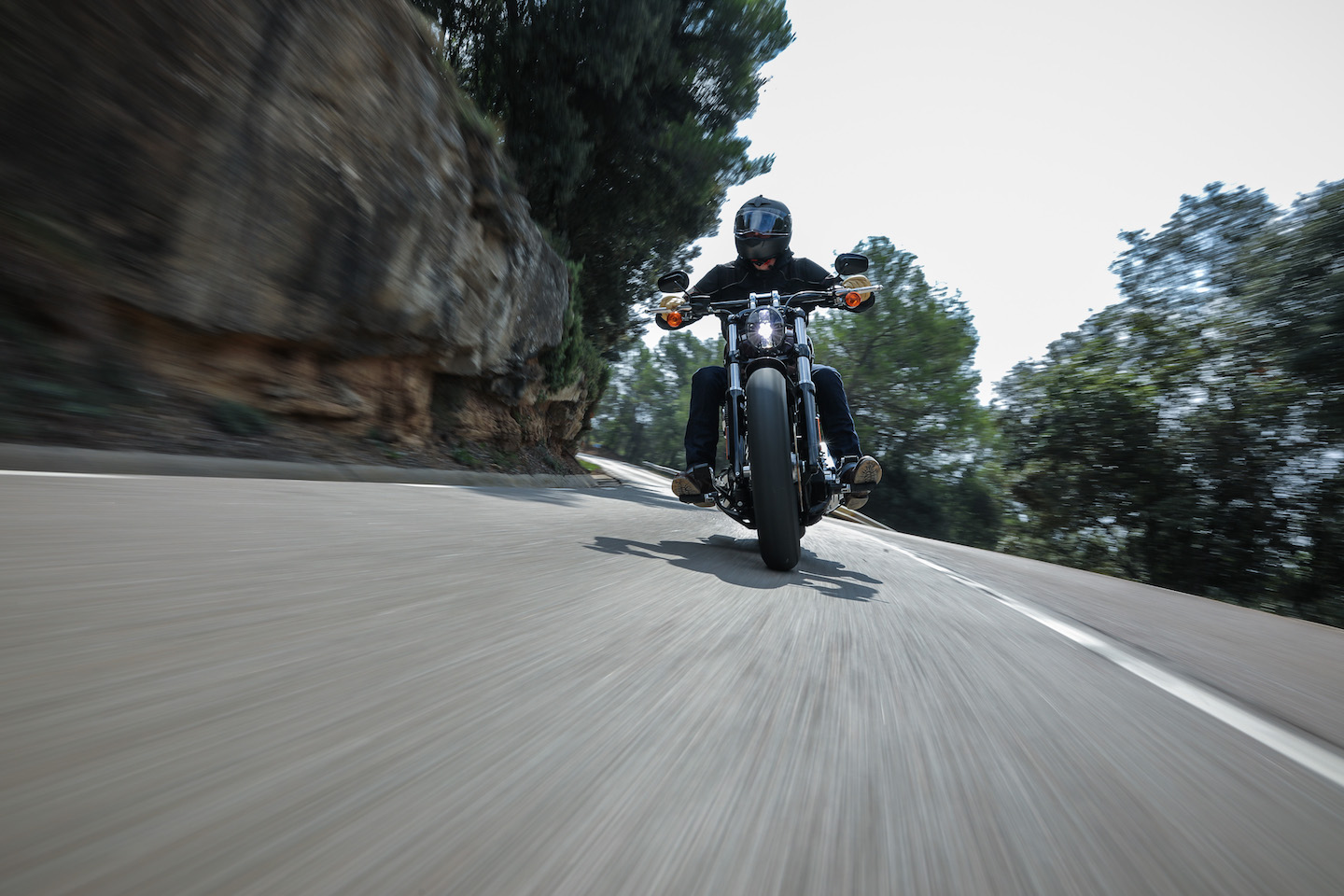
I’m usually the ‘motorcycle guy’ in my friend groups. It’s part of how my friends define me. If they hear or learn anything about motorcycles or motorcyclists, they make sure to let me know about it in conversation. If they have any questions about motorcycles or motorcyclists, they ask me.
I like being the motorcycle guy. I especially like it when a friend of mine finds themself interested in taking up biking. And I always do my best to be the sort of person that I wish I had known when I first got interested in motorcycling.
My first foray into biking came when I was 18. I got my motorcycle license but I was so afraid of asking dumb questions, of being ridiculed or belittled for my motorcycling ignorance, that I let that interest die for a number of years. When that interest reignited I started this blog in part to create a space where I could ask and try to answer those ‘dumb’ questions.
RELATED: What you need to know as a new rider
The other day, out of the blue, a friend of mine in Dublin sent me a text: “The Svartpilen 401. What do you think about that?”
Ah, the hook bike. We all have the bike that grabbed our attention and made us start to think: “Ooh, maybe this could be my sort of thing.”
For me it was the Triumph Thruxton. For my friend, it seems, it’s the Husqvarna Svartpilen 401.

I replied with my thoughts on the bike (“I am suspicious of everything KTM does”), which then led to a meandering hour-and-a-half-long conversation that ended with my encouraging him to hit me with any question he might have, no matter how dumb he might think it is.
Here are those questions, and my best attempt to answer them. What’s interesting is how many of these were questions I had. If you’ve got something to add, please do so in the comments.
How safe will I be? What do I tell my wife and kids about it, and the risks involved? What age should my kids be before I risk life and limb?
The question of safety is one that motorcyclists hear about a lot. One thing I’d suggest is to ask yourself how many people you personally know who have been seriously injured or killed while riding a motorcycle. Then ask yourself how many people you personally know who have been seriously injured or killed in an automobile accident.
I’m willing to bet the second number is notably higher than the first. Yet, people don’t tend to get worked up about that second number (Perhaps negligently so, in the case of many US states, but that’s a different topic).

This is because the inverse of those numbers is also true; the number of people you personally know who haven’t been in serious auto accidents (including, I’d hope, yourself) is higher than the number of people you personally know who haven’t been in serious motorcycle accidents.
Yes, I know that from a structural point of view, a car is more protective – and thereby “safer” – than a motorcycle, but I’d argue that the main reason people see motorcycles as unsafe has more to do with perception than reality. Because far more people drive cars than ride motorcycles, the horror stories of motorcycling’s risk-takers (see below) don’t get watered down by the mundane everyday experiences of everyone else, as happens in the car world.
Sure, bad things can happen – things that are genuinely beyond your control (Getting hit by a meteor, for example). Just as bad things can happen to you in a car. But, as with a car, the overwhelming majority of dangers can be observed, planned for, and avoided.
What about that guy who lost a foot? No, for real, what about him?
Are you specifically referring to Mike Booth? The guy from 44Teeth? He crashed during a qualifying session at the Isle of Man TT, breaking both femurs, suffering spinal damage, severely damaging his left leg and suffering such extensive injuries to the right that part of it had to be amputated.

Notably, he is back riding these days, but the most important thing for anyone worried about ending up like him is that you almost certainly won’t. He was at the Isle of Man TT, for the love of Pete. He was probably going faster than you can comprehend, and almost certainly faster than you will ever go. He was in a situation that you will never be in. More importantly, he very clearly has a higher tolerance for risk than you (or me).
There’s a really good Wes Siler quote about the relative risks of motorcycling. I can’t remember it exactly, but it was something along the lines of: “If you say that your uncle’s neighbor’s brother died as a result of riding a motorcycle at 130 mph while naked, that doesn’t tell me that motorcycles are dangerous. It tells me that your uncle’s neighbor’s brother was an interesting guy.”
On the sharp end of it, motorcycling attracts people who really enjoy taking risks. Those guys – unfortunately – suffer injuries, lose limbs, and, occasionally, die in spectacular ways. But there are a lot of us – the overwhelming majority, in fact – who will never choose to be in the situations that led to those spectacular mishaps. We’ll just go out on rides that are, in the telling, not very interesting: “I rode to a nice cafe in the New Forest. Really good cakes there. Then I rode home in time to mow the lawn.”
What’s it like to be in a crash? How often will that happen?
The answer to your second question here largely depends on your appetite for risk. It also depends on your ability to accurately and honestly assess yourself and your situation. It is entirely possible to have a very long riding career without crashing. I know several people who have been riding for decades longer than me and who have never once tasted the sweet kiss of pavement.
On the road, I have crashed once. I didn’t enjoy it. Thanks to good gear (and some luck, of course), I got through it with nothing more than a damaged ego and some bruising. If I wanted to let myself off the hook, I could make the argument that getting hit by a trash can that had been picked up by a sudden gust of unusually strong wind was a freak occurrence. I could say that it was beyond my control and that I was one of the very small number of truly unlucky ones.

But, looking back, the truth is that there were a number of things I could have done before and during that occurrence that would have seen me avoiding the crash. I try to carry those things with me now as I ride.
My joints are shit; what happens if I fuck myself up?
It’ll probably hurt. Just as it would hurt if you fucked yourself up doing any other activity. As stated above, however, I don’t think you need to go into motorcycling with the mindset that things are definitely going to go horribly wrong.
How is it for back pain? I had a spinal operation for sciatica and I don’t want to bang on my spine.
Some of this will depend on the specific bike you choose, as well as how long you choose to be on a bike at a given time. You probably won’t want to attempt an Iron Butt on a Ducati Panigale, but, on the whole, I’d say it is possible to enjoy motorcycling without exacerbating back issues.
Is it like cycling a bike without the pedaling?
Not really. The riding position is similar but motorcycles are far more stable.
How much strength is needed? Like, when shifting position? What speeds do you start to need to lean, rather than turn?
Riding on a race track can be quite physically demanding but you won’t really be replicating those actions when riding legally on a public road. You naturally lean a certain amount at all speeds. As you get more comfortable with it, you’ll find yourself leaning a little more into turns to help with the overall fluidity of riding. At legal and slightly-not-legal speeds on public roads I have never observed a need for a great deal of strength in doing this.
Will I be a dick if I go to a motorcycle shop and sit on a bike going “Vroom! Vroom!” just to see how it feels for me?
Nope. You are exactly the sort of person a good motorcycle shop wants to see. If you’d like to sit on loads of different bikes – of size, genre, and manufacturer – visit a motorcycle show like Motorcycle Live, which takes place each year in Birmingham. I’ve not looked, but I’d guess there’s a similar show in Dublin or Belfast. At shows like this, manufacturers set up pretty much every bike from their line-up for you to sit on to your heart’s content.

It looks cool but can I do it?
Yes. Unless you suffer from severe vertigo and are unable to walk/drive/function normally, you can ride a motorcycle.
Is it easy switching between first and second gears? Down is up and up is down and neutral is between that? What the fuck, bike owners, why is that a thing?
Up until very recently, motorcycles did not have gear indicators (indeed, quite a few motorcycles still don’t). So you had to remember which gear you were in. With everything else, that can be easy to forget, so placing first gear in a position where you can find it by just mashing your foot down is actually pretty useful.
I’d argue that it’s more natural to press your foot down – as opposed to lifting it up – in an emergency or high-uncertainty situation. So, if gears ran the other way, and you made a sudden stop you’d run the risk of knocking yourself into sixth and thereafter stalling. For the same reason, you wouldn’t want neutral to be in the bottom position, because going all the way down and then back up a bit would require that additional bit of effort.
RELATED: Eight skills to work on as a new rider
I don’t know if this is actually why motorcycle transmissions are set-up the way they are. I can’t find anything on the subject other than educated guessing on internet forums. But in practice, I find the set-up to be pretty logical.
It’s the sort of thing that will confuse you for about 45 seconds, then you’ll never question it again.
How easy is it to recover from a stall in traffic?
Pretty easy. Pull in the clutch lever and press the start button. If you’ve ever seen a motorcyclist struggling it’s because they are suffering from the white-hot mindmelt of embarrassment. I’ve had that happen; the bike cuts out and suddenly I can hear in my mind the rage and murderous intent of drivers behind me, and that temporarily makes me forget everything I know about motorcycles.
If it falls over will people help me pick it up?
Definitely. Every bloke within a kilometer radius will come running. Whereas you may be able to get through an entire motorcycling career without crashing, the likelihood of your dropping a bike is considerably higher. I’ve dropped a lot of bikes over the years. It is annoying and embarrassing every time, but it’s a thing that happens. Sometimes you pay the penalty of snapping a lever in the process (they’re easily replaced), but it’s usually not a big deal.

Should I look at a quickshifter thing, so I don’t need to worry about the clutch past start?
No. Quickshifters are for really fast riders and they generally don’t work as well as you’d like. If you genuinely don’t want to fuss with a manual transmission, there are an increasing number of bikes with automatic transmissions.
Because I like to hold gears in acceleration, and engine braking is very much a part of my riding, I don’t tend to love automatic transmissions. The exception to this comes in the feel/performance of electric motorcycles. They don’t have transmissions and I enjoy the feel of them quite a bit.
Overall, though, shifting gears isn’t that hard.
Is it better, after learning in a parking lot, to go on shitty backroads where the inbred locals drive at 70 kph because they know it like the back of their hand, or to get barely missed by turning trucks in town?
Where do you feel the most comfortable? Where would you be more able to calmly assess your situation and your surroundings? Ride there.
Are car drivers generally complete dicks to motorcyclists? Should I be worried in open traffic?
No. The world is full of assholes, so you will occasionally encounter inconsiderate drivers but the overwhelming majority of them don’t really care about you. A handful are even looking out for you. Drivers are dealing with the same distractions as you are – sometimes more because they have multiple passengers. The heavier the traffic, the higher the number of distractions. They’re not being dicks, they’re just distracted,
Are other motorcyclists dicks to people who are new and make mistakes?
No. The only thing that will annoy you about other motorcyclists when you make mistakes is their eagerness to help. Recently I was at a spot where a motorcyclist dropped his bike and SEVEN guys (myself included) swarmed his bike to pick it up, dust it off, assess the damage, and adjust the brake lever.
What’s the deal with motorcycle gangs these days? Is it all accountants for the most part?
There are no motorcycle gangs. There are motorcycle clubs. Some of those clubs may take part in extra-legal activities. Unless you actively seek out these groups you won’t really interact with them. The only time I’ve ever knowingly been in conversation with an MC member was in Brighton. The two of us sat on a wall, eating ice cream. I didn’t ask him what his job was.

Is filtering a bad idea, or a terrible idea?
It’s a good idea. When you are between cars it is much harder for a distracted driver to hit you from behind. It’s only a bad idea if conditions aren’t right – that can include the conditions in your mind. If you don’t feel up to it, don’t do it.
How much is it going to cost to get started? I mean, like, gear and everything; I want to be safe – or as safe as possible – when riding my penis extension with wheels.
I’m a strong proponent of wearing good gear. You are legally required to wear a helmet. I would argue that it is equally important to wear riding appropriate jacket, gloves, pants, and footwear. If you have a pair of combat boots or the like, those are suitable for riding on public roads.
Randomly picking gear manufacturers I know/trust, you could buy an HJC helmet for as little as £65. You could buy an Oxford jacket for £100 and Oxford pants for as little as £50. You could buy a pair of Weise gloves for about £30. That’s if you buy all-new.

eBay can be your friend in getting hold of some good used gear. Never buy a helmet second-hand, but other stuff is OK. Buy known brands. If you don’t know brands, look at sites like SportsbikeShop or Motolegends. In my experience, the best affordable new gear comes from Oxford Products. It’s all made in China or Pakistan, but Oxford rigorously tests it and makes sure it adheres to high-quality standards.
Full-face helmet, right? I don’t want to lose a jawbone (Not mine, anyway).
Yup. That’s my feeling, at least. I also like wearing full-face helmets for the sake of protecting my visage from bugs. Those things can really sting if they smack you at 70 mph.
What’s a naked bike?
It’s a bike without fairing. Or, at least, a bike that lacks fairing that would be used for weather protection/aerodynamics. Take a look at the BMW F 900 R, for example. Notice how it diesn’t have a windscreen or any bits that would necessarily protect you from wind, rain, bugs, etc. Then take a look at the BMW F 900 XR. It is effectively the same motorcycle (same engine, same chassis), but with bits that ostensibly help to alleviate fatigue on long rides.

There is no ‘better’ in this situation. I generally prefer bikes with weather protection, but it’s really up to individual taste.
A few years ago, BikeSocial created a guide to different types of motorcycles. I have long intended to do this on my blog, but haven’t gotten around to it.
Is it weird to have a sporty bike?
No, not if that’s the sort of bike you like. Since you mentioned your back, I’d assume you wouldn’t want to spend much time in a sport-riding position, but I know a lot of sportbike riders who insist that their bikes are “all-day comfortable.”
What position would suit a tall man on a motorbike?
Usually, a tall rider – especially one with a bad back – would want to choose a bike that doesn’t see them scrunching up too much. The website cycle-ergo is really good for helping a person get a sense of what bike might work for them. Generally speaking, the less angle there is at your knees and the less you have to lean forward, the more comfortable you are going to be.
Again, I know sportbike riders who would contest this assertion.
What about security?
It is an unfortunate truth of motorcycles that they are more easily stolen than cars. The topic of keeping a motorcycle safe is an entire article in and of itself, but the short answer is: park in high-traffic/high-visibility areas and use the best locks you can afford.
When do I get the “YES! YES! YES! THIS IS THE COOLEST THING EVER!” feeling?
It happens pretty early on. You may not experience it in the very first hour of learning to ride, because your mind is so full of other things – the dance of riding (you are using all your hands and feet at once) and the information overload of your surroundings – but it comes quick. You may feel it after that first ride – helmet off, adrenaline wearing down, you may stop and think: “Hey, that was pretty cool.”
It may take a few times on a bike for that feeling to kick in.

Controversially, I’ll tell you that if you don’t get that feeling, it’s OK. You don’t have to ride a motorcycle. Indeed, one of the best ways to make yourself miserable is to fail to listen to yourself and try to force yourself to do a thing because you think you should like it.
I enjoy being on a bike. It’s a mindful experience for me. But I know people who would say the same thing about scuba diving, which is something that I have no interest in whatsoever. In other words, what works for you is what works for you.
If that turns out to be biking, awesome. I’ll see you on the road.


Leave a Reply