
One of the appeals of motorcycling is that it offers a lot of choice compared to, say, the car world. There are so many options in terms of things like engine configuration, tires, ergonomics, styling, and – what we’re talking about here – wheels.
In the world of wheels, those options are a little more manageable. Your choices are basically: spoked wheels or alloy wheels. What’s the difference? Which is better? Let’s get into that.
What’s the difference?
For the sake of simplicity, I’m going to be using ‘alloy’ as something of a catch-all term in this article, to effectively mean “not spoked.” You’ll also sometimes hear terms like “cast wheels” and “forged wheels” (and If you’re from the American South, you may also use the term “mags”). Broadly speaking, alloy, cast, and forged are interchangeable terms. Specifically speaking, of course, they are different in ways that are somewhat tedious to explain.
(Or, at least, they are tedious for me. If you’d like to have a go at parsing the terms in the comments, I very much welcome and encourage your input.)

Spoked wheels
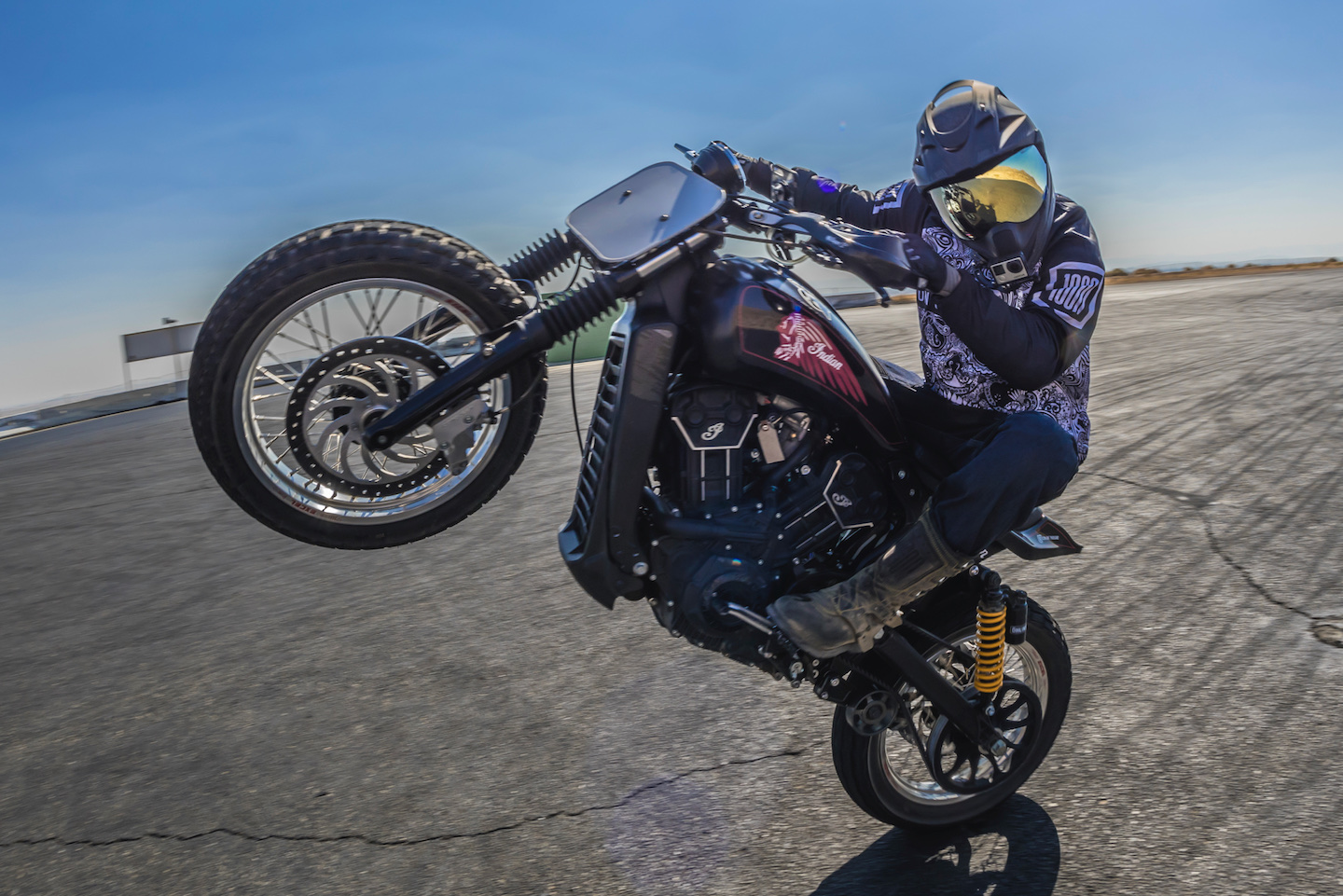
Let’s start, though, with the other one: spoked wheels. Sometimes known as wire wheels (or, if you’re old-school, “laced wheels”), spoked wheels have rims (the outer round bit) that are connected to their hub (the middle round bit) via a series of thin metal rods.
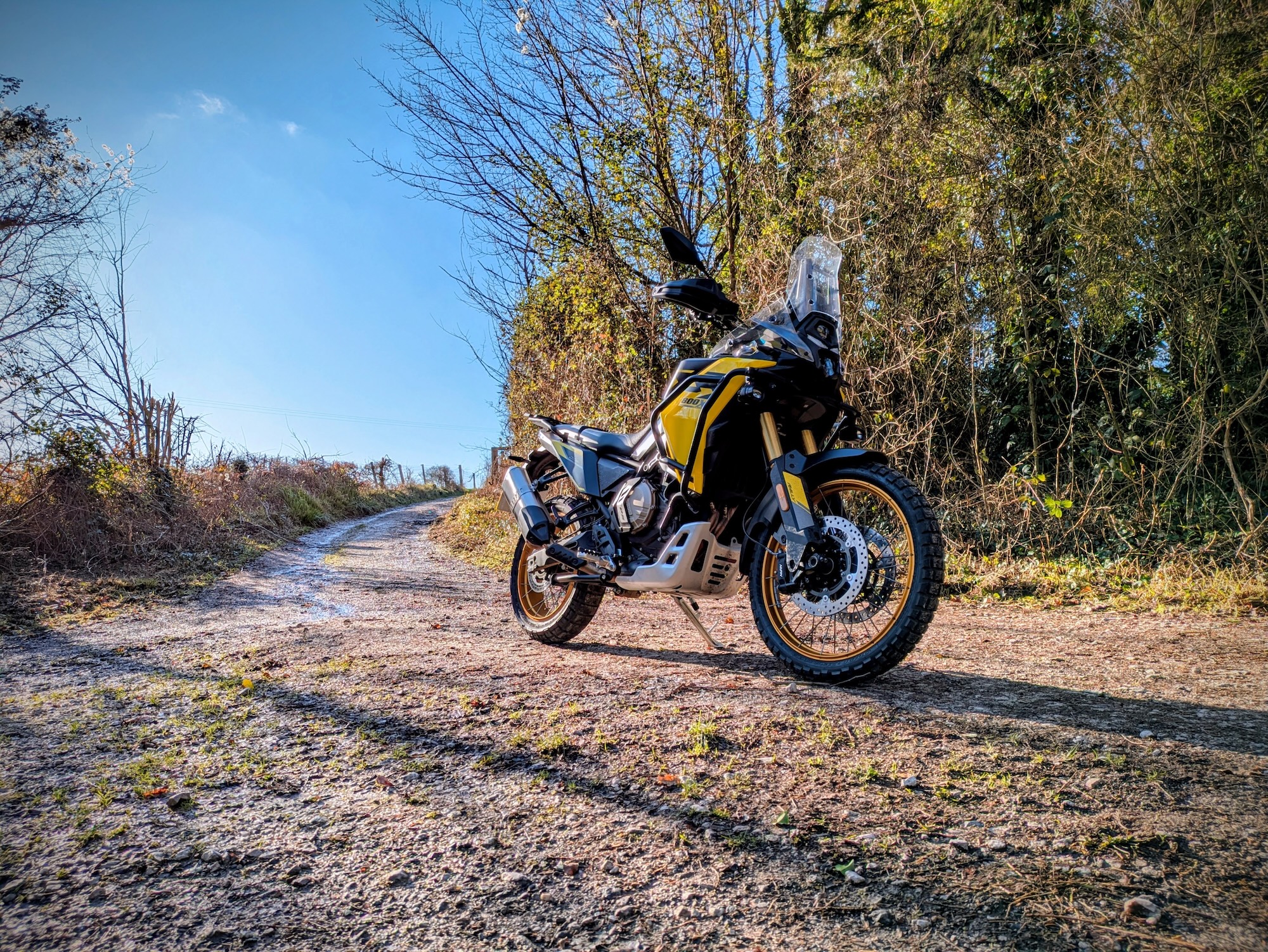
These are the wheels that you typically see on off-road-focused motorcycles or adventure bikes seeking to give an air of off-road focus. Think machines like the Royal Enfield Himalayan 450 Mana Black or the Honda Africa Twin.
Spoked wheels are also common on modern classics and cruisers seeking to exude old-school feel. Think of the Triumph Bonneville T120, or the Indian Chief Vintage.
Typically, spoked wheels on a motorcycle indicate tubed tires, though there are some notable exceptions – the wheels on the infinitely popular BMW R 1300 GS, for example.. We’ll get into the whole “tubed tires vs tubeless tires” discussion at a later date.

Alloy wheels
Alloy wheels are wheels that are made by casting a wheel with metal alloys. More often than not, the wheels are cast of aluminium or magnesium alloys. Therein you can see the origin of their many names. It’s worth noting that carbon-fiber wheels – primarily used in track racing – are constructed differently. But for the purposes of this article. We’ll loop them into the alloy umbrella, too.
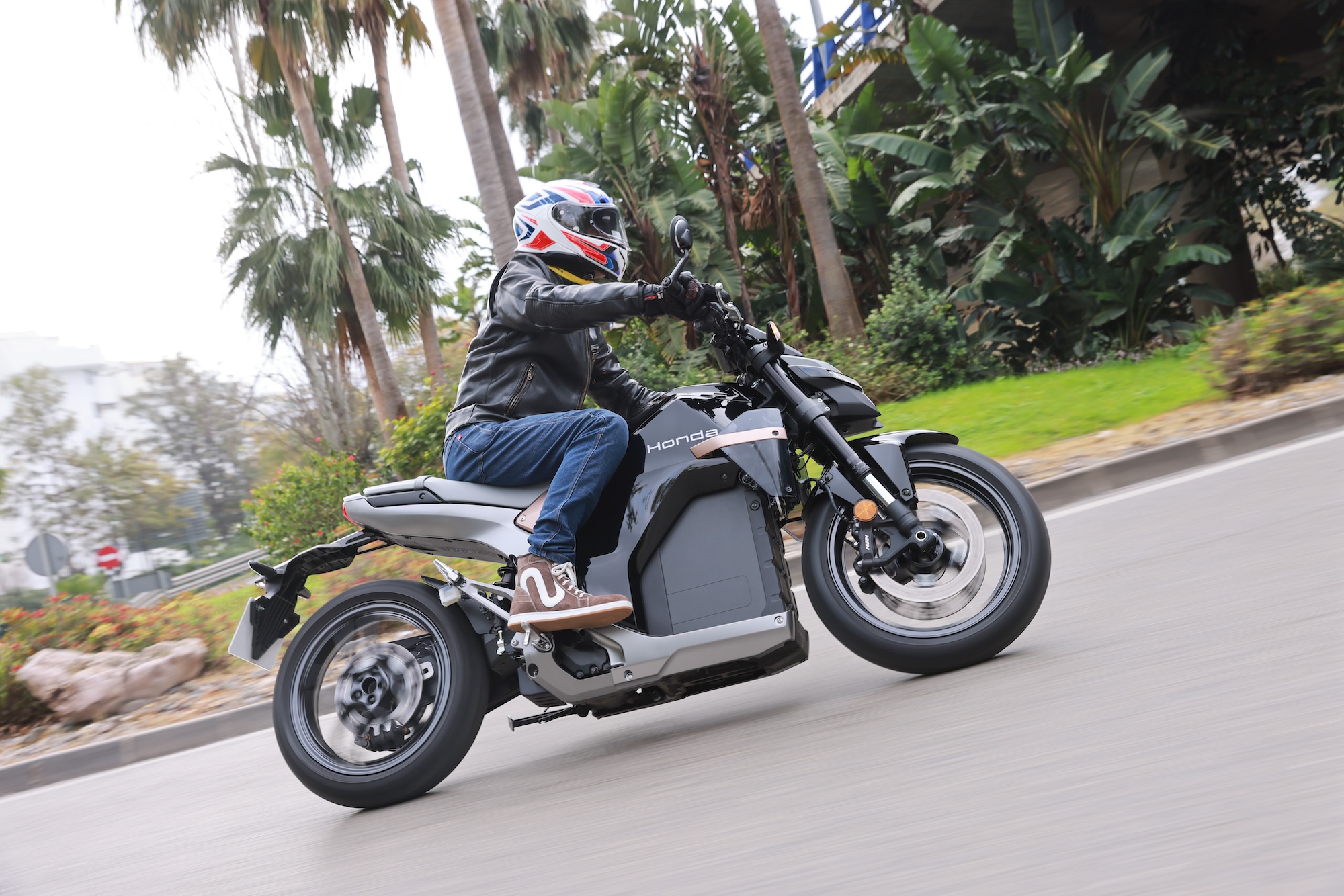
Alloy wheels are to be found on pretty much every style of motorcycle, including plenty adventure bikes, cruisers, and modern classics. Pretty much the only place where you don’t see alloy wheels is on bikes that are specifically, purely off-road machines.
You can probably start to guess some of the strengths and weaknesses of each type of wheel. Within that, it is pretty universally true that an alloy wheel will be adorned with a tubeless tire, unless something’s gone wrong.

Which is better?
The question of which type of wheel is best depends on the type of riding you’re doing, where you’re doing it, and – on the modern classic/cruiser side of things, certainly – personal taste.
The argument for and against spoked wheels
As mentioned above, spoked wheels tend to be the weapon of choice for motorcycles that have an off-road focus, or which seek to exude the spirit of an off-road motorcycle. This is because spoked wheels can generally take more of a beating off-road than alloys.
They offer a little more twist and flex in broken-surface situations. Whereas an alloy wheel might crack when traversing a tree stump or typical British pothole. Related to this, spoked wheels have a better chance of limping on when/if they do suffer serious damage; you can survive with a broken spoke or two.
Related to this, spoked wheels also have an off-road advantage in the type of tire they usually accommodate. Traditionally, spoked wheels are made in such a way that the rim is not airtight. So, you need to use tubed tires, ie, tires that have an inner tube – just like your bicycle.

If you have a tubed tire because your tire rim is not airtight, that inherently means the rim does not need to be airtight. Or, within the off-roading context, the rim does not have to be perfect. In other words, you can generally suffer more dings and dents with spoked wheels than alloy.
Meanwhile, no one’s taking a Royal Enfield Classic 650 off road, but it and other old-school-styled bikes often have spoked wheels because they are period-correct. The use of alloy wheels didn’t really pick up pace until the 1970s. Any bike seeking to evoke a spirit older than that will probably wear spoked wheels.
The faffery of a tubed tire is one of the arguments against spoked wheels. There is also the fact that they are generally heavier than alloy equivalents. And because spoked wheels have that bend and flex that makes them beneficial for off-road applications, they are less ideal for high-speed road or track situations.
All three of those are reasons you no longer see tubed tires being used in track or road racing.

On top of this, I can tell you as the former owner of a motorcycle with spoked wheels that they are a ball ache to keep clean. If you meet a motorcycle owner whose spoked wheels are spotless, you are meeting someone who could have learned to play the harmonica with all the damned time he or she has spent cleaning and protecting their wheels from corrosion.
The arguments for and against alloy wheels
For the most part, the strengths and weaknesses of alloy wheels are the reverse of those for/against spoked wheels.
Because they have airtight rims, they are able to accommodate tubeless tires, which are a hell of a lot easier to patch up on the roadside than tubed tires (depending on the severity of the puncture).
The absence of a tube also saves you some weight, of course, but alloy rims are generally lighter than spoked wheels, too.

They are also generally easier and faster to make, which contributes to their being cheaper to produce. Cheaper wheels for manufacturers means more affordable motorcycles for consumers.
Because of the above, alloy wheels are manufacturers’ de rigueur choice for most kinds of motorcycle. And, as mentioned above, they have been the choice for racing applications for decades.
For a road-focused rider, the only real disadvantage to alloy wheels is the fact that they often aren’t very pretty. Especially those three-pronged alloys that Suzuki and Honda were fond of in the early 2000s. I mean, the 2004-2017 Suzuki V-Strom 650 was already facing an uphill battle in the aesthetics game, but those rims just killed the thing dead.
The middle ground
Thankfully for riders of cruisers and modern classics – or riders of adventure bikes that aren’t intended to be used aggressively off road – there is a middle ground in the form of spoked wheels that can accommodate tubeless tires.

This style of wheel is becoming increasingly popular. It means, for example, that on the current Harley-Davidson Street Bob you can get an old-school look while retaining the benefits of tubeless tires. Again, if you’re carrying a patch kit, it’s easier to deal with a nail or the like on tubeless tires.
These kinds of wheels help to make your bike look cooler, but they do create the problem of embracing almost all of the drawbacks of a traditional spoked wheel (eg, weight, flex, cost) without its primary benefit.
So, which should you choose?
As stated above, if you’re not participating in off-road or proper dual-sport riding, the question of which wheel is best largely comes down to personal taste and financial wherewithal.
I personally like the look of spoked wheels, especially now that tubeless-tire spoked wheels are more common. But that reflects my typical riding style, aesthetic preference, and deep fear of having to change/patch an inner tube in the shoulder lane of a motorway.
What you choose may be different. Most likely, whatever you think is right for you will be right for you.




Leave a Reply to DaveCancel reply