
Because I’m both rock and roll, and because I’m a dad, I own a 2012 Citroën C3 Picasso. If you are playing along in the United States, the C3 Picasso is an awkward bug of an automobile, seemingly designed for small families who can’t afford a proper family car but who have enough taste to avoid being seen in a Vauxhall Zafira.
My car is the “big” version of the C3 Picasso, driven by a 1.6-liter diesel engine. That’s right: 1600cc, baby. Cue heavy metal music and screeching tires.
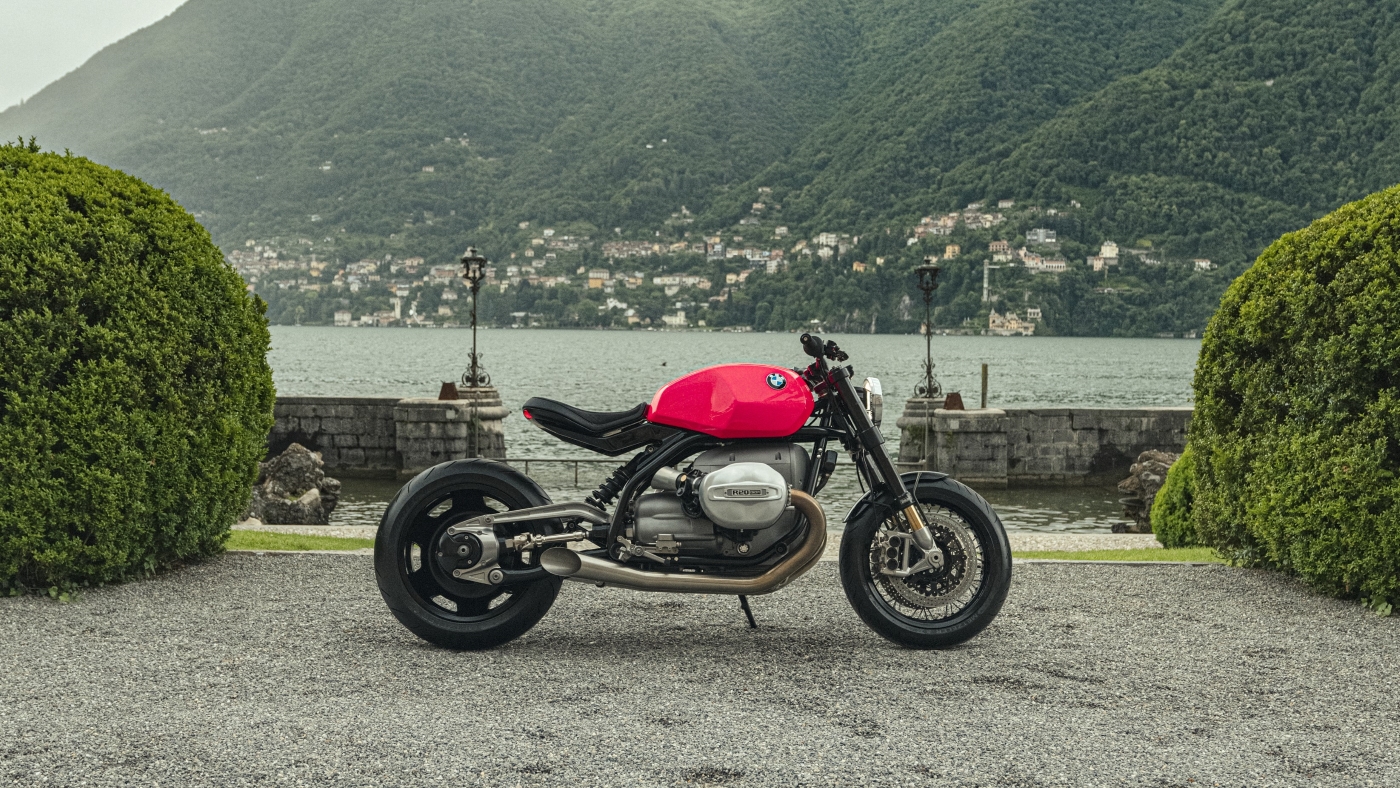
Meanwhile, you may have heard that BMW last week introduced a concept bike known simply as the R 20. And, if you understand BMW Motorrad naming convention, you’ll understand that means that this is a boxer twin with a 2000cc capacity. That’s right: 2 liters, baby. Cue heavy metal oompah music and the sounds of grinding engine headers. Because this mama’s gonna be wide.
“The BMW R 20 concept is a motorcycle that impresses with a powerful appearance in a casual gentleman style,” explains BMW’s awkwardly written press release. “Centered around the Big Boxer engine as the epicenter of great riding pleasure, the expressive tank presents itself like a sculpture, the rear is reduced to the essentials to emphasize the clean lines and the power of the motorcycle.”
I feel like that was written by a German AI, then translated, then rewritten by the free version of some other AI. The press release also uses words I don’t understand, like “chrome-molybdenum” and “kinematics.”

No, I’m kidding. I’m not stupid. I know who The Kinematics are. They were a 1970s pop-punk band; they opened for The Runaways during their fabled 1977 tour of Japan.
Actually, according to Merriam-Webster, kinematics are “a branch of dynamics that deals with aspects of motion apart from considerations of mass and force.” I still don’t really understand what that means, but BMW says it has paid close attention to said dynamics in ensuring that the R 20’s “drive torque is completely balanced.” I’m guessing that’s another way of saying “smooth power delivery?”
Meanwhile, the brand has chosen to house its colossal concept engine in a roadster similar to its R 12 model (formerly known as the R nineT).
“The R 20 concept is a bold interpretation of the BMW Motorrad DNA,” the press release quotes Alexander Buckan, Head of Design BMW Motorrad, as saying. “It combines modern technical elements with a classic roadster design. Its oversized proportions and minimalistic aesthetic make it an unmistakable character.”
Admittedly, BMW doesn’t always follow through on its concept bikes, but I think it’s a pretty safe bet that this engine will be showing up in production models within the next few years. I’d guess, however, that it will be used in a cruiser, replacing the current R 18 platform. An engine that massive is better suited to the more relaxed, less corner-hungry style of a cruiser or continent-crossing tourer (it’s a clear sign of my age that I look at the R 18 B and think: “Yeah, I’d have one of those…”).

But, of course, when the R 20 cruiser eventually hits dealerships in, say, 2026, it will not be the biggest production bike out there. I’m pretty sure the 2458cc Triumph Rocket 3 holds that distinction.
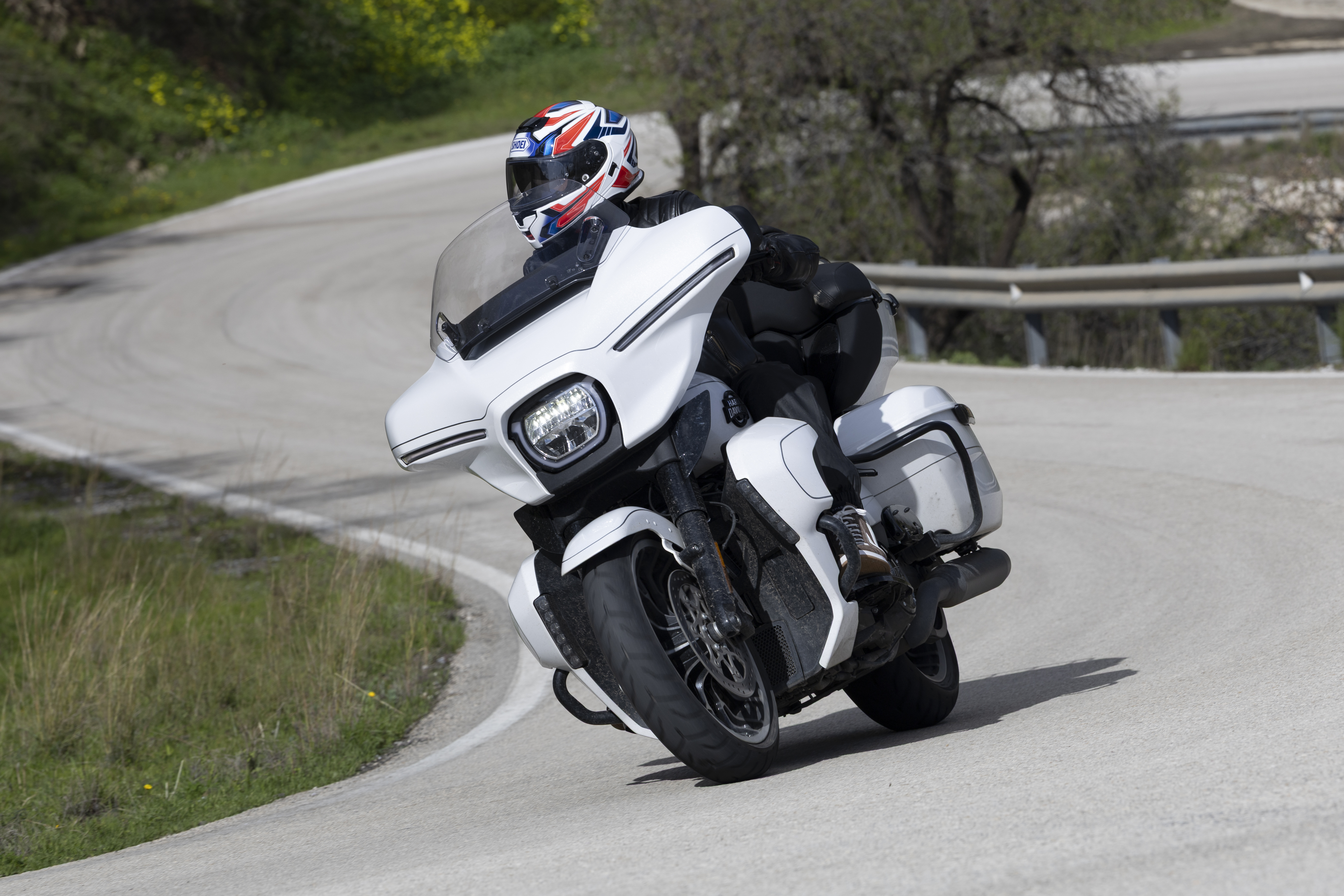
Meanwhile, Harley-Davidson‘s current CVO models are powered by 1980cc engines, meaning it’s only a matter of time before the Milwaukee Eight 121 powerplant moves ‘down’ to the standard models and the CVO engines gain even greater capacity. Indian Motorcycle‘s not too far behind, with a 1901cc lump driving its big-twin bikes; I would not be surprised to see Indian introducing a bigger Thunderstroke engine this year.
A little smaller, but still monstrous, the erstwhile KTM 1290 Super Duke R became the 1390 Super Duke R earlier this year (it’s actually a 1350cc bike, but what’s 40 cc between friends).
In other words, bikes are getting bigger. This is something we’ve seen across the capacity spectrum in recent years. 1200s have become 1250s then 1300s, 800s have become 900s, 400s have become 450s, and so on and so on.
An article published on Revzilla earlier this year explained the reason for this: emissions standards. In order to maintain the power/torque that customers want, and still meet ever-more-stringent emissions standards, manufacturers are gradually increasing capacity.

“Larger mills generate more power at lower engine speeds,” explains the article. “Thus, producing less emissions without sacrificing output (compared to the outgoing model).”
Here’s the problem with that, though: larger engines are generally less fuel-efficient. Sure, there are exceptions to that rule depending on environment and how extreme the comparison (eg, if you have a 125cc Yamaha MT-125 going wide open on the Autobahn, it’s going to be burning fuel at a faster rate than, say, a 1833cc Honda Gold Wing traveling at the same speed), but on the whole it’s the case that bigger the capacity means more fuel burned.
Which, of course, runs counter to the whole purpose of emissions standards; you’re not really saving the planet by burning more fuel. And bigger engines create additional issues that affect motorcyclists more acutely than, say, car drivers. Namely, heat and weight.
I mean, can you imagine what it’s going to be like to ride an air/oil-cooled R 20, the headers of its bison-sized engine tucked right next to your shins? It’ll be the perfect bike for winter, I suppose, keeping you toasty warm on January rides. But in the dead of summer, crawling along in holiday traffic, perhaps, it’ll be like wearing a blanket of fire. You’ll be able to cook things in your pockets.
And, of course, people with a lot of muscle mass feel the heat more intensely. Which is a shame, because you’ll need to be pretty strong to shove the R 20 around in your driveway.

Yes, as I say, there are already bigger bikes out there, and the R 20 still probably won’t weigh as much as the Victory Vision I rode to Italy back in 2015 – thereby proving that it’s entirely possible for a not-very-strong person to comfortably navigate a colossal (it weighed about 450 kg fully loaded) machine – but I still can’t help feeling that there has to be a stopping point for all of this.
Surely we can’t just keep building bigger and bigger bikes, right?



Leave a Reply to TheQCancel reply