
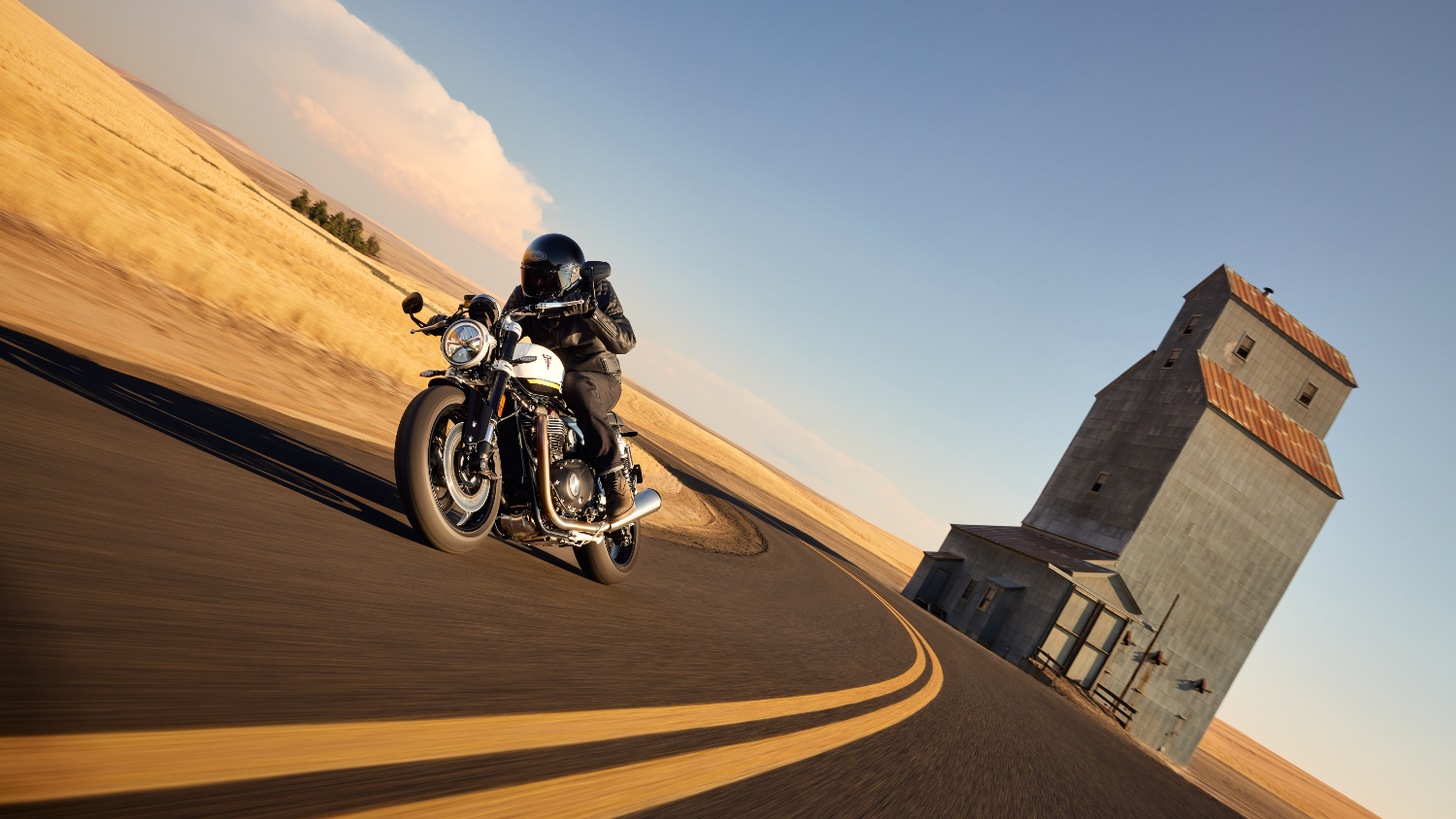
I wasn’t a huge fan of the Triumph Speed Twin 1200 when it was first unveiled in 2018. My response at the time was somewhere between “‘meh” and “why?”
“Is there something wrong with me,” I wrote. “Or is it really the case that Britain’s best known moto brand has run out of ideas?”
My main issue with the bike was (and – spoiler alert – still is) the question of who it’s for. The theory of the case for a Speed Twin 1200 struck me as limited. Quite a lot of people disagreed with me, though. Bike magazine, for example, elevated it to bike of the year (October 2019 issue). And when I asked my friend, Austin Genard, to write a review of the model for this site, he also came out strongly in favor.
“I like it. A lot,” he wrote. “I like riding it and I like looking at it.”
Fast forward to the present. Triumph has updated the Speed Twin 1200 for 2025, and earlier this month, I got a chance to spend three days with one in connection to an article I’ve written for Bike (That article will be published in the May 2025 issue; be sure to buy the magazine and send them emails telling them how much you love my work).

I clocked up more than 500 miles with Triumph’s updated modern classic, riding it on pretty much every kind of road surface the UK has to offer. I rode it on straight roads, twisty roads, smooth roads, and roads so horribly potholed that there might as well have been no road at all. The TLDR version of my review is: I like it, but largely because it reminds me of other Triumphs.
The longer version of my review is this:
SOME NUMBERS
Starting price: £12,495
Engine: 1200cc liquid-cooled parallel twin with 270° crank
Power: 77.2 kW at 7750 rpm (103 hp)
Torque: 112 Nm at 4250 rpm (82.6 lb-ft)
Fuel capacity: 14.5 liters (3.8 US gallons)
Seat height: 805 mm (31.6 in.)
Weight: 216 kg wet (476.1 lbs)
SOME CONTEXT
The Speed Twin name stretches back almost 90 years, to when it was applied to a 498cc air-cooled parallel twin produced from 1938 to 1966 – with a six-year gap (1941-1946) in production during which Britain was too busy killing Nazis to make motorbikes.
That Speed Twin won the hearts and minds of many, and ultimately led to the development of Triumph’s T100 series, which is what Ted Simon rode in Jupiter’s Travels.

In the late 2010s, Triumph was expanding its Bonneville platform in every which way it could. You had the Bonneville T120, of course, as well as the Bobber, Speedmaster, Scrambler 1200, and now-defunct Thruxton. Not to mention all the 900cc duplicates, like the Bonneville T100, Street Scrambler, and so on. For Triumph, though, this was not enough. So, for 2019, through a complicated formula of “this but not this but also this” it came up with the new Speed Twin.
“Depending on how you want to look at it, it’s a Thruxton with standard ‘bars or a Street Twin on steroids,” Austin wrote.
It had the power of one and the ergonomics of another. Initially known just as the Speed Twin when it arrived in dealerships, it was (very lightly) refreshed in 2021 and renamed the Speed Twin 1200, making way for the erstwhile Street Twin to be renamed the Speed Twin 900. For 2025 the model has received more substantial updates, with the most obvious being a boost in power (now claiming 103 hp, vs. the previous generation’s 94 hp).
FIRST IMPRESSIONS
In silhouette, the Speed Twin 1200 is still the attractive machine it’s always been. Turn the lights on, however, and you’ll see that it’s adorned in cheap-looking paint and a silly graphics scheme that seems aimed at a slightly younger audience. But aimed by someone who isn’t particularly good at aiming things at younger audiences.
Ignore that, however, and the bike has a nice, muscular stance. It’s a bit like Thomas Hobbes’ description of life without society: brutish and short. But, thankfully, not nasty. Lines flow naturally – it is especially sexy from the rear – and you have to respect the expertise it takes to build a modern bike – one so loaded with electronics – that you can ‘see through’ in the way of old bikes.

Overall, the fit and finish that we’ve come to expect from Triumph is there. Mostly. All the stuff you touch and immediately see has a well-made, crafted feel. But, Triumph’s habit of saving money on the stuff you don’t usually pay attention to is a little too obvious here. There’s a hell of a lot of plastic for a modern classic that has an asking price approaching £13,000.
Throw a leg over – an easy step for someone who’s 6-foot-1 – and the Triumph is more comfortable than you might assume. It’s definitely cramped for someone used to riding a Kawasaki Versys 1000, but not awful. By my third day with the bike, it was perfectly livable. Hands fall easily to the ‘bars; knees are not too bent; the bench seat allows plenty of room for a single rider to move around.
Duck-walk the bike around a parking lot and you will notice its weight. It’s well-balanced, but there’s this sense of… un-athleticness that runs against the aesthetic. It’s kind of ‘skinny fat.’
Looking forward, your view is unfettered. The bike’s TFT dash has been identified by a few moto-journalists as contrary to the modern classic spirit, but it’s not something you really notice or care about on the move. Bar-end mirrors are tiny but do actually work. Switchgear is reasonably intuitive but you will need to memorize where buttons are and what they do, because they are not backlit and become completely invisible at night.
ENGINE, TRANSMISSION, AND BRAKES
Press the ignition button and the Speed Twin 1200’s biggest selling point becomes obvious: the thudding growl of its 1200cc parallel-twin engine. This bike sounds delightful. Just loud enough to make you wonder how close it comes to breaking noise regulations, but not so loud that it’s going to upset your neighbors, the exhaust note is rich in bass, depth, and tone.

Twist the throttle and you’re not only rewarded with a lovely sound, but a womp of syrupy-smooth torque. Well, to a point. Wander too far above the 4250 rpm at which peak torque arrives and the bike delivers exponentially more sound than power.
And this is where the Speed Twin starts to confuse me. Because where it performs best is in the ‘legal’ range. You know: that riding speed that may nudge a little over the stated limit at times but won’t really put you in danger of losing your license. I like bikes like that, because I only ever ride on the road and I don’t enjoy high insurance premiums. So, one part of me won’t criticize, but, you know…
The six-speed transmission, meanwhile, is so, so, so wonderful – the butteriest butter that ever buttered. Clutch pull is feathery light and gear selection is accurate every single time – no false neutrals or missed shifts. I would like to meet the team responsible for this transmission and kiss each of them on the lips. Then I’d like to introduce them to Kawasaki‘s engineers and ask the latter why they are so utterly incapable of delivering something that’s even half as good as that produced by the former.
For 2025, Triumph also offers a higher-spec (and higher-priced) version of the Speed Twin 1200 in the form of the Speed Twin 1200 RS. One of its key selling points is the addition of a quickshifter, but there’s no point when the transmission is this perfect.

The Speed Twin 1200’s brakes are good, but a little too aggressive/off-on for my tastes. Slowing with subtlety is an art that takes a certain amount of practice. By my third day, I was no longer shunting myself forward at stops, but even then, hard braking lacked fluidity.
PERFORMANCE AND HANDLING
Despite feeling chunky at a standstill, the Speed Twin 1200 is nimble. On the move, it dances with ease and confidence. Put simply: the Speed Twin 1200 can take much more than this particular rider can give. At the same time, it is capable of being rock steady on a straight.
Part of my time with the bike involved several hours of motorway slog and it was perfectly happy to just settle in and chug along. In both scenarios, you always feel perfectly in control; you feel confident that the bike will do what you want it to do, when you want to do it.
The bike’s suspension deserves much of the credit for delivering this confidence. That’s one of the improvements for 2025: new, non-adjustable 43mm Marzocchi forks and twin rear shocks (with adjustable preload and rebound damping) absorb all but the worst bumps, while keeping things firm enough to push through corners.

Apparently the riding position has been tweaked slightly, as well, with ‘bars set a teensy bit higher and a teensy bit further forward. The seat is also a teensy bit narrower, which improves shorter riders’ ability to put both feet flat on the ground.
BELLS AND WHISTLES
The 2025 Speed Twin 1200 is equipped with both lean-sensitive ABS and traction control. As before, it comes with two (almost indistinguishable) riding modes: Road and Rain. Within that, you can tweak settings to suit your tastes. A little bit; you can turn off traction control, for example, but you can’t adjust it. ABS cannot be turned off (Why would you want to on a road bike, though?).
The new offset single clock/dash offers pretty much all the information you’d want, although, the inability to see both trip distance and time without clicking from one TFT display to another is kind of a pain in the caboose.
Another small gripe: you get a low-fuel warning when there are still two bars left on the fuel gauge (and about 4 liters of dino juice still in the tank).

A USB-C port can be found at the side of the clock. Three-setting heated grips are standard (I think; feel free to correct me on that), and were an absolute life-saver when I found myself riding through Newcastle in -2°C temps (28.4°F).
CRITICISMS
The kickstand is impossible to find. I am not exaggerating. Triumph has placed the catch for the stand (ie, the little sticky-out bit) directly beneath the gear shift pedal. Sitting on the bike and looking down, you cannot see it. Feeling around with your boot, you cannot find it.
The only way I could reliably get the stand down was to step off the bike (thankfully not difficult for me, but perhaps more of a challenge for a shorter rider) and come at the stand from an angle. Triumph’s been making motorcycles off and on for more than a century; how it managed to screw this up so badly is beyond me.
Thanks to a clumsy shift, I discovered that the bike’s computer will completely reset as the result of a hard stall. I had let out the clutch too quickly in first and it lurched to a stop. Firing it back up, I discovered that the bike was now under the impression that it was midnight on 1 January 2000. Happy New Millennium! Resetting the bike’s date and time doesn’t demand a huge amount of effort, but I would expect electronics to be able to suffer more abuse.
Meanwhile, the Speed Twin 1200, is not pitched as a touring bike, or even an all-rounder, so I don’t think it’s outrageous that there is nowhere to attach luggage, but, you know, there’s nothing to hook a bungee strap to. If you want to carry a water bottle with you on a day’s riding, it will need to be in a backpack.

That said, I suppose you could hook something to the passenger pegs. Which would, at least, give the passenger pegs a purpose – because you wouldn’t want to attempt to ferry a second human on this thing. Again, Triumph’s not pitching the bike as being for that purpose, so I won’t be too critical. But, potential owners should know that they will be using most of the seat – especially if they are tall – and its tapered end means passengers have even less room than it appears.
THE COMPETITION
If you want the Speed Twin 1200’s mix of modern classic styling/spirit and sportier handling/performance, I suppose you’ve got three options: BMW’s R12 nineT (formerly known as the R nineT), Yamaha’s XSR900, and Kawasaki’s RS900.
In terms of fit and finish, riding experience, and aesthetic, the BMW’s the clear winner for me – easily standing out against the Triumph. But, it has a starting price of £14,420.
The Yamaha has a (somewhat) more tolerable starting price of £11,000, but its styling is confused, to put things politely, and it doesn’t offer the delightful twin-engine feel of the Speed Twin 1200.
Kawasaki’s retro-styled machine doesn’t either, but I’d be seriously inclined to give it a test ride if I were looking for something along these lines. It’s more powerful, its fit and finish is, overall, about as good (or better – depending on which specific bit you’re looking at), and it costs £700 less. But, you do have to put up with a Kawasaki transmission…

Or, if you’re willing to make some concessions in terms of styling, I’ll bet you could get a good deal on an Indian FTR 1200 these days.
VERDICT
As I said at the start, I like the Speed Twin 1200, but largely because it reminds me of other bikes in the Bonneville range that I like better. There is nothing that the Speed Twin 1200 does that can’t be done better by another bike in Triumph’s line-up.
Want to cruise around loving the engine’s torque and growl? The Bobber and Speedmaster do it better. Want a relaxed seating position and the feeling of freedom that comes from a machine that looks and feels simple? The T120 does it better. Want to scream through corners? The Street Triple 765 does it a whole lot better (and costs less). Want a parallel twin that can get silly but not as silly as the Street Triple? Get a Scrambler 1200.
The way I see it, the Speed Twin 1200 is a motorcycle that needs a Goldilocks buyer: someone who wants exactly what the Speed Twin 1200 has to offer in exactly the proportions that it is offered. After three days with the bike, I’m pretty certain that I’m not that guy.
Part of my distaste for the bike is, I admit, driven by its price. For a number of years, I’ve felt that Triumph motorcycles are overpriced by at least 20 percent. That’s definitely the case here; at £9,500 this would be a pretty good motorcycle. But at £12,495 you’re forced to look at the plastic and the cheap paint and the easily flustered electronics and the made-in-Thailand origins, and ask: “Where is my money going?”
All this said, I can’t find anyone else who agrees with me. Search for any other review of the Speed Twin 1200 and you’ll see glowing praise. Moto-journalists really like this bike. And the fact that Triumph’s been selling it for six years suggests that riders are also buying it. So, maybe I’m the Goldilocks here. Or, more correctly, the princess and the pea, put off by things that no one else cares about.
THE THREE QUESTIONS
Does the Speed Twin 1200 suit my current lifestyle?
Yes. I don’t tour that much these days, and the Speed Twin 1200 is well suited to wandering around West Sussex in search of tea and cakes.
Does the Speed Twin 1200 put a smile on my face?
Definitely. I can complain about the bike all day, but there was never any point at which I didn’t enjoy riding it. I simply felt that I would enjoy riding other bikes more. But, if someone were to sneak into my garage and replace my bike with this one, I wouldn’t spend a lot of time complaining. It’s fun, it’s nimble, it sounds great, and it looks good.
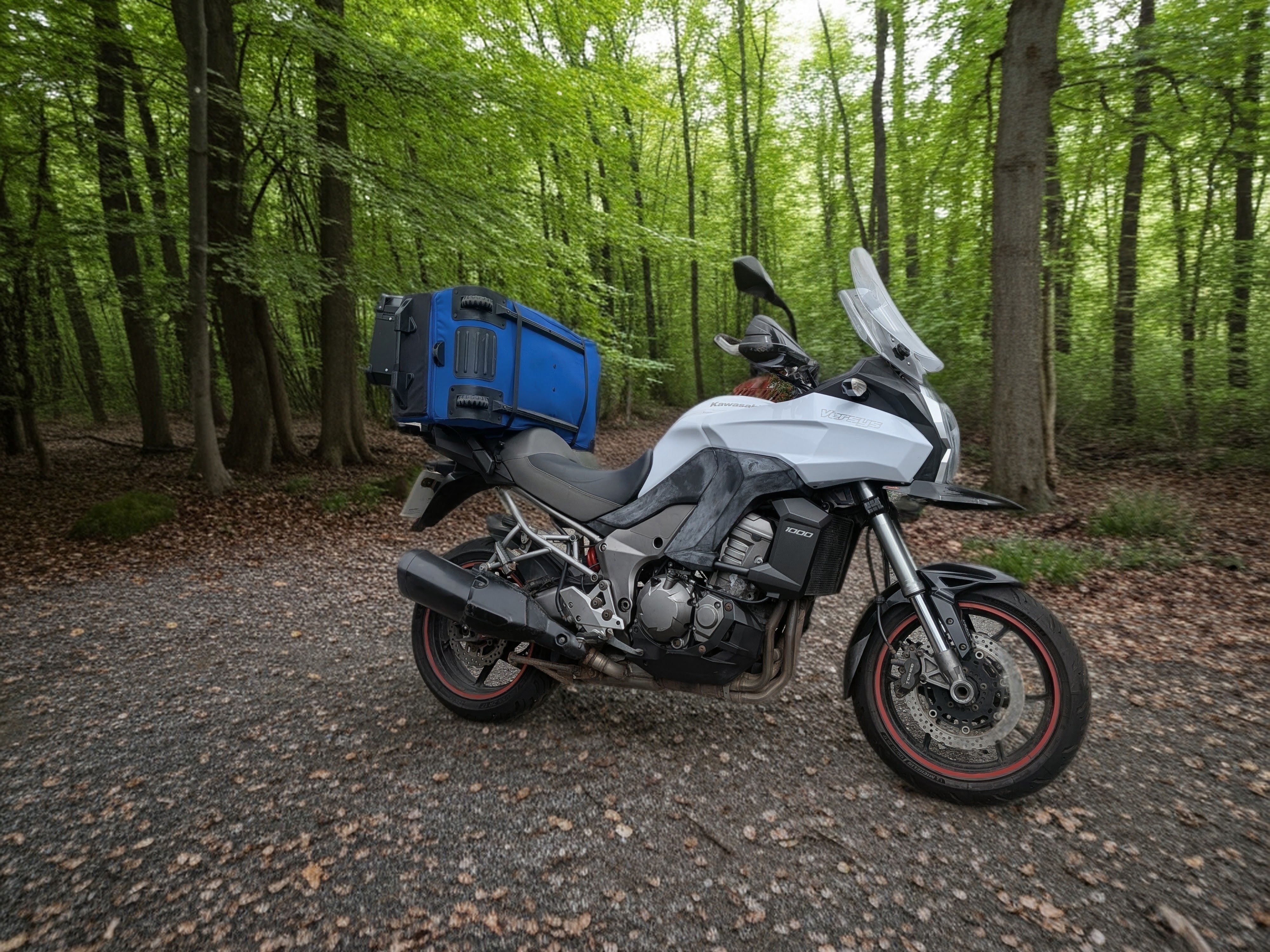
Is the Speed Twin 1200 better than my current motorcycle, a 2012 Kawasaki Versys 1000?
Despite what I just said about it making me smile and fitting my lifestyle, no. It is not better than what I have. Yes, most would agree it looks better. It definitely sounds better. Its transmission isn’t as clunky. But in pretty much every way that matters, a brand new Speed Twin 1200 falls short against a 13-year-old Versys 1000. My bike is more comfortable, more powerful, and more engaging. It accelerates better, corners better, and stops better. It’s better for long hauls, better for Sunday blasts, and infinitely better for carrying passengers.



Leave a Reply