
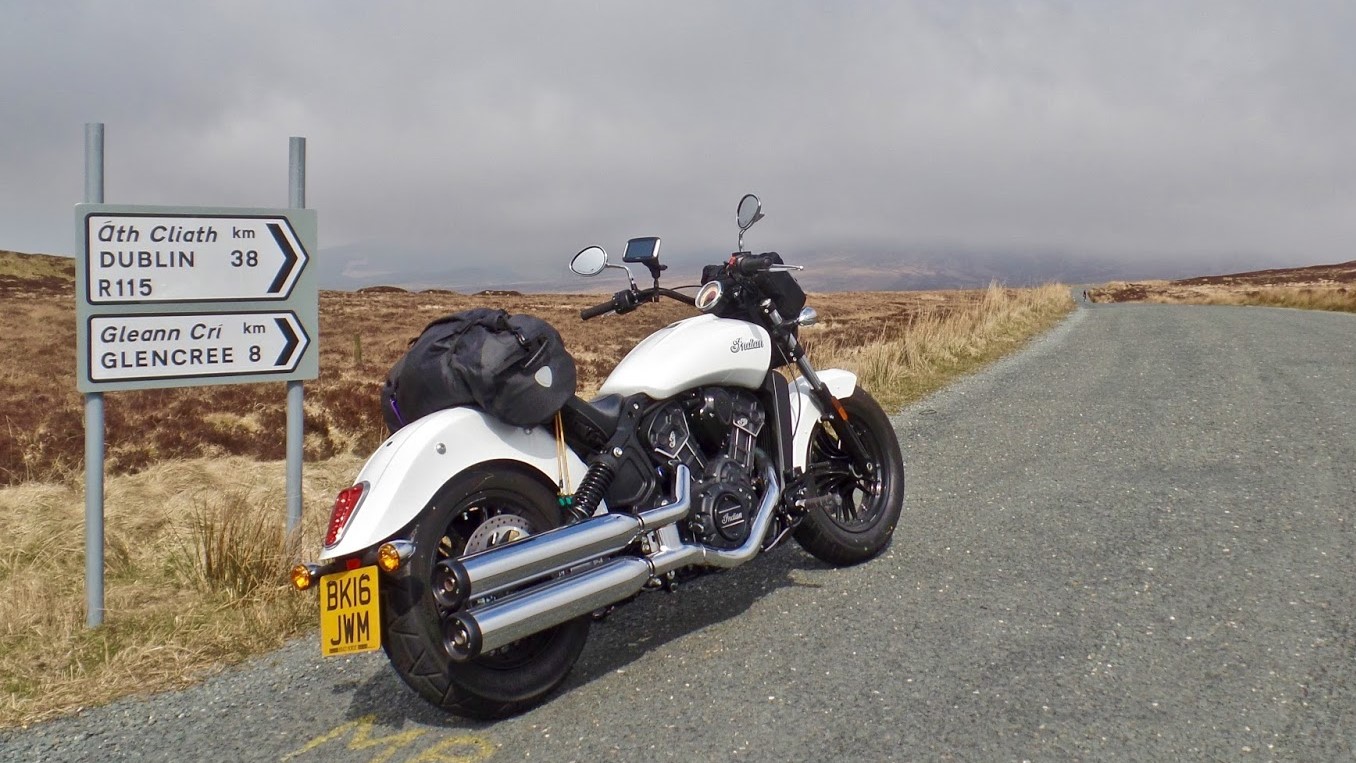
It’s summer and I find myself constantly daydreaming about going on a road trip.
It’s been a few years since I strapped a bunch of Kriega gear to a bike and rode far enough that it warranted an overnight stay. And it will be a while longer still, because I’m a new(ish) dad. (Also, I’m not entirely sure I trust the transmission on my bike at the moment. What, exactly, is that whining noise I hear when riding?) Maybe next year. Maybe the year after that.
But while I’m having to get my motorcycle fix with limited back-by-lunchtime jaunts, I thought I’d put together a classic how-to article for anyone keen to hit the road longer than I’m presently able to. The where and when is up to you, of course, and from my experience, it doesn’t really matter. Make up a nonsense goal and ride toward it.
RELATED
How to Keep Your Bike Safe While Traveling
What’s important is packing. Unlike car travel, motorcycle packing requires a delicate balance. Too little, and you’ll be left wishing you had brought that extra layer. Too much, and you’ll end up leaving your underwear in faraway places because you’ve gotten sick of carrying it.
Fear not, happy traveler! (I had an AI check my story for flow and it stupidly suggested this phrase.) With a solid packing strategy, you can hit the road more easily and more often.
EMBRACE THE ART OF HAPPY MINIMALISM
Even the fanciest motorcycles are relatively minimalist. Your packing philosophy should reflect that. Drawing from the same thinking employed in backpacking, try to resist the urge to bring “just in case” items. Every non-essential ounce adds weight and bulk, affecting your handling and fuel efficiency – and creating yet another thing you have to deal with when packing up each morning. To help think minimal:
Plan Your Itinerary: Having a reasonably good idea of where you’ll be when (it doesn’t have to be too rigid) means you can check weather forecasts and pack accordingly. Riding through the desert in June? You probably won’t need five layers (But you should probably still bring rain gear. God will always punish you for failing to pack rain gear).

Embrace Versatility: Look for multi-functional clothing that can be layered for different temperatures. Opt for quick-drying materials that can be washed and worn again easily. Lately I’ve been in love with alpaca gear from Appalachian Gear Company. It’s targeted at hikers but I see no reason not to wear it on a bike; alpaca shirts and hoodies and such can go a long time without needing to be washed.
SOMEWHAT RELATED
Five Motorcycle Life Hacks
Utilize Available Space: Panniers are good, but also consider tank bags and tail bags, which won’t necessarily compromise your balance.
MASTER THE ART OF HAPPY PACKING
Now that you’ve embraced minimalism, let’s delve into the art of packing efficiently. Here are some key strategies:
The roll-and-tuck technique: Sounds like something a drag queen does. But what I’m talking about is rolling your clothes instead of folding them. It saves space and minimizes wrinkles. Tuck rolled items into nooks and crannies of your bags to maximize space.
Compression bags: Your mileage may vary on this idea. But some people like to use compression or vacuum storage bags when traveling. Squeezing the air out of bulky items like clothes and towels can significantly reduce their volume. The drawback is that you’re adding an additional step to packing. If you’re using vacuum bags you’ll also need to carry a hand pump.

Utilize waterproof bags: If you’re not using waterproof Kriega gear or the like, lining your bags with waterproof liners offers protection against the rain. As stated above, if you fail to prepare for rain God will make you suffer.
Pack by weight: Place heavier items like tools and spares lower in your bags, closer to the bike’s center of gravity.
ESSENTIAL GEAR FOR A HAPPY RIDE
Beyond underwear and toiletries, there are certain items that are crucial for a happy and safe motorcycle journey:
Motorcycle-specific clothing: Obviously, a helmet, jacket, pants, gloves, and boots are non-negotiable. Invest in quality gear that fits well and offers adequate protection. The beauty of modern gear is that a lot of these things can double as off-the-bike items. Boots, for example. A solid pair of Red Wing boots will serve you in pretty much any situation: on the bike, walking around town, even doing a bit of light hiking.
Tools: Pack a basic toolkit that includes what you’d need for emergency roadside repairs. At the very least, bring a Leatherman. However, don’t pack tools for jobs that are beyond your ability or for stuff you’re obviously not going to be doing. On my first major European road trip, I spent two weeks hauling a massive torque wrench through six countries.
First-aid kit: Be prepared, but don’t be overprepared. What, honestly, are you going to need? You’re not going to be putting anyone into a sling, for the love of Pete. For the most part, you only need stuff for very minor injuries and maybe – if you have the knowledge – to be able to stabilize someone while you wait for an ambulance.
Bring a real map: Sat-navs and phones are useful, but consider carrying a physical map as a backup. At the very least, it’s something to stare at in the bar each evening as you plan your next day’s riding.

Puncture repair kit: If you have tubed tires, you should definitely make sure you’re comfortable with roadside fixes. Or make sure you’re signed up to a recovery service and have packed a good book to keep you occupied while you wait for help to arrive. Life is a lot easier if you have tubeless tires. I personally can vouch for the Gear Gremlin tire repair kit; I’ve used it a few times. It’s reasonably light, easy to use, and fits under most seats.
Water: Dehydration is pretty common on motorcycle trips. If you’re lucky, you’re riding in the sun, but even when you’re not you’re sitting there exposed to the wind for long periods without access to water (unless you’re wearing a flip-front helmet and riding the kind of bike that accommodates a cup holder). Make sure you have water with you and that you guzzle big amounts at stops. Remember that coffee and sugary drinks make things worse.
EXTRA STUFF HAPPY TRAVELERS MAY WANT TO BRING
A happy traveler is a comfortable one. Outside of essentials some things you might want to bring are:
Snacks: I’m a strong proponent of tea-and-cake breaks in cafes. Stopping, taking off some of your gear, and physically going into a place to sit down and have food has all kinds of benefits beyond satiating hunger. It’s rest time; if the weather is cold or hot or wet, it’s an opportunity to get out of the elements for a while; there’s an opportunity for human interaction and thereby a chance to better relate to the place you’re traveling through. But that way of doing things can get pretty expensive, especially on a longer trip. Equally, you may find yourself in a place that’s light on cafes. So, it’s a good idea to have some (healthy) snacks tucked away. Don’t ride hangry.
Microfiber towel: I carry one of these when I go backpacking. It packs lighter than an actual towel and dries a little faster. It doesn’t really absorb water as well as a proper towel does, but it’s still convenient. And it’s the kind of thing that you’ll find yourself using in all kinds of situations. As the Hitchhiker’s Guide to the Galaxy says, “a towel is about the most massively useful thing” a traveler can have.
Stuff for down time (maybe): Odds are, you’ll be carrying your phone, so if you’re the sort of person who needs podcasts and such it might be a good idea to download a few. You’ll have to make your own decisions about whether you want to carry any electronics beyond that (like a laptop for watching films). As I say, carrying a physical book can be helpful if you get stuck waiting for a recovery vehicle, but my experience has often been that if I bring something to distract me it just sits in my bag the whole trip. After a day of riding I prefer to just let my brain go into neutral. I don’t need to be entertained; I’m happy to simply reflect on where I’ve been that day.

Seat pad? I’ve never used one of these. I’ve often wondered if I’m missing out.
And that’s pretty much it. If you’ve got any suggestions, let me know. This is another one of those articles that I’ve effectively written for myself, like when I wrote a used bike buyer’s guide while I was in the process of looking at used bikes. I’m not able to take any big road trips right now, but I want to. Hopefully you’ll find this useful, too.
Also, you will note that some of the links take you to Amazon. Yes, they are affiliate links.



Leave a Reply